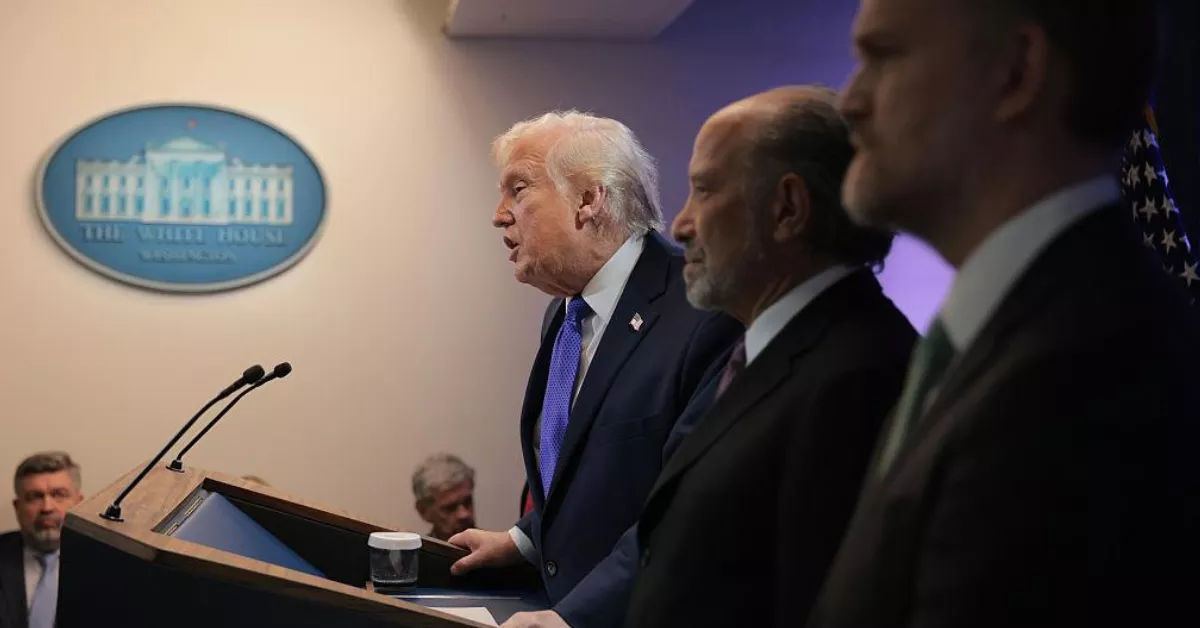
President Donald Trump has stepped back from his earlier warning of a sweeping 15% global tariff increase, opting instead to keep existing duties on exports from the European Union and the United Kingdom at 10%.
The move, which took effect Tuesday morning, eases immediate trade tensions and preserves a degree of stability for transatlantic commerce.
For the UK, the decision largely maintains the status quo, as British goods were already subject to 10% tariffs alongside standard Most Favored Nation rates under Trump’s previous trade measures.

By avoiding a further hike, the administration has spared exporters from additional cost pressures at a time when global supply chains remain fragile.
For the EU, the reversal is particularly significant. European exports had faced the prospect of a higher 15% levy, creating uncertainty and political friction on both sides of the Atlantic.
In response to the tariff threat, the European Parliament had paused ratification of an EU–U.S. trade agreement, citing concerns that the move could violate commitments made last summer.

The current tariff framework is temporary, set to last 150 days under Section 122 of the Trade Act of 1974, during which the administration may pursue targeted investigations that could lead to sector-specific tariffs.
Once the period expires, Congress will have the option to extend the measures, leaving the longer-term outlook for EU–U.S. and UK–U.S. trade relations dependent on political negotiations in the months ahead.









Leave a Comment