
The UK’s handling of cryptocurrency feels more like a crackdown than a fair system, with investors often treated as suspects from the start, as the government assumes guilt until they prove otherwise on tax matters.
HM Revenue and Customs (HMRC) views digital assets as property rather than currency, which means they’re hit with capital gains tax (CGT) or income tax.
And things are only getting tougher, with major enforcement changes rolling out in 2026. While officials say it’s all about fairness and fighting money laundering, many see it as a punitive setup that makes investing in crypto a nightmare.

This approach has earned the nickname “guilty until proven crypto.” It puts the burden on everyday investors to navigate a maze of rules, while the government eagerly claims a share of any gains.

HMRC doesn’t just wait for mistakes; they actively hunt for them. They’ve shifted from passive monitoring to aggressive tactics that start with suspicion.
For instance, they’ve sent out thousands of “nudge” letters to people they think might have skipped taxes on crypto gains. These letters aren’t gentle reminders, they pressure recipients to come clean or face consequences.

The penalties are no joke. If HMRC decides your failure to declare was deliberate, you could face fines up to 100% of the tax owed, plus interest.
For careless errors, it’s up to 30%. And in cases they label as “deliberate and concealed,” they can go back 20 years to assess what you owe.
That’s a long shadow hanging over any old transactions. They even have powers to freeze and seize your crypto assets during investigations, forcing you to prove they weren’t from illegal sources.

It’s like being guilty until you prove your innocence, and it can tie up your funds for months or longer.
On top of that, recent updates have made penalties even stricter for offshore matters or transfers, where fines could climb much higher.
This enforcement mindset isn’t just about collecting taxes, it’s about making investors feel watched and vulnerable.

Punishing Tax Rules, Taxes on Paper Gains, and Shrinking Allowances
The tax framework itself seems designed to squeeze every possible pound out of crypto holders. One big issue is the drastic cut in the CGT-free allowance, known as the Annual Exempt Amount.
It dropped from £12,300 in 2022/23 to just £3,000 for the 2024/25 and 2025/26 tax years, and it looks set to stay low into 2026. That means even modest gains can trigger a tax bill now.
Then there’s the rule on crypto-to-crypto trades. Swapping Bitcoin for Ethereum? That’s seen as a taxable disposal, so you pay CGT on any unrealized gains, even if you haven’t cashed out to fiat currency.
It’s a “dry” tax charge, where you owe money without having actual cash in hand to pay it. This catches a lot of people off guard and adds unnecessary complexity.
Losses aren’t straightforward either. If you lose access to your crypto due to stolen keys or hacks, it’s not automatically a capital loss. You have to file a “negligible value claim” with HMRC, and approval isn’t guaranteed. Without it, those losses can’t offset your gains.
Calculating everything is a headache, too. HMRC demands strict “share pooling” for averaging costs and the “30-day rule” to prevent quick buy-backs for tax advantages, often called bed and breakfasting.

Without specialized software, it’s nearly impossible to get it right, leading many to hire expensive accountants just to comply.
And if you’re trading frequently enough that HMRC sees it as a business, income tax kicks in instead of CGT, which can mean higher rates.
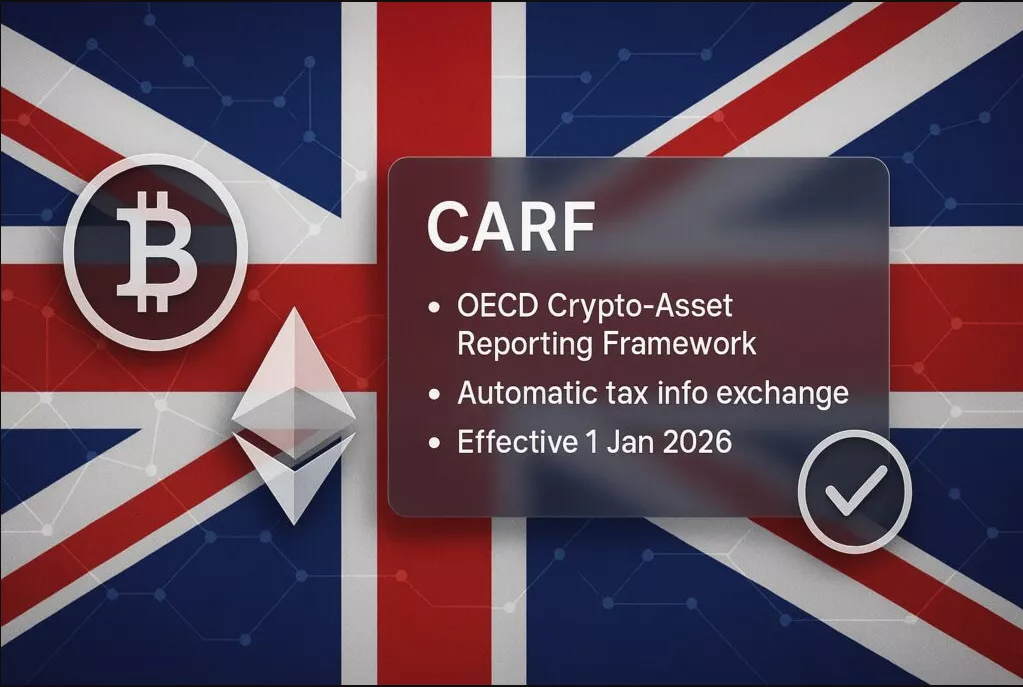
Starting January 1, 2026, the rules got even tighter with the rollout of the OECD’s Crypto-Asset Reporting Framework (CARF), implemented through the UK’s Reporting Cryptoasset Service Providers Regulations 2025.

Now, crypto exchanges and service providers must collect detailed user info, like names, addresses, and full transaction histories, and send it straight to HMRC.
The first reports cover 2026 and are due by May 31, 2027, with annual reporting after that. By 2027, HMRC will have data pipelines from 67 countries, making it almost impossible to hide anything.
Fail to provide your details to a provider? You could face immediate fines of £300, plus up to £60 per day until you comply. Penalties for providers and users range from £100 to £5,000, depending on the issue.

This isn’t just about big players, it’s every transaction reported, creating a surveillance-like system that ramps up scrutiny. HMRC expects a surge in compliance checks, using this data to chase down unpaid taxes more aggressively than ever.
A Hostile Banking and Operating Environment
Beyond taxes, the whole ecosystem feels stacked against crypto investors. Traditional banks often flag any crypto-related transactions as suspicious, leading to frozen accounts or outright closures.
Even if everything is legal, you might get interrogated about your funds’ origins. A recent report from the UK Cryptoasset Business Council highlights this “debanking” trend: 80% of exchanges say more customers are facing blocks or limits on transfers, and 70% call the banking environment more hostile than last year.
Around 40% of payments to crypto platforms get blocked or delayed, with one exchange reporting nearly £1 billion in declined transactions. This isn’t just inconvenient—it drives companies away.
Firms like Gemini, Binance, and Bybit have already exited the UK market, and fintech investment has dropped 43% due to the chill.
The Financial Conduct Authority (FCA) adds to the pressure with strict rules on crypto operations, including bans on certain exchanges and constant demands for re-KYC and document uploads.
New regs coming in April 2026 require 90-day notices for account closures, but they don’t cover freezing orders in investigations.
Investors end up migrating platforms, dealing with interruptions, and feeling like criminals for handling their own money.
Posts from the bitcoinuk
community on Reddit
One Reddit user summed it up perfectly:
“Honestly, trying to engage in crypto in the UK is like asking to get punished for touching your own money. The banks and government don’t just make it hard, they punish you for trying. And after all the risk you took, and all the time you spent navigating this space, they still feel entitled to a cut of your gains. You’re expected to comply with thousands of tax rules—many of them unclear or outdated—and if you’ve done anything even remotely advanced in crypto, the software that’s supposed to help is flat-out not good enough. You’ll spend hundreds of hours manually adjusting transactions that the software mislabels or ignores completely. And chances are, you’ll still end up paying an accountant just to make sure you’re ‘doing it right.’ Then you try to withdraw your money, and your bank flags the transaction, interrogates you, and might just shut down your account. Doesn’t matter if it’s legal. Doesn’t matter if it’s your money. You’re treated like a criminal for cashing out of crypto. Meanwhile, the FCA bans exchanges, so you’re constantly forced to migrate and re-KYC, re-upload documents, and hope the next one doesn’t get axed too. Crypto in the UK isn’t just inaccessible—it’s actively hostile. You take all the risk, do all the work, and the government still swoops in like they done all that work for you.”
Via Reddit
This sentiment echoes across forums and reports, where investors complain of the endless hurdles and punitive vibe.
The UK government insists these measures ensure everyone pays their fair share and curb illicit activities like money laundering. But for many investors, it feels like the system is built to punish rather than support.
You take the risks, manage the volatility, and then face a barrage of taxes, fines, and freezes while the authorities claim your gains with ease.
As enforcement ramps up in 2026 and beyond, the question is: Will this drive innovation away, or force a rethink? If you’re in crypto in the UK, staying compliant is key, but it’s clearer than ever that the deck seems stacked against you.










Leave a Comment