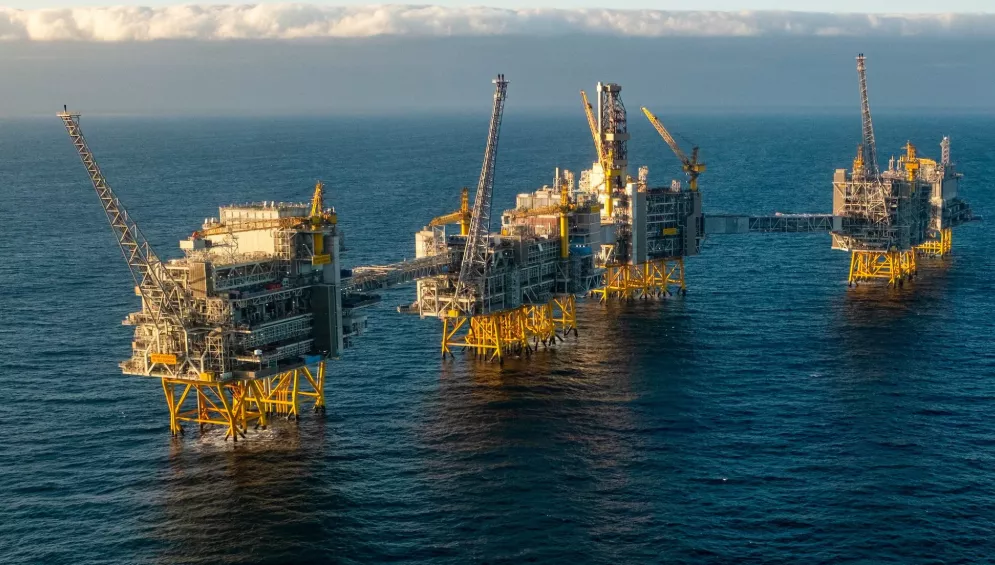
The UK North Sea windfall tax has moved from an emergency measure to a central battleground in Britain’s energy policy, with headline tax rates now reaching as high as 78 percent and a wide debate over whether the levy is protecting the public purse or hollowing out a strategic industry.
The policy framework at the heart of that debate is the Energy Profits Levy, the extraordinary charge added to the existing corporate and supplementary taxes on petroleum profits. Energy Profits Levy began as a 2022 emergency response to the spike in global energy prices after Russia’s invasion of Ukraine.
What started as a temporary 25 percent emergency levy has been raised, extended, and layered on top of the normal tax regime so that qualifying North Sea profits can face a combined headline rate of roughly 78 percent.

That figure, corporation tax plus supplementary charges and the EPL, is now one of the highest effective petroleum tax burdens in the world.
The levy’s structure includes automatic safeguards intended to prevent long-term damage to investment. The Energy Security Investment Mechanism sets price thresholds tied to six-month average commodity prices.
For the 2026 27 financial year, those thresholds were set around $78.65 per barrel for crude oil and 61p per therm for gas. When six-month averages fall below those trigger points, the levy is designed to switch off or scale back so that routine profit margins are not taxed as windfall.

Those circuit breakers acknowledge a central tension: windfall taxes are meant to capture extraordinary rents, not to become a permanent levy on ordinary returns.
That tension plays out against stark production and investment data. UK North Sea output has been in long-term decline: official trajectories put daily production down from roughly 1.6 million barrels in 2009 to about 564,000 barrels by 2025, with projections showing further falls unless new investment reverses the trend. The industry points to mounting marginal economics.
Several major operators have publicly scaled back plans or flagged strategic reviews of their UK portfolios; observers estimate roughly £15 billion of North Sea investment has been deferred in recent years, a patient sum that represents postponed projects, delayed infrastructure, and lost opportunities for job creation.

The human and regional costs are already visible. Operators have cut staff and contractors, one large company recording more than 600 redundancies since 2023, while sectorwide monthly job losses in the high hundreds have been reported in some periods as activity and supply-chain work dries up.
Those employment effects concentrate in communities around Aberdeen and other Scottish supply hubs, producing acute political pressure on ministers who must weigh national climate commitments against local economic disruption.

Political positions on the levy divide sharply and shape the policy’s future. The current Labour government says it wants to maintain revenue while providing certainty for industry, but internal and external debates are loud. Rachel Reeves and Treasury officials stress the need to balance fiscal receipts with long-term competitiveness.
Critics on the right argue the EPL is punitive and risks capital flight, while environmental voices see a high windfall tax as an instrument to accelerate the energy transition. Reform UK has called for abolition, the Green Party favours permanent heavy taxation on fossil rents, and regional actors in Scotland press for measures that protect jobs.
Internationally, the UK now sits near the top of the taxation table for petroleum jurisdictions. Comparisons with Norway, Australia, and other producers show different trade-offs. Norway captures large rents but does so in a system that includes sizeable uplift provisions and production incentives.

Australia’s PRRT is profit-based and offers different allowances. The UK approach, price-triggered windfall capture layered on an already ring-fenced tax base, has proved politically expedient but financially and operationally heavy for firms weighing marginal projects.
That calculus has prompted Treasury officials and industry groups to explore alternatives. One proposal under discussion is an Oil and Gas Price Mechanism intended to replace the current emergency structure with a more predictable framework.
Under draft parameters, the OGPM would keep a baseline tax while reducing the windfall capture rate and raising the activation thresholds so that only truly exceptional price spikes trigger high levies.

Proposals sketched in recent debates suggest a model that captures windfalls above a $90 per barrel trigger but levies a lower surcharge than the current peak EPL, and that includes enhanced investment allowances and clearer grandfathering rules for projects already underway.
Designing an effective replacement is technically difficult. Price thresholds must be set so the mechanism fires in genuine windfall periods without reacting to transitory volatility.
Six-month averaging helps blunt short spikes, but the policy must also be calibrated to avoid creating cliff edges that spur pre-emptive project shutdowns.

Industry negotiators stress the importance of transition arrangements, saying investors need clear timetables and protections for sanctioned projects. Union and regional actors insist any change must protect jobs and local supply chains.
The fiscal trade-off is stark. EPL receipts have delivered substantial near-term revenue, modelling put collections in the billions, funds that help finance wider government commitments.
But that immediate fiscal gain risks long-term revenue erosion if the tax accelerates field abandonment and deters new development. Economic modelling warns of a feedback loop: higher marginal tax rates reduce investment, which in turn reduces taxable activity, leaving the public worse off in the long run.

Beyond tax mechanics, the policy conversation intersects with strategic energy security concerns. Declining domestic production at scale raises import dependence, exposing the UK to global market volatility and geopolitical risk.
Policy makers point to the need to preserve certain domestic capacities during the energy transition to ensure resilience and to retain infrastructure that can, in time, support hydrogen, carbon capture, and offshore renewables. Prematurely discarding that industrial base could strand assets and increase the cost of achieving net-zero objectives.
Given those competing pressures, the most politically and economically sustainable path may be a graduated transition, a clear timetable to replace emergency levies with a calibrated OGPM that retains a modest windfall capture function, but raises triggers and strengthens investment allowances and certainty measures.
Such a compromise would aim to protect Treasury receipts in high-price scenarios while giving firms the confidence to sanction projects and retain skilled workforces.
The UK experiment with a high windfall tax offers a lesson in policy design. Emergency measures are politically useful in a crisis but difficult to unwind. If the goal is to secure revenue without permanently damaging industrial capacity, the next phase must combine credible thresholds, investment incentives, and explicit transition management for affected regions.
Otherwise, the immediate fiscal gains from a 78 percent headline rate may prove fleeting, paid for by lost output, lost jobs, and diminished capacity to respond to future shocks.







Leave a Comment