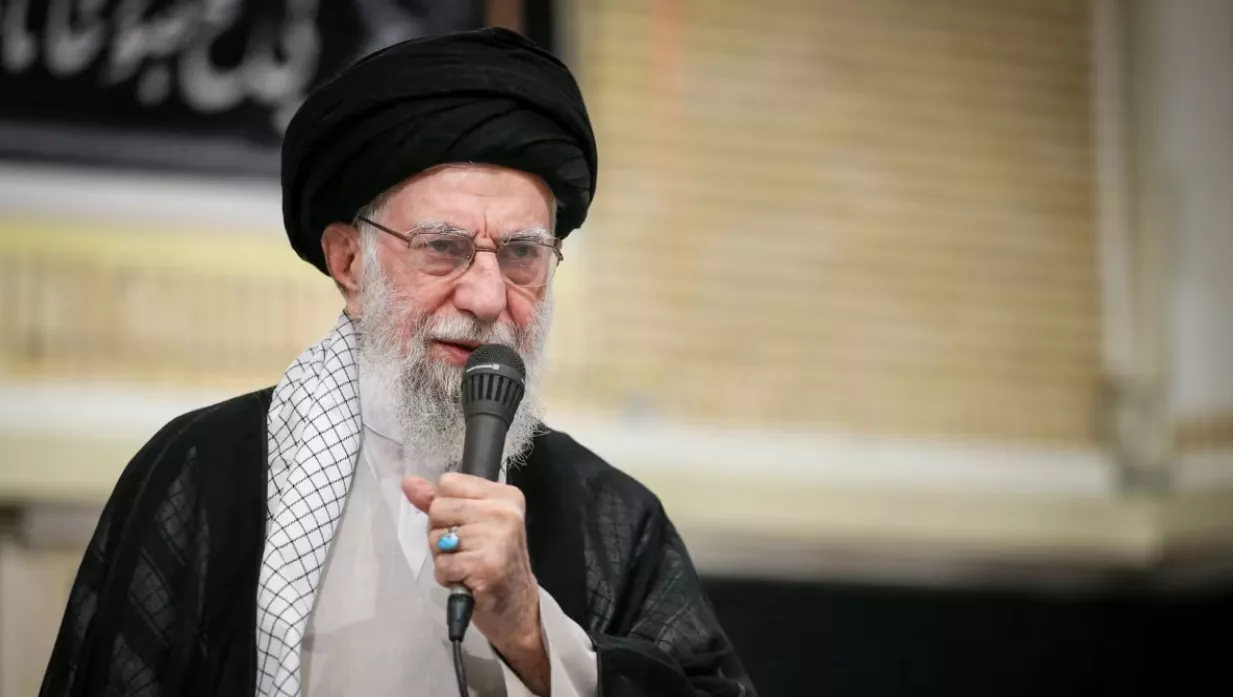
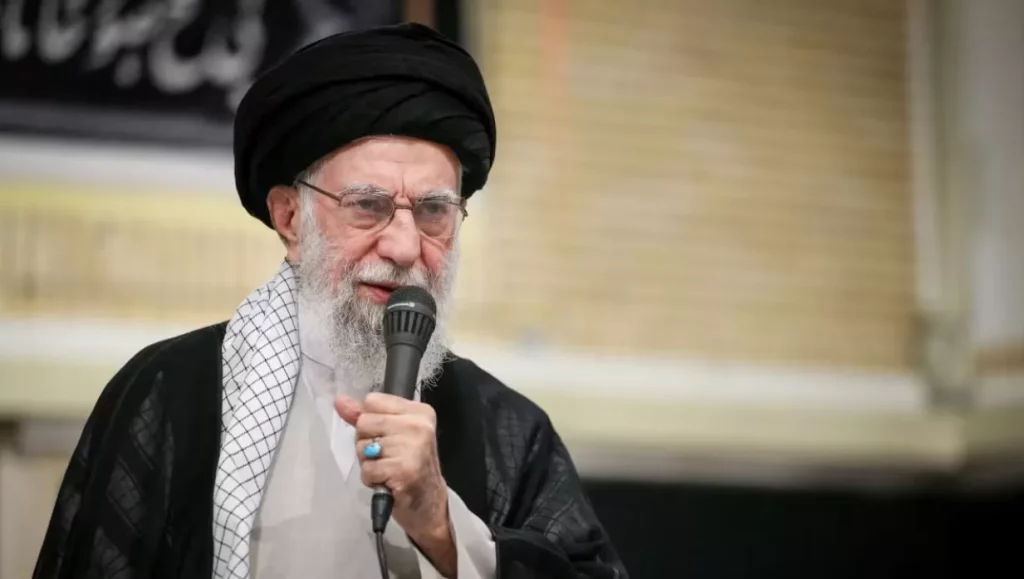
Ali Khamenei was killed when a precision strike hit his compound in Tehran in late February 2026, according to multiple international and Iranian reports.
The operation, described publicly by officials as a coordinated move by the United States and Israel, also struck several senior security sites and killed other high-ranking figures, instantly shattering the aura of continuity that had underpinned Tehran’s leadership for decades.
The capital erupted with grief and fury; state institutions moved quickly to secure the streets and control messaging while mourning was declared nationwide.
Within hours, the regime’s security apparatus moved to consolidate power and signal retaliation. The Islamic Revolutionary Guard Corps vowed a harsh response, and allied networks across the region began striking at targets associated with the attackers.
Communications in and out of the city were tightly controlled as officials prioritized securing command of the armed forces and preventing large-scale unrest, while rumours and conflicting reports circulated about the scale and origin of the strikes.
Constitutionally, responsibility for choosing a successor rests with the Assembly of Experts, an 88-member clerical council empowered to pick a new supreme leader. In practice, however, succession is as much about who controls the instruments of force and the levers of patronage as it is about legal procedure.

If the Assembly can convene quickly and present a consensus candidate, a relatively orderly transition is possible; if it cannot, the vacuum will be filled by the actors who already hold guns, funds and communications.
Analysts and regional sources have pointed to a narrow set of outcomes: a consensus cleric chosen by the Assembly; a collective clerical council that shares power; or a transition effectively managed by the security elite with a figurehead in place.
One name that has circulated in open reporting is Mojtaba Khamenei, the supreme leader’s son, but any move toward hereditary succession would risk deep backlash within the clergy and the officer corps.
Whichever path is taken, the immediate imperative for whoever holds authority will be to secure loyalty from checkpoints, the state media apparatus and the security services.
The impact of the killing is already visible beyond Tehran. Global markets reacted to the sudden spike in regional risk, insurers and shipping companies reassessed routes in the Gulf, and diplomatic capitals shifted into emergency mode as allies sought to calibrate responses and avoid a wider war.
International media outlets, including major agencies that first reported the strikes, raced to corroborate details, but the fog of the initial hours left many operational questions unanswered and legal debates about the strike’s legitimacy and consequences only beginning.
On the ground in Iranian cities, authorities face a dual challenge: domestically containing unrest in places where discontent has been visible in recent years, and demonstrating that the state still functions.
Public displays of mourning will be orchestrated to project unity, but spontaneous protests or factional clashes among elites could reveal fractures that the leadership cannot easily mend.

The security services’ willingness to use force and the public’s tolerance for it will shape whether the coming weeks produce a managed handover or a prolonged period of instability.
Regionally, the danger is that tit-for-tat attacks escalate into a broader conflagration that draws in proxies and partner states.
Ports, bases, and shipping lanes are vulnerable pressure points that can be targeted without open declarations of war, and non-state groups aligned with Tehran may intensify operations that force direct responses.
Diplomatic backchannels will be crucial in the short term to prevent miscalculation, even as officials publicly posture and issue threats.
For readers watching what comes next, the key signals to track are who actually controls security and communications in the capital, whether the clerical Assembly can meet and produce a clear successor, and the tempo of military actions across the region.
The constitutional framework names the institution that should pick the next supreme leader, but power on the ground will determine how closely practice follows law.
In either case, the killing of the supreme leader rewrites Tehran’s political map overnight and leaves a cascade of uncertain outcomes for Iran and its neighbours.




Leave a Comment