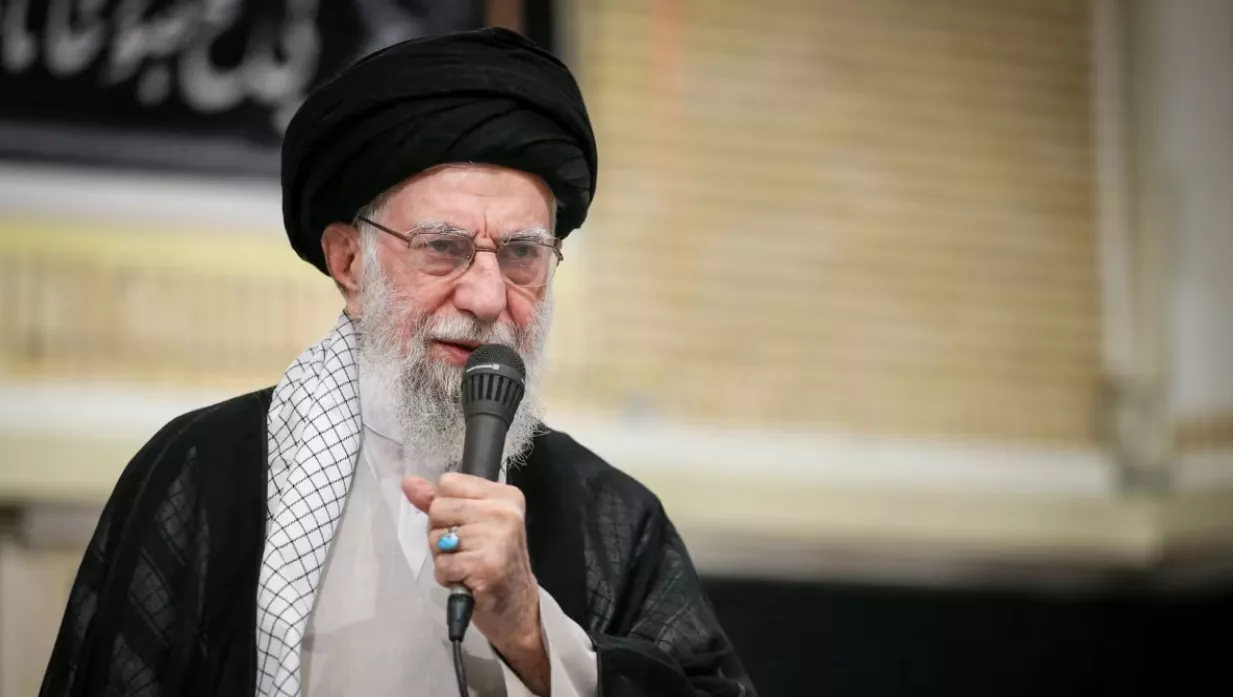
Ali Khamenei was killed when a precision strike struck his compound in Tehran late in February 2026, an operation that major outlets report was carried out in coordination between the United States and Israel.
The attack tore through the carefully managed fiction of continuity around Iran’s highest office, killing senior officials and touching off immediate promises of revenge from Tehran’s security establishment.
The speed and scale of the strikes, and the fact that they hit the heart of the regime, sent shockwaves through capitals, markets, and city streets around the region.

Within hours, the Islamic Revolutionary Guard Corps vowed retaliation, and Iranian forces and allied groups began striking targets associated with the attackers, escalating a tit-for-tat dynamic that quickly pulled in neighboring states and U.S. force posture across the Gulf.
Cities across Iran experienced panic, fuel and cash shortages, and disrupted communications as authorities moved to secure strategic installations and control public messaging.
The immediate pattern, a high-value decapitation strike followed by rapid, asymmetric counterattacks, has amplified public fears that what began as a targeted operation could cascade into a broader war.
Iran’s constitution names an 88-member clerical body, the Assembly of Experts, as the institution that must choose the next supreme leader. In practice, succession is political as much as legal: who controls the capital’s security hubs, the loyalty of the armed forces and the levers of state media will matter as much as clerical votes.
The Assembly is obliged to act “as soon as possible,” but convening, vetting candidates, and managing elite bargaining under the pressure of open conflict is a fraught task that can produce either a quick consensus or a prolonged power struggle.
Analysts outline a narrow set of likely outcomes: a single cleric chosen quickly by the Assembly; a collective clerical council to share authority; or a de facto security-elite managed transition with a figurehead in place.
Names circulating in open reporting include close insiders such as Mojtaba Khamenei, the supreme leader’s son, a choice that would be controversial and could provoke elite or popular backlash, but nothing is settled and any attempt at hereditary succession would risk deepening factional splits. Control of checkpoints, intelligence networks and key communications will determine which scenario unfolds.
The international fallout is already material. Oil markets spiked and trading desks re-priced risk as tanker routes, insurance costs, and output plans were reassessed; operators and governments warned of disruptions to shipments through the Gulf.

Tehran’s announcement that it had closed or threatened to close the Strait of Hormuz, the narrow conduit that carries a large share of the world’s seaborne oil, raised the prospect of acute supply shocks and pushed diplomats and traders into emergency mode.
Those economic ripples are matched by diplomatic churn: emergency briefings, calls between allied capitals, and public statements that both justify and condemn the strikes have replaced routine foreign policy.
On the ground, the human reaction is split between grief, anger, and fear. State-orchestrated mourning will aim to reclaim the narrative, but decades of protests and recent unrest mean spontaneous demonstrations and localized clashes are a genuine risk.

Citizens queuing for fuel and cash, travelers stranded, and families unsure of the fate of loved ones in service or overseas have turned a geopolitical shock into an immediate social emergency.
The mix of asymmetric proxy violence, targeted strikes against bases and shipping, and direct attacks on partner facilities raises the odds that a local confrontation could widen unless diplomatic backchannels quickly reduce the risk of miscalculation.
Why many ordinary people now fear a slide toward the kind of general European-style world war the term “World War III” evokes is simple: the combination of a direct strike on a sitting head of state, rapid and public promises of revenge, and the dense web of alliances and proxies across the Middle East creates a matrix of escalation points.
A single misfired strike, a badly timed retaliation, or an over-publicized mobilization by a foreign power could push the crisis past the tipping point.
Equally plausible is a managed, cold-to-hot transition in which confrontation is intense but limited to asymmetric and regional battlegrounds; the difference will come down to command control in Tehran and restraint among the states most exposed to immediate blowback.
What to watch next: whether the Assembly of Experts can convene and produce a candidate; which institutions control the capital’s communications and security hubs; the tempo and targets of military actions across the Gulf and Levant; and near-term moves in oil markets and shipping that will translate geopolitical risk into economic pain.

The killing of the supreme leader removes a central node in Iran’s power architecture overnight; how quickly that node is replaced, legally, politically, and practically, will determine whether the region slips into prolonged, wider conflict or finds a path back from the brink.







Leave a Comment