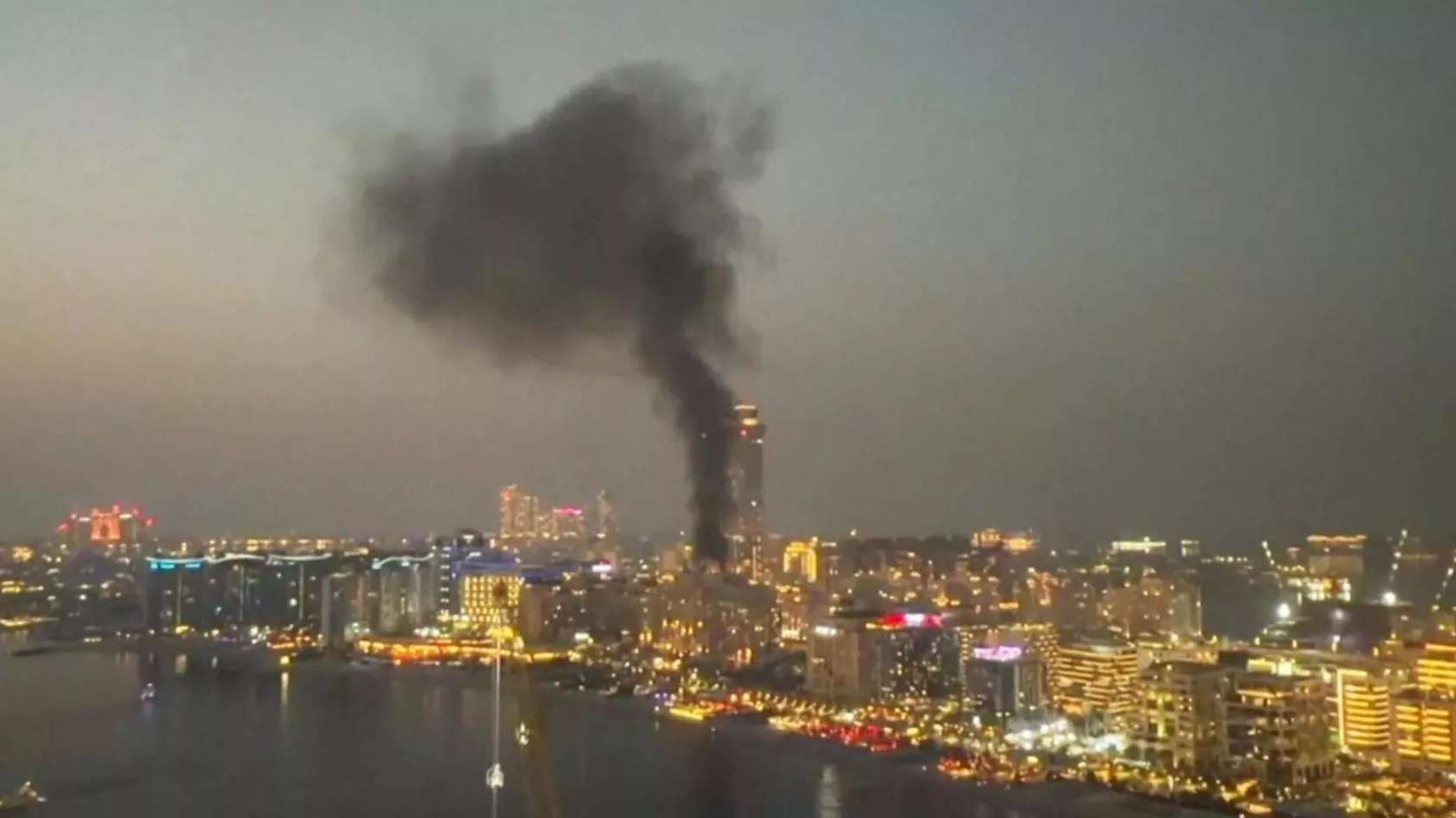
In the opening days of the recent escalation, missiles and drones launched from Iranian-controlled territory struck targets across the Gulf, with debris and intercepted warheads falling in and around Dubai’s port and industrial zones.
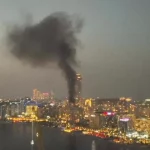
Satellite imagery and on-the-ground reporting show damage to infrastructure near Jebel Ali and smoke over parts of the city, underscoring that this is not a theoretical threat but a tangible disruption to one of the world’s busiest trade hubs.
Those strikes are not aimed at the Emirates as a standalone enemy; they are part of a wider, rapidly unfolding confrontation between Tehran and a coalition of opponents that includes the United States and Israel. Iran describes its actions as retaliation for sustained strikes and pressure on its territory and assets.

In this pattern, Tehran has been striking sites tied to U.S. military presence and allied operations across the region, including at times infrastructure in countries that host those assets, which is why places like Dubai and other Gulf cities have been caught in the crossfire.
Regional reporting and eyewitness accounts make clear the linkage: these are retaliatory moves inside a broader theatre of conflict.
Dubai and the UAE as a whole are affected by three simple, connected reasons. First, the UAE hosts Western-aligned facilities and has grown closer to Israel diplomatically and economically in recent years; that association makes it strategically relevant in Iran’s calculations.

Second, Dubai is a global economic hub, hitting port, aviation, or financial infrastructure sends a strong message and has immediate economic ripple effects.
Third, many of the recent Iranian strikes have been directed at assets and supply lines that support Western military activity or regional partners; because the UAE is part of that logistics and diplomatic network, it becomes a target of opportunity in a tit-for-tat campaign, not necessarily the primary adversary.

Reporting that traces specific strikes across the Gulf shows this pattern of targeting and the practical logic behind it.
The UAE government has responded quickly and forcefully. Officials have condemned the strikes as dangerous escalations that put civilians at risk, and the foreign ministry moved to withdraw its diplomatic mission from Tehran amid strong language about unacceptable attacks on its territory.
UAE agencies and its armed forces say they have intercepted several incoming missiles and drones, and they have publicly stressed that the Emirates should not be treated as a base for attacks on Iran, a point they have repeatedly made to international partners while urging de-escalation through diplomacy.

Those official statements make the UAE’s position clear: it wants protection and reassurance from allies, and it is seeking to avoid being dragged into a full bilateral war with Iran.
On the ground, the consequences are immediate and practical. Major carriers temporarily halted scheduled flights, airports limited operations and focused on repatriation flights, and shipping and logistics faced interruptions.
Dubai’s image as an always-safe commercial center was shaken, with insurers and international businesses watching closely for further disruption.

Those disruptions are already feeding into measurable economic risks, from tourism to port throughput, because a strike near a major port or airport imposes real costs and insurance complications almost overnight. International airlines and aviation authorities have been moving cautiously while the security picture remains unpredictable.
So when will the strikes stop? There is no simple calendar date. Wars and escalatory campaigns like this end when the political and military incentives that drive them change.
There are three realistic pathways to de-escalation. One is an immediate, negotiated ceasefire reached through outside mediation, where all parties agree to stop attacks in exchange for concrete concessions or guarantees.
A second is a show of force or credible deterrence by one side sufficient to convince the other that continued strikes are too costly; this is unstable and carries the risk of further escalation.
The third is a messy cycle where battlefield or geopolitical fatigue, domestic pressure, and international sanctions gradually reduce the appetite for continued action, that process can take weeks to months and is unpredictable.
Senior international actors are already trying to broker a lower heat and to communicate red lines; diplomatic exchanges, including offers to relay complaints and press for restraint, suggest that back-channel and state-level pressure will be central to any pause.
The Kremlin’s immediate pledge to pass the UAE’s concerns to Tehran is one example of how outside parties are being asked to help cool things down.
Readers should understand what that means in practice: if the UAE and other Gulf states receive credible security assurances, if attacks on Iranian soil stop, or if an identifiable source of strikes against Iran is restrained, Tehran has a political opening to de-escalate.

Conversely, any new strikes on Iranian cities, military or nuclear sites, or fresh covert operations will likely trigger further Iranian retaliation.
Analysts warn that the conflict’s arc will be shaped more by diplomatic pressure and the calculations of major powers than by any single local event; the Gulf emerging from this crisis will be different in terms of security posture and economic policy depending on how long the tit-for-tat continues.
For the people and businesses in Dubai and across the UAE, the immediate priorities are clear: protect civilians, secure critical infrastructure, keep supply chains moving where possible, and push for diplomatic channels that can restore predictable security.
For outsiders trying to make policy sense of it all, the key takeaway is that Iran’s strikes are a response to a broader war-of-influence and military contest.
They are designed to impose cost, demonstrate reach, and influence calculations, and they will stop only when those calculations change, either through negotiation, deterrence, or exhaustion. International pressure and mediation matter; so do credible security guarantees to Gulf states that they will not be punished for hosting partners.







Leave a Comment