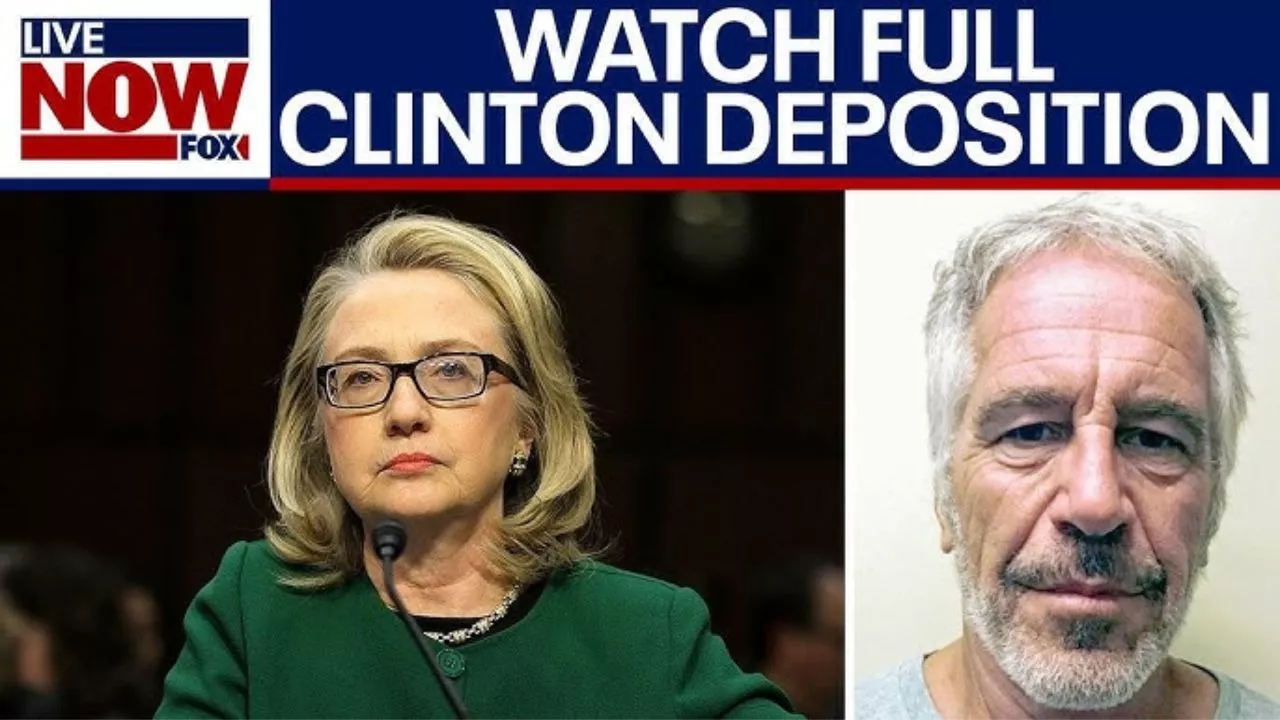
On 2 March 2026, the Republican‑led House Oversight Committee made public hours of video recordings showing the depositions of Hillary Rodham Clinton and Bill Clinton as part of Congress’s ongoing investigation into the late financier and convicted sex offender Jeffrey Epstein and his network, including his associate Ghislaine Maxwell.
The footage had previously been taken behind closed doors but was released online so the public could see, in full, what each of the Clintons told lawmakers under oath.
Both sessions were long and detailed. Each deposition lasted about four and a half hours, with cameras fixed on the witness as they were questioned by members of the committee.

The interviews took place at the Clintons’ home area in Chappaqua, New York, and were conducted in late February after months of negotiations over subpoenas and testimony format.
In his deposition, Bill Clinton repeatedly denied any knowledge of Epstein’s criminal conduct. He told the committee he first met Epstein in the early 2000s, when he accepted the use of Epstein’s private jet for Clinton Foundation humanitarian work after a recommendation from an associate.
He emphasised he had severed ties well before Epstein’s 2008 conviction for soliciting prostitution from a minor and denied ever witnessing inappropriate behaviour or discussing sex with Epstein.
During the session, lawmakers showed photos and documents linking him to Epstein events and acquaintances. Clinton explained again that appearing in Epstein‑associated materials did not indicate wrongdoing, maintained he saw nothing improper, and said he would have acted if he had known about abuse happening.
Some exchanges also touched on conversations with Donald Trump from two decades earlier, which Clinton said did not suggest any improper conduct by the current president either.

Clinton was shown images of himself in a hot tub and pool in the Epstein files. He said he did not know the unidentified woman in the hot tub photo and that the image was taken during a trip connected to charitable work in Brunei, not at Epstein’s private island.
Hillary Clinton’s deposition was tense at times. She told lawmakers she could not recall ever meeting Jeffrey Epstein and maintained she had no relationship, communication, or direct involvement with him. She said she knew Ghislaine Maxwell only casually through mutual friends years earlier but did not discuss Epstein with her.
A dramatic moment in her session came when a photo from inside the deposition, taken by Republican Representative Lauren Boebert in violation of committee rules, was shared publicly. Clinton expressed visible anger, threatened to end the deposition, and demanded that if committee members were going to publish images, then the full testimony should be made public. After a brief pause, she returned to continue answering questions.
She also engaged in heated exchanges with some Republicans over other unrelated topics raised during questioning, asserting her positions firmly and at times sharply disputing interruptions or baseless assertions.
Neither Hillary nor Bill Clinton has been accused of wrongdoing in connection with Epstein’s crimes. Their appearance in the Epstein files or inclusion in photos does not, in itself, imply illegal behavior, and both repeatedly sought to distance themselves from Epstein’s criminal acts throughout their testimonies.
The release of the videos was aimed at transparency, after weeks of public interest in the congressionally gathered materials and the Clintons’ initially reluctant cooperation with subpoenas.

Many observers noted that the videos provided significant new material for public review, showing how the Clintons handled direct questioning under oath, and, in the case of Hillary Clinton, how she responded when committee decorum was violated and partisan lines were drawn in the questioning.





Leave a Comment