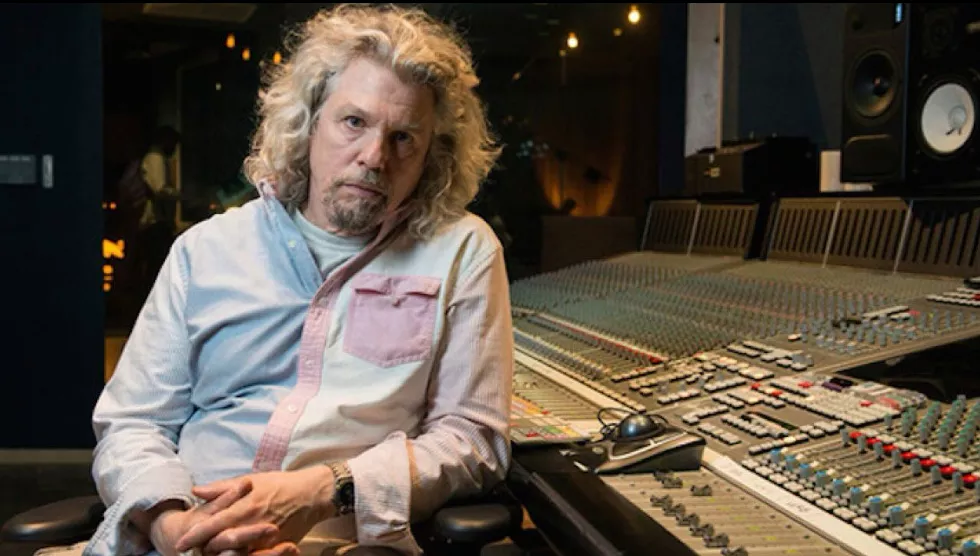
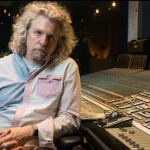
Bob Power, the quietly revolutionary engineer and producer whose fingerprints sit on some of the most influential hip-hop and neo-soul records of the 1990s and 2000s, has died. He was 74.
His death was announced by Okayplayer and widely reported by outlets including the LA Times; no cause of death has been disclosed.
Power’s career bridged musicianship, technical mastery, and a deep musicality that changed how records sounded. He brought heft and clarity to drums and bass lines, earning the nickname “King of the Low End” from admirers who recognized how his mixes could make a track feel both warm and sculpted.

That approach helped define landmark albums such as The Low End Theory and De La Soul’s De La Soul Is Dead, D’Angelo’s Brown Sugar, Erykah Badu’s Baduizm, and Common’s Like Water for Chocolate.
Artists and engineers regularly pointed to Power’s mixes as a blueprint for how to place rhythm and sample material in the service of the song.
Power’s influence runs through the names that followed him. The hip-hop band The Roots even shouted him out in verse, “Coming to New York to mix / It’s Bob Power with the snares and kicks to fix” and his longtime champion Ahmir “Questlove” Thompson called Power the “KING of the Low End,” adding that before Power entered the scene, “Hip Hop was chaotic & muddy, but man, when Bob entered our sonic sphere? Jesus.”

Tributes poured in from across the music world. Producer DJ DJ Premier called Power “one of the iLLest Engineers of all time,” and engineer Young Guru described him as “an absolute legend” and “the man who I patterned my sound after.”
Those endorsements underline how Power’s craft not only improved records but shaped entire careers and aesthetic directions in studio practice.

Power’s path to becoming a go-to engineer was a long and varied one. Born in Chicago in 1952 and raised near New York City, he picked up the guitar as a kid and studied music theory and composition at Webster University in St. Louis.
He worked in jazz, R&B bands, and did a host of session and commercial gigs before a break at Calliope Studios in New York in the mid-1980s put him in the orbit of early hip-hop producers.
From there, he worked with Prince Paul and others who connected him to the burgeoning alternative hip-hop scene.

His discography reads like a who’s who of the era: he engineered and produced for A Tribe Called Quest, De La Soul, D’Angelo, Erykah Badu, Meshell Ndegeocello, Common, and many others, including later work with artists as varied as Ozomatli, Angie Stone, David Byrne, and Brockhampton.
He earned Grammy nominations for his work on Meshell Ndegeocello’s Peace Beyond Passion and India.Arie’s Acoustic Soul, a recognition of both his technical skill and musical sensitivity.
Power also passed on what he knew. He joined the faculty at NYU’s Clive Davis Institute of Recorded Music in 2006, where he taught generations of students until his retirement last year.

Former pupils and colleagues remember him as exacting but generous, someone who insisted on musicality in engineering and a deep understanding of rhythm and space.
What made Power special was not only a set of mixing tricks but an intuitive musical taste. He once said that a track needed to be “rhythmically buoyant” so the rest of the song could breathe, a philosophy that guided his decisions about drum placement, sample treatment, and how bass should sit in a mix.
That artistry made him a favorite collaborator for musicians who wanted records that felt alive yet sonically disciplined.
Details about where Power died, and the precise cause, have not been released by family or representatives. In the absence of that information, the focus has been on his work and the outpouring of respect.
The statements, posts and tributes underline a common theme: Power’s mixes made music clearer and fuller, and he taught others to hear and make records differently.
Survivors include his sister Robin and the many students, engineers, and artists who considered him a mentor and friend.
As memorials and tributes continue, his mixes and the artists he helped shape will keep that influence audible.
For anyone who grew up on the records he touched, the clarity of those bass lines and the snap of those snares will remain a live reminder of what a master engineer can do for a song.









Leave a Comment