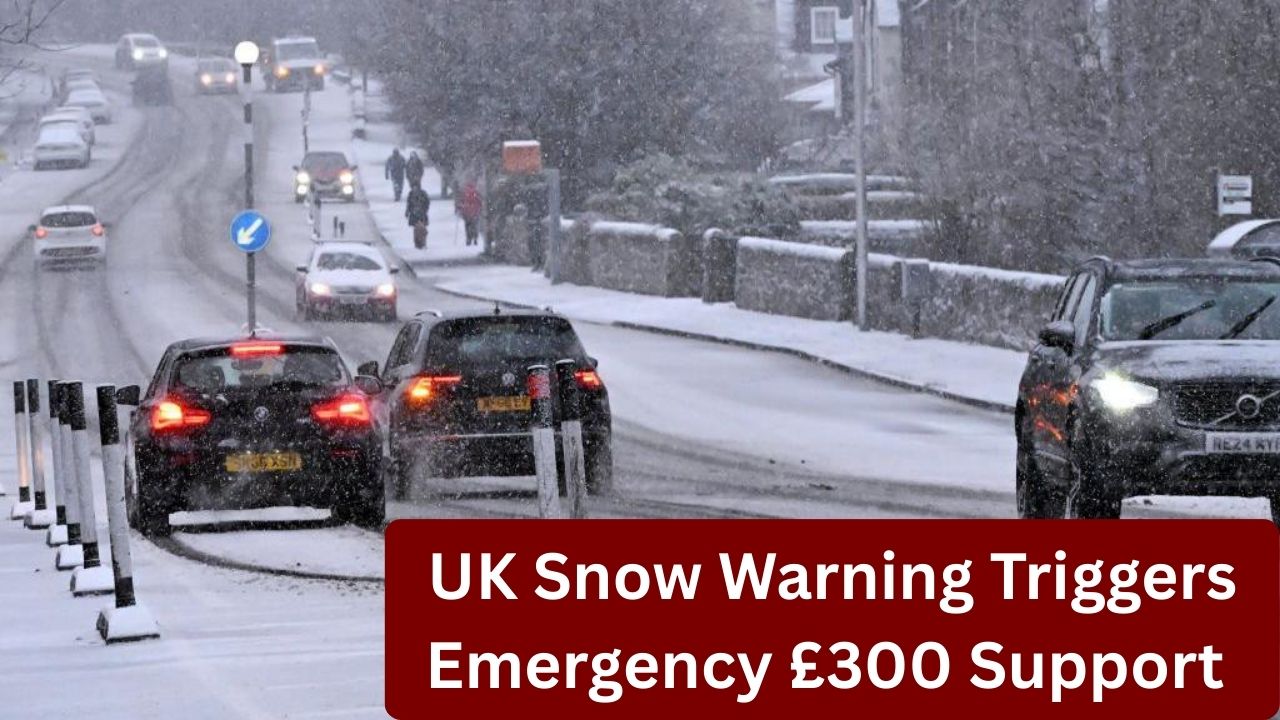
As heavy snow and freezing temperatures sweep across parts of the UK, many households are once again bracing for higher heating bills, travel disruption, and difficult choices about keeping warm. For pensioners and low-income families, winter weather is not just inconvenient — it can be financially frightening.
With new snow warnings issued this week, attention has turned to reports of emergency £300 winter support, prompting a surge in questions: Who qualifies? Is it automatic? And who gets paid first when the cold hits? Here’s what you need to know as winter conditions intensify across the country in 2025.
What’s Changing — And Why Snow Warnings Matter
While dramatic headlines often suggest that snow itself “unlocks” a £300 payment, the reality is more nuanced. The UK operates multiple winter support schemes, some triggered by temperature thresholds and others paid on a seasonal schedule.

Here’s what’s happening during the current cold spell:
- Severe snow and ice warnings have been issued in several regions.
- Temperatures in some postcode areas are forecast to stay at or below freezing.
- This activates weather-linked support for certain benefit claimants.
- At the same time, annual winter payments for pensioners are already in progress.
The confusion comes from the overlap — snow warnings arrive just as winter payments land in bank accounts.
The £300 Payment Explained
The widely discussed £300 support refers to the Winter Fuel Payment, a long-standing scheme designed to help older people cover heating costs during winter.
This payment:
- Is not a new emergency grant
- Is not triggered by a snow warning
- Is paid every winter to eligible pensioners
Most eligible households receive the payment automatically, often before the coldest weather arrives.
Who Gets Paid First When Snow Hits?
When severe cold sets in, the order of payments matters — especially for households relying on weekly benefits.

First: Cold Weather Payments (£25 per cold spell)
The first payments directly linked to snow and freezing conditions are Cold Weather Payments.
These are triggered when:
- Temperatures in a local area average 0°C or below
- The cold lasts for seven consecutive days
For each qualifying seven-day period, eligible households receive £25, paid automatically into the same account as their benefits.

A spokesperson from Department for Work and Pensions said the system is designed to respond quickly when weather conditions pose a risk to vulnerable people.
“Cold Weather Payments exist so families don’t have to choose between heating and eating when temperatures drop sharply,” the spokesperson said.
Second: Winter Fuel Payment (up to £300)
The Winter Fuel Payment is usually paid earlier in the season, between November and December.

It goes to people who:
- Have reached State Pension age
- Meet residency rules
- Have not opted out
Because of this schedule, many pensioners receive their £300 before the worst snow arrives, even though headlines often connect the two.
Real Stories Behind the Policy
For Margaret Lewis, 79, from North Yorkshire, the payment brings reassurance but not luxury.

“When the snow comes, my heating stays on all day,” she said. “The £300 doesn’t cover everything, but it means I’m not panicking every time I see the meter ticking up.”
In contrast, James and Aisha, parents of two in the Midlands, rely on Cold Weather Payments when temperatures plunge.
“When school closes because of snow, everything costs more,” James said. “That £25 might not sound like much, but it pays for heating during the coldest week.”

These stories reflect why the UK maintains two separate systems — one seasonal, one reactive.
Government Statements as Snow Warnings Expand
Officials have stressed that winter support is already built into the system and does not require emergency legislation every time snow falls.
A senior official at the Met Office explained that weather triggers are closely monitored.

“Temperature thresholds are tracked by postcode area. When criteria are met, payments are triggered automatically for eligible claimants.”
Meanwhile, the DWP has urged people not to delay reporting changes in circumstances, as eligibility depends on up-to-date benefit records.
Expert Analysis: Why Timing Matters
Energy analysts say the timing of payments can be just as important as the amount.
- Pensioners receive larger lump sums early, allowing them to budget.
- Low-income working-age households receive smaller payments tied to extreme cold.
- Households facing both low income and high energy use feel pressure first.
One social policy expert noted:
“The system prioritises immediate weather risk through Cold Weather Payments, while Winter Fuel Payments provide seasonal stability for older people.”
In recent winters, millions of Cold Weather Payments have been issued nationwide, particularly during prolonged cold snaps in January and February.
Comparison: Winter Payments at a Glance
| Support Type | Amount | Trigger | Who Receives It | When Paid |
|---|---|---|---|---|
| Cold Weather Payment | £25 per 7 days | 0°C or below for 7 days | Certain benefit claimants | Shortly after cold period |
| Winter Fuel Payment | Up to £300 | Reaching State Pension age | Pensioners | Nov–Dec |
| Warm Home Discount | £150 bill reduction | Eligibility criteria | Low-income households | Applied to energy bill |
What You Should Know Right Now
- Snow warnings do not create a new £300 emergency grant
- The £300 Winter Fuel Payment is annual and scheduled
- Cold Weather Payments are the first support triggered by snow
- Payments are automatic — no application needed if eligible
- Bank accounts used for benefits are where money is paid
If you believe you qualify but have not received payment, the issue is often outdated benefit details rather than missed support.
Questions and Answers: Clearing Up the Confusion
Q1: Is the £300 payment new for winter 2025?
No. It is the existing Winter Fuel Payment paid each year.
Q2: Does a snow warning automatically trigger £300?
No. Snow warnings trigger Cold Weather Payments, not Winter Fuel Payments.
Q3: Who gets money first during severe cold?
Eligible benefit claimants receiving Cold Weather Payments.
Q4: Do I need to apply for Cold Weather Payments?
No. Payments are automatic if conditions are met.
Q5: Can I receive both payments?
Yes, if you meet eligibility for both schemes.
Q6: How long does Cold Weather Payment take to arrive?
Usually within two weeks after the cold period ends.
Q7: Is the £300 taxable?
It may be recovered through tax for higher-income pensioners.
Q8: What if my area is cold but I receive nothing?
Your benefits or postcode details may need updating.
Q9: Are these payments affected by energy price changes?
No, they are fixed amounts set by policy.
Q10: Does Scotland or Northern Ireland differ?
Yes, similar support exists but is administered separately.
Q11: Will there be extra payments if winter worsens?
Only if additional seven-day cold periods are recorded.
Q12: Can working families qualify?
Yes, through Cold Weather Payments if on qualifying benefits.
Q13: Are payments guaranteed every winter?
Winter Fuel Payments are annual; Cold Weather Payments depend on temperature.
Q14: Do snow warnings change eligibility rules?
No, eligibility rules remain the same.
Q15: Where does the money appear?
In the same bank account as your pension or benefits.









Leave a Comment