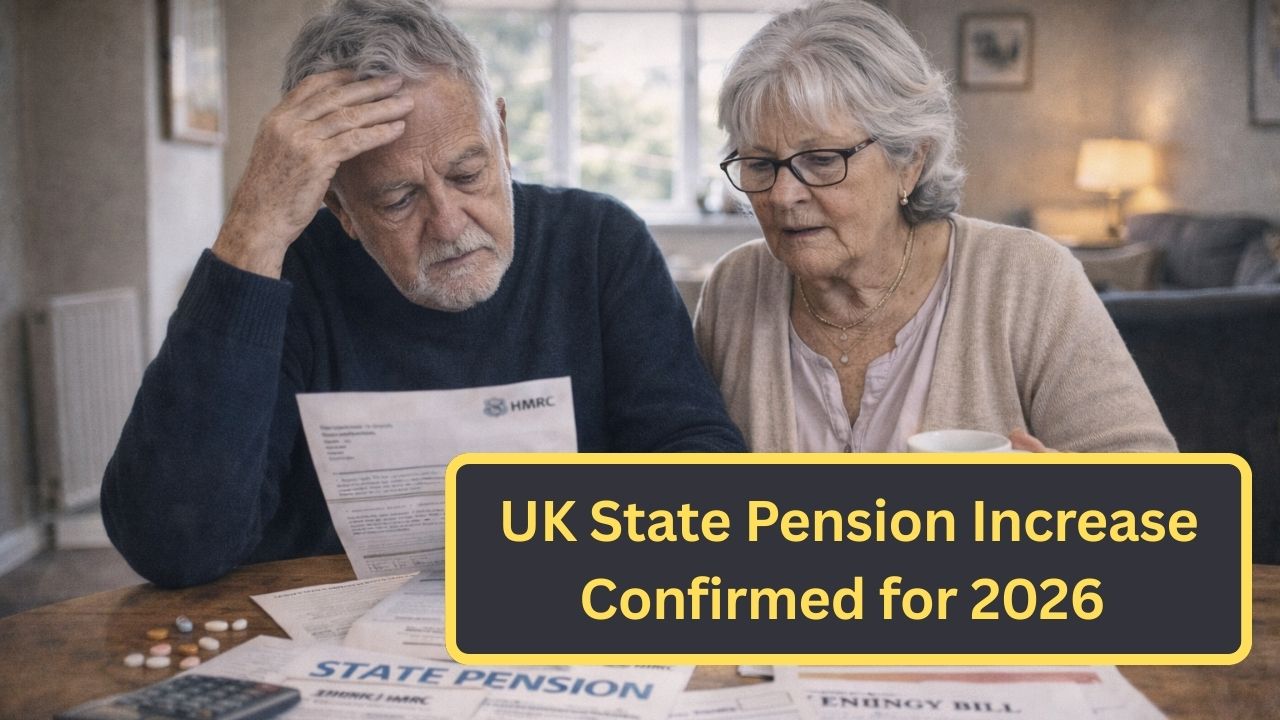
For millions of older people across the UK, the State Pension is the financial backbone of daily life. It pays for food, heating, council tax, and the basics that keep households running. So when the government confirms a pension increase, expectations rise quickly. But as many retirees have learned, the headline increase and the money that actually lands in your bank account are not always the same thing.
The UK State Pension increase for 2026 has now been confirmed under existing rules. While most pensioners will see a rise, the real-world impact depends on tax, personal circumstances, and rising living costs.
Here’s a clear explanation of what the 2026 increase means — and what retirees will actually receive.

The 2026 State Pension Increase: The Big Picture
The UK State Pension continues to rise under the triple lock system, which links annual increases to the highest of:
- Average earnings growth
- Inflation (CPI)
- A minimum guarantee
For 2026, this mechanism has triggered another increase, meaning both the New State Pension and the Basic State Pension will rise from April.
The increase is applied automatically — no application is required.

Headline Rates vs Real Take-Home Pay
One of the biggest sources of confusion is that State Pension increases are always quoted as gross figures.
What retirees actually receive depends on:
- Whether they pay income tax
- Any other income, such as private pensions or employment
- Whether tax is deducted via PAYE
- Changes to personal tax allowances or thresholds
As a result, some pensioners will see less than the advertised increase, while others may notice little difference week to week.

Tax: Why Some Pensioners Lose Part of the Increase
The State Pension is taxable income, even though tax is not deducted at source for many people.
In 2026:
- Pensioners with income above the personal allowance may see more tax owed
- Frozen tax thresholds mean more pension income is pulled into tax
- Some retirees will pay tax through adjustments to private pension payments
This means part of the pension rise may be offset by higher tax, particularly for those close to the tax threshold.

Cost of Living Still Outpacing Pension Growth
While the State Pension is rising, many retirees say everyday costs are rising faster.
Key pressures in 2026 include:
- Energy bills remaining high despite support measures
- Food prices staying elevated
- Council tax increases across many local authorities
- Higher water, insurance, and service charges
Even with the increase, many pensioners feel the rise is absorbed immediately by essentials.

Who Benefits the Most From the 2026 Increase
The increase has the biggest impact on pensioners who:
- Rely primarily on the State Pension
- Pay little or no income tax
- Have no significant private pension income
- Live in lower-cost areas
For these households, the increase provides genuine breathing space — even if modest.
Who May See Less Than Expected
Some pensioners will not feel the full benefit if they:

- Pay income tax on their pension
- Receive private or workplace pensions
- Have deductions or adjustments applied
- Are affected by frozen tax thresholds
In these cases, the increase still applies — but the net gain is smaller.
Government Position on the 2026 Increase
Ministers say the State Pension continues to be protected and remains one of the most generous systems in Europe when uprated annually.
They point out that:

- Increases are automatic
- The triple lock remains in place
- Pensioners are shielded from the worst of inflation compared to fixed-income systems
However, charities and advocacy groups argue that annual increases alone no longer reflect the real cost of retirement, particularly for single pensioners and renters.
What Retirees Should Check Now
To understand what you will actually get in 2026, pension experts recommend:
- Checking whether your total income exceeds the tax-free allowance
- Reviewing any tax codes applied to private pensions
- Watching for letters from HMRC about tax adjustments
- Comparing your April 2026 payment with March
- Seeking advice if the amount looks wrong
Small changes in tax treatment can make a big difference.

Common Misunderstandings About the Increase
- The increase is not paid as a lump sum
- Everyone gets the same percentage rise, but not the same cash result
- The increase does not cancel out all cost-of-living pressure
- Tax can quietly reduce the headline gain
Understanding these points helps avoid disappointment.
Q&A: UK State Pension Increase 2026
1. Is the State Pension increasing in 2026?
Yes, from April 2026.
2. Is the triple lock still in place?
Yes, it continues to apply.
3. Do I need to apply for the increase?
No, it’s automatic.
4. Will everyone get the same amount?
No — it depends on pension type and tax.
5. Is the increase taxable?
Yes, like the State Pension itself.
6. Why might my increase seem small?
Tax and frozen thresholds reduce net gains.
7. Does this affect Pension Credit?
It can, depending on income levels.
8. Are private pensions affected?
No, but they affect tax.
9. When will the increase start?
April 2026.
10. Will payments be backdated?
No — they rise from the start date.
11. Can the increase be delayed?
No, unless there is an error.
12. Does it help renters enough?
Many groups say no.
13. Are couples affected differently?
Yes, based on combined income.
14. Can I challenge my payment?
Yes, if it appears incorrect.
15. What’s the key takeaway?
The rise helps — but tax and costs matter.









Leave a Comment