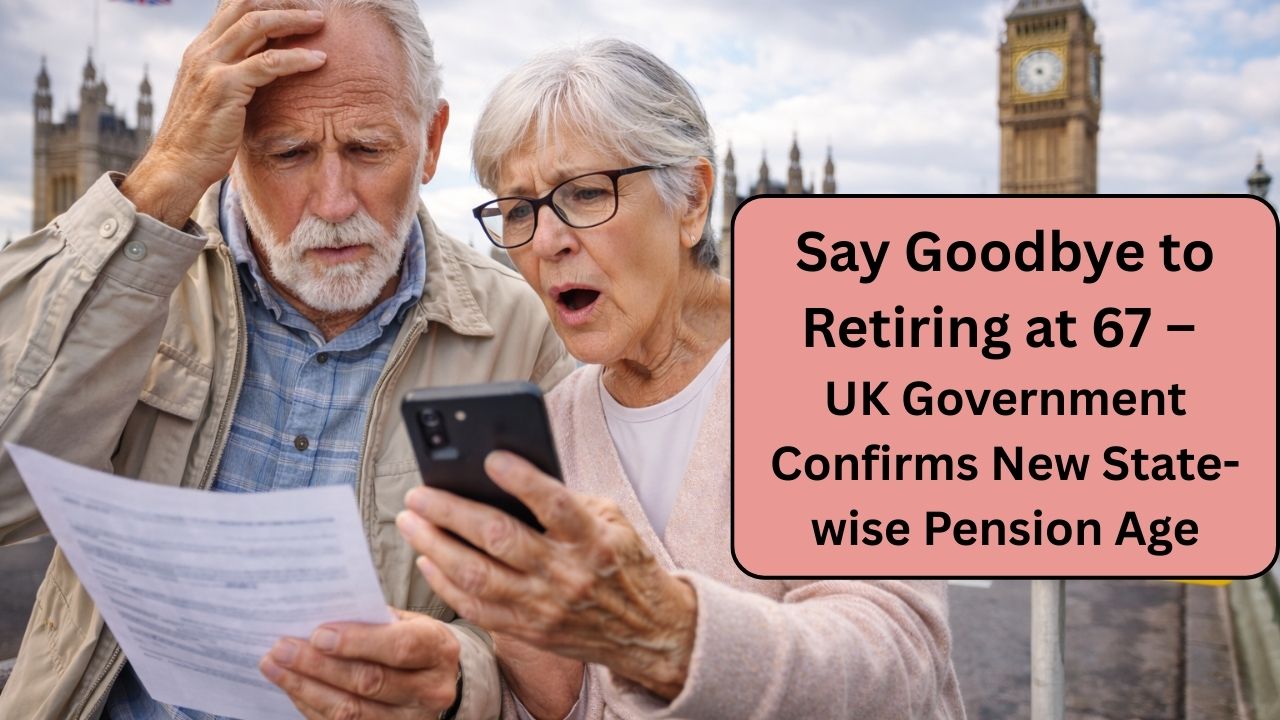
For years, many UK workers have planned their retirement around a simple assumption: the State Pension would arrive at 67, or soon after. But fresh confirmation from the government has reignited anxiety among millions approaching later life, with headlines suggesting the end of retiring at 67 altogether.
So what has really been confirmed — and what hasn’t?
Despite growing speculation, the UK has not introduced different “state-by-state” pension ages, but it has confirmed plans that could push the State Pension age beyond 67 for future retirees. The impact will depend heavily on date of birth, with younger workers facing the biggest changes.

Here’s a clear breakdown of what the government has confirmed, who is affected, and what comes next.
What the State Pension Age Is Right Now
The State Pension age in the UK is currently:
- 66 for both men and women
This applies nationwide, with no regional or “state-level” variation. The pension is not means-tested and depends on National Insurance contribution records.

The system is overseen by Department for Work and Pensions.
What the Government Has Confirmed
The government has reaffirmed that:
- The State Pension age will rise from 66 to 67
- The increase will be phased in gradually
- It will mainly affect people born between the mid-1960s
- A further rise to 68 is under active review
There is no new law creating different pension ages by region, but there are different pension ages depending on year and month of birth — which is why confusion has spread.

Why “Retiring at 67” May No Longer Apply
While 67 has been widely seen as the next stable retirement age, government reviews now suggest that 67 may only be a temporary milestone, not a long-term endpoint.
Key reasons include:
- Rising life expectancy
- Fewer workers supporting more pensioners
- Rapid growth in State Pension spending
- Long-term pressure on public finances
Officials argue that without further changes, the system may become unsustainable.

Who Will Be Affected First?
The earliest impact falls on people born:
- After April 1960, with increasing effects for those born in the mid-to-late 1960s
What this means in practice:
- Some will see their pension age rise by months
- Others may wait a full extra year
- Younger workers may never retire at 67 at all
The closer someone is to retirement, the less time they have to adapt — making these changes especially disruptive.

What About a Rise to 68?
A rise to 68 has not yet been legislated, but it is actively under review.
What is currently known:
- No final decision yet
- Any change would require new legislation
- Long notice periods are expected
- People born in the 1970s and later would be most affected
The government has stressed that no sudden changes will be imposed without warning.

How This Changes Retirement Planning
If retiring at 67 is no longer guaranteed, many people may need to rethink long-standing plans.
Potential consequences include:
- Working longer than expected
- A gap between leaving work and receiving the State Pension
- Greater reliance on workplace and private pensions
- Increased pressure on savings and health
Those in physically demanding jobs and people with health conditions face the greatest challenges.

Groups Most Likely to Struggle
Experts consistently warn that pension age rises hit some groups harder than others:
- Manual and physically demanding workers
- People with long-term health conditions
- Renters with high housing costs
- Workers with limited private pension savings
For these groups, delaying the State Pension can mean genuine financial hardship.
UK Compared With Other Countries
| Country | Public Pension Age |
|---|---|
| United Kingdom | 66 (rising to 67, 68 under review) |
| Germany | 67 |
| United States | 66–67 |
| Australia | 67 |
| France | 64 |
The UK is not an outlier, but public resistance remains strong.

What People Should Do Now
If you are in your 50s or early 60s, preparation is essential.
Practical steps:
- Check your official State Pension forecast
- Review workplace and private pension access ages
- Build a buffer in case of delayed pension access
- Consider phased or part-time retirement options
- Monitor future pension reviews closely
Planning early can soften the impact of future changes.
Common Questions About the New Pension Age Plans
1. Is the State Pension age already above 67?
No. It is currently 66.
2. Has the government confirmed different pension ages by region?
No. Pension age varies by date of birth, not location.
3. Will everyone retire at 68?
No decision has been made yet.
4. Who is affected first?
People born after April 1960.
5. Can the government change this again?
Yes, following reviews and legislation.
6. Will I get notice before any rise?
Historically, yes — usually many years.
7. Can I still retire earlier?
Yes, but without the State Pension.
8. Is the State Pension means-tested?
No.
9. Does working longer increase the State Pension?
No, but it may boost private pensions.
10. Where can I check my exact pension age?
Through your official State Pension forecast.









Leave a Comment