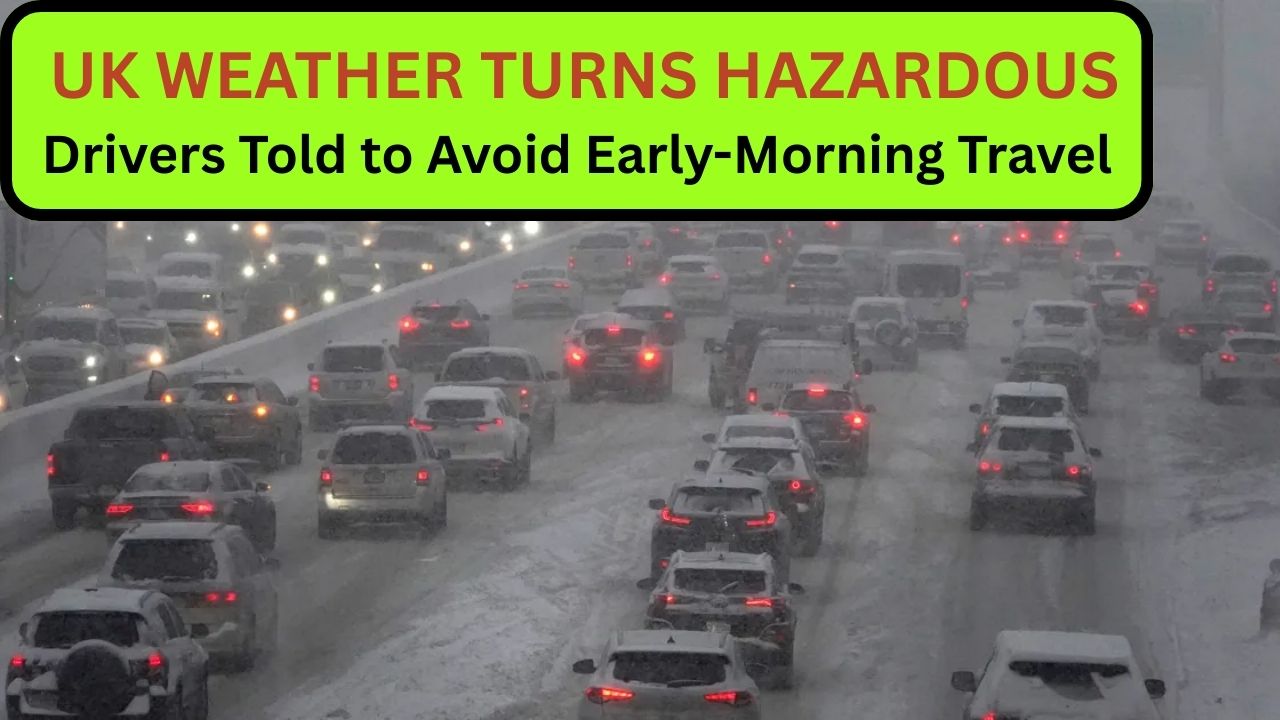
Conditions across large parts of the UK have turned dangerous overnight, with snow, ice and freezing temperatures creating hazardous early-morning travel conditions. Drivers are being urged to delay journeys where possible, as roads that appear clear may be dangerously slippery at dawn.
Weather forecasters warn that the risk is highest during the early-morning hours, when refreezing has created widespread black ice on untreated roads, pavements and bridges.
The warning has been highlighted by the Met Office, which says conditions may catch commuters off guard after a relatively quiet evening.

Why Early-Morning Travel Is Especially Risky
The danger is not just snowfall, but what happens after it stops.
Key factors include:
- Temperatures dropping sharply overnight
- Melted snow refreezing before sunrise
- Moist roads turning icy without visible warning
- Limited gritting on quieter routes
Black ice is particularly dangerous because it is almost invisible, even to experienced drivers.

Areas Most Affected
While conditions vary, the highest risk areas include:
- Northern England
- The Midlands
- Wales
- Scotland
- Parts of eastern and southern England
Rural roads, side streets, bridges and shaded routes are expected to be the most hazardous.
Impact on the Morning Commute
Authorities warn of:

- Increased collision risk during peak hours
- Slower traffic on main routes
- Delays to bus and rail services
- Slips and falls on pavements
Even short journeys, such as school runs or trips to local shops, may carry higher risk than usual.
Advice for Drivers
Motorists are strongly advised to:
- Avoid early-morning travel if possible
- Delay journeys until temperatures rise
- Reduce speed well below normal limits
- Allow extra braking distance
- Avoid sudden steering or braking
If travel is unavoidable, drivers should allow significantly more time and expect delays.

Warning for Seniors and Vulnerable People
Older adults face increased risk from:
- Slips and falls on icy pavements
- Cold-related health issues
- Reduced mobility during freezing conditions
Health and safety officials recommend:
- Staying indoors until conditions improve
- Wearing footwear with strong grip
- Keeping homes adequately heated
- Asking for help with errands where possible
Family members are encouraged to check in on elderly relatives and neighbours.

What to Do Right Now
Before heading out:
- Check local weather and road updates
- Look for ice even if roads appear wet
- Salt or grit paths and driveways if safe
- Carry warm clothing and a charged phone
Small precautions can significantly reduce risk.
When Conditions Are Expected to Improve
Forecasters suggest:

- Gradual improvement after mid-morning in some areas
- Persistent icy patches in shaded and rural locations
- Continued caution needed throughout the day
Drivers should not assume conditions are safe just because the sun is up.
Questions and Answers
1. Why is early morning more dangerous than late night?
Because refreezing occurs before sunrise.
2. What is black ice?
Ice that is clear and hard to see on the road.

3. Are main roads safer?
Usually, but icy patches can still form.
4. Should I drive if I don’t have to?
No, unnecessary travel should be avoided.
5. Are pavements dangerous too?
Yes, slip risk is high.

6. Do bridges freeze faster?
Yes, they are especially hazardous.
7. Will gritting solve the problem?
It helps, but doesn’t reach every road.
8. Are rural areas worse?
Often yes, due to less treatment.
9. Is snow still falling?
In some areas, but ice is the bigger threat.
10. Should seniors go out early?
Only if absolutely necessary.
11. Can conditions change quickly?
Yes, especially near dawn.
12. Is public transport affected?
Delays and disruptions are possible.
13. Will it warm up later?
Some improvement is expected later in the day.
14. Are accidents more common in these conditions?
Yes, especially at low speeds.
15. What’s the biggest risk?
Underestimating how slippery roads really are.










Leave a Comment