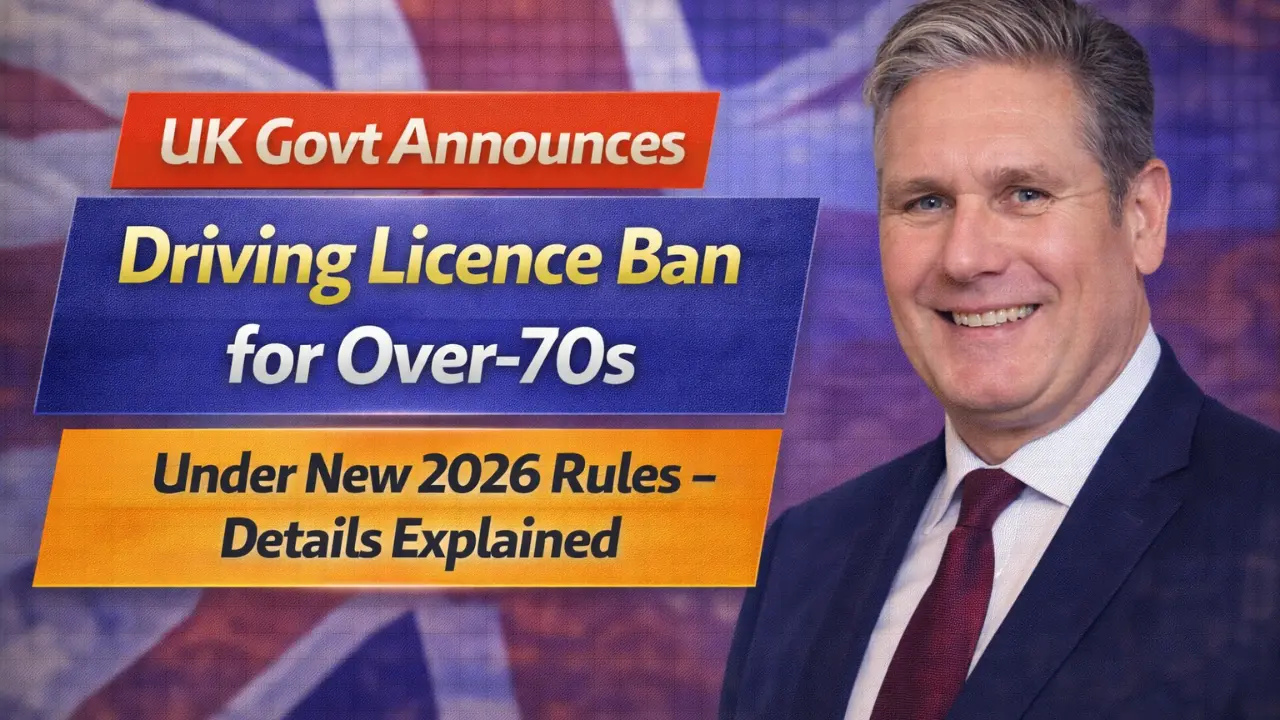
The UK Government has unveiled a major overhaul of road safety policy that will significantly change how driving licences are renewed for older motorists. Under proposals scheduled to take effect from 2026, drivers aged 70 and above will face stricter medical and eyesight requirements when renewing their licences, with the potential for licences to be refused or withdrawn if minimum standards are not met.
Ministers say the reforms are designed to modernise an ageing regulatory framework, improve road safety, and respond to the changing demographics of Britain’s driving population. However, the announcement has also sparked intense debate about age discrimination, personal independence, and the practical realities faced by older people—particularly in rural and semi-rural communities where access to alternative transport is limited.
Background to the 2026 driving licence reforms
The proposals form part of a broader national road safety strategy, the first comprehensive update in more than a decade. According to the Government, the current system relies too heavily on self-reporting of medical conditions and does not sufficiently account for gradual age-related changes in vision, reaction time, and cognitive processing.

At present, UK drivers are required to renew their licence at age 70 and every three years thereafter. The renewal process is largely administrative and based on a declaration that the driver meets the required medical standards. There is no routine medical or eyesight test unless concerns are raised by a doctor, the police, or a third party.
The new 2026 framework would shift this model away from self-certification and towards objective testing at renewal, marking a significant change in how older drivers are assessed.
What the new rules mean for drivers over 70
Under the proposed rules, drivers aged 70 and over will be required to demonstrate that they meet enhanced fitness-to-drive standards when renewing their licence. While the Government has stressed that the policy is not an automatic ban based on age, failing to meet the required standards would result in a refusal to renew a licence.

Key elements of the proposed changes include:
-
Mandatory eyesight testing at the point of licence renewal
-
Expanded powers for the DVLA to require further medical or cognitive assessments
-
Clearer thresholds for refusing or revoking licences on safety grounds
-
Retained rights of appeal and reassessment for affected drivers

Officials emphasise that many drivers will pass the new checks without difficulty, particularly those who already attend regular eye examinations and manage existing health conditions appropriately.

The role of eyesight testing
Vision is central to the proposed reforms. The Government argues that declining eyesight is one of the most significant risk factors in age-related driving incidents, particularly in complex environments such as junctions, roundabouts, and night-time driving.
Under the 2026 proposals, drivers over 70 would be required to pass a formal eyesight test when renewing their licence. This could involve:
-
Certification from a registered optometrist
-
A standardised visual acuity assessment linked to DVLA requirements
-
Confirmation that corrective lenses, if needed, bring vision within legal limits

Drivers who fail the test would not automatically lose their licence permanently. Instead, they would be given the opportunity to seek treatment, update corrective prescriptions, or undergo further assessment before reapplying.

Possible cognitive and functional assessments
In addition to eyesight checks, the Government is consulting on whether cognitive or functional driving assessments should be introduced in certain cases. These would not apply to every driver over 70 but could be triggered where there are concerns about memory, concentration, or decision-making ability.
Such assessments would be designed to evaluate practical driving competence rather than diagnose medical conditions. The aim, according to officials, is to identify drivers who may pose a safety risk while avoiding blanket restrictions based solely on age.
Medical professionals and road safety experts have stressed that any cognitive testing must be evidence-based, proportionate, and sensitive to the wide variation in health and capability among older adults.

Current system versus proposed 2026 approach
| Area of regulation | Current rules for over-70s | Proposed 2026 rules |
|---|---|---|
| Licence renewal | Every three years with self-declaration | Every three years with mandatory eyesight testing |
| Medical reporting | Driver self-reports conditions | DVLA may require objective medical evidence |
| Vision assessment | No routine test | Formal eyesight check at renewal |
| Cognitive review | Only if concerns are raised | Possible targeted assessments |
| Licence refusal | Rare and reactive | More proactive refusal if standards not met |
Why the Government says change is necessary
Ministers point to demographic trends and safety data as the primary drivers behind the reforms. The UK’s population is ageing, and the number of drivers aged over 70 has risen steadily over the past two decades. With more older drivers on the road, the Government argues that existing safeguards are no longer sufficient.
While older drivers are generally less likely to speed or drive under the influence, statistics show that when serious collisions do occur, age-related factors such as slower reaction times and impaired vision are more likely to play a role. Officials say the reforms are about prevention rather than punishment.
The Department for Transport has framed the changes as part of a wider ambition to drastically reduce deaths and serious injuries on UK roads by the mid-2030s.

Reactions from older people’s groups and road safety bodies
Reaction to the announcement has been mixed. Road safety organisations have broadly welcomed the proposals, arguing that objective testing is long overdue and could prevent avoidable tragedies. They note that many other countries already require routine medical or vision checks for older drivers.
By contrast, charities representing older people have expressed concern about the tone of the debate, warning against policies that may stigmatise ageing or undermine independence. They argue that driving is closely linked to mental wellbeing, social inclusion, and access to essential services.
Some groups have called for parallel investment in public transport, community transport schemes, and mobility support to ensure that drivers who lose their licences are not left isolated.
Rural and regional concerns
One of the most contentious aspects of the policy relates to its impact outside major cities. In rural areas, driving is often essential rather than optional. Buses may be infrequent or nonexistent, and alternatives such as taxis can be expensive or unavailable.
Local councils and rural advocacy groups have warned that stricter licence renewal rules could disproportionately affect older residents in these areas. They are urging the Government to consider exemptions, phased implementation, or additional support measures to mitigate unintended consequences.
How the DVLA would enforce the new rules
The Driver and Vehicle Licensing Agency would play a central role in implementing the reforms. Under the proposals, the DVLA would be responsible for:
-
Verifying eyesight test results
-
Requesting additional medical evidence where necessary
-
Making decisions on licence renewal, refusal, or restriction
-
Managing appeals and reassessment processes
The agency already has powers to revoke licences on medical grounds, but the 2026 rules would significantly expand the circumstances in which those powers are used proactively.
Appeals, reassessments, and safeguards
The Government has stressed that safeguards will be built into the system. Drivers who fail an eyesight or medical assessment would have the right to:
-
Submit further medical evidence
-
Undergo additional testing or treatment
-
Appeal decisions through established DVLA procedures
In some cases, restricted licences may be considered, allowing driving under specific conditions such as daylight-only use or limited distances, though this remains under consultation.
Other road safety measures linked to the reforms
The changes affecting over-70s are part of a broader package of road safety initiatives. These include proposals to tighten drink-driving limits, expand the use of alcohol interlocks for repeat offenders, and increase enforcement against uninsured and dangerous driving.
Ministers argue that addressing risk across all age groups strengthens the case that the over-70 reforms are about safety rather than age-based discrimination.
Timeline and next steps
The proposals are currently subject to consultation, with final decisions expected following feedback from the public, medical professionals, and stakeholder organisations. If approved, legislative changes would be introduced through Parliament, with implementation targeted for 2026.
A phased rollout is being considered to allow time for optometrists, medical practitioners, and the DVLA to prepare for increased demand.
What older drivers should do now
Drivers aged 70 or approaching renewal age are advised to:
-
Attend regular eye tests and keep records up to date
-
Monitor any medical conditions that could affect driving
-
Check licence expiry dates and renewal requirements early
-
Stay informed as consultation outcomes are published
Conclusion
The UK Government’s proposed 2026 driving licence reforms represent one of the most significant changes to older driver regulation in decades. By introducing mandatory eyesight testing and the possibility of further assessments, ministers aim to strengthen road safety and reduce serious accidents.
However, the success of the policy will depend on how fairly and sensitively it is implemented. Balancing public safety with personal independence, particularly for older people who rely on driving for daily life, remains a central challenge. As consultation continues, the debate is likely to intensify, shaping how Britain defines safe and inclusive mobility in an ageing society.










Leave a Comment