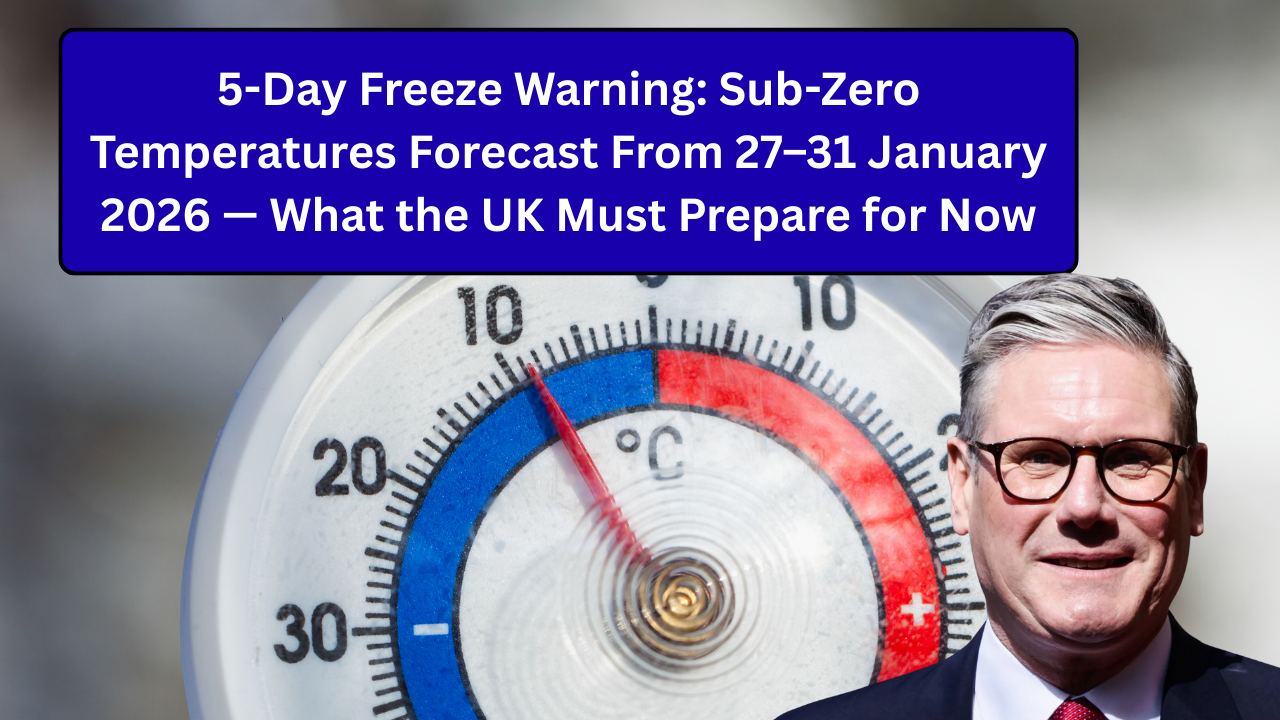
The warning came quietly at first. A colder-than-usual forecast. Overnight frosts. Then a sharper update landed: a five-day freeze is expected to grip large parts of the UK from 27 to 31 January 2026, with temperatures dropping well below zero and staying there.
For 82-year-old Joan Mitchell in Northumberland, the memory is still fresh.
“Last time it froze like that, my pipes burst and the house went freezing,” she said. “I don’t want to be caught out again.”

This late-January cold snap is shaping up to be one of the most prolonged sub-zero spells of the winter so far. While short cold nights are common, forecasters are warning that daytime temperatures may struggle to rise above freezing in some areas — increasing risks to health, homes, travel, and infrastructure.
Here’s what’s expected, who is most at risk, and what households should do now — before the freeze sets in.
Who Issued the Warning — and Why It’s Serious
The forecast is based on updated modelling from the Met Office, which shows a strong high-pressure system pulling in cold Arctic air and holding it in place over the UK.
Meteorologists say the concern is not just how cold it gets, but how long the cold lasts.
A senior forecaster explained:
“Prolonged freezing conditions place sustained stress on people, homes, and services. It’s very different from a single frosty night.”

When the Freeze Is Expected to Hit
Current projections show the cold spell developing rapidly toward the end of the month.
- Monday 26 January: Temperatures begin falling sharply overnight
- Tuesday 27 January: Widespread sub-zero nights begin
- 27–31 January: Persistent freezing conditions, icy days in some areas
- Early February: Gradual easing possible, but uncertainty remains
In some rural and inland areas, overnight lows of -7°C to -10°C are possible.
Areas Most Likely to Be Affected
While much of the UK will feel the cold, the most severe impacts are expected in:

- Northern England
- Scotland (especially inland and rural areas)
- Northern Ireland
- Parts of the Midlands
- Upland and rural communities
Southern and coastal areas may see slightly higher temperatures, but widespread frost and ice are still expected.
Why This Freeze Is More Dangerous Than It Sounds
Cold weather warnings often sound routine. This one isn’t.
The danger lies in:

- Multiple consecutive freezing days
- Limited daytime thaw, increasing ice buildup
- Increased strain on heating systems
- Higher risk of pipe bursts
- Cumulative health effects, especially for older people
Emergency planners warn that prolonged cold often causes more disruption than short-lived snow events.
Health Risks: Who Needs to Be Most Careful
Cold weather disproportionately affects certain groups.
Those at higher risk include:

- Older adults, especially over 65
- People with heart or respiratory conditions
- Those living alone
- Households struggling with heating costs
- People using electric or gas-powered medical equipment
Cold exposure increases the risk of heart attacks, strokes, respiratory illness, and falls.
A GP in Leeds warned:
“We see a spike in admissions during prolonged cold spells, not just during snow.”

Real Stories: The Cost of Being Unprepared
In Cumbria, a pensioner couple lost heating during a similar freeze last winter.
“It took three days to get an engineer,” they said. “The house dropped to near zero.”
In Birmingham, a single mother found her water supply frozen solid.

“We had no water for two days,” she said. “I didn’t know the pipes needed insulating.”
These experiences are common — and often preventable.
Homes at Risk: Pipes, Boilers, and Power
Prolonged freezing temperatures put enormous pressure on housing infrastructure.
The biggest risks include:
- Burst pipes, especially in lofts and garages
- Boiler breakdowns as systems work harder
- Frozen condensate pipes in modern boilers
- Power cuts due to increased demand
Repairs during cold snaps often take longer due to high demand and difficult conditions.
Travel Disruption Likely Throughout the Period
Even without heavy snow, ice causes major disruption.
Expect:
- Icy roads, especially early mornings and evenings
- Black ice on untreated rural routes
- Delays on rail networks due to frozen points
- Bus cancellations in hilly or rural areas
Authorities warn that the most dangerous conditions often occur when roads look clear but are still icy.
Why Older Homes Are Especially Vulnerable
Many UK homes were not designed for sustained sub-zero conditions.
Older properties may have:
- Poor insulation
- Exposed pipework
- Inefficient heating systems
- Single-glazed windows
Residents in older housing stock should take extra precautions.
Government and Council Preparations
Local authorities are preparing grit stocks and coordinating cold-weather responses.
Support measures may include:
- Gritting priority routes
- Cold weather outreach to vulnerable residents
- Emergency accommodation where needed
- Advice lines for heating and power issues
However, councils stress that household preparation is essential, as services can be stretched during prolonged freezes.
What Households Should Do Before 27 January
Experts strongly recommend acting now.
Key steps include:
- Insulate exposed pipes and water tanks
- Check boiler pressure and servicing status
- Keep heating on low overnight during extreme cold
- Know where your stopcock is
- Stock essential supplies and medications
- Charge phones and power banks
- Check on elderly neighbours
A few simple actions can prevent thousands of pounds in damage.
Heating Costs and the Cost-of-Living Impact
Extended cold spells drive up heating bills sharply.
For pensioners and low-income households, this can mean difficult choices between heating and other essentials.
Advice groups urge people not to ration heat dangerously during freezes.
“Cold homes cost lives,” one adviser said. “Staying warm is not optional.”
Those struggling should seek help early rather than waiting for a crisis.
Schools, Care Homes, and Workplaces
Organisations are reviewing cold-weather contingency plans.
This includes:
- Adjusting opening hours
- Reviewing heating systems
- Supporting staff travel arrangements
- Monitoring indoor temperatures
Care homes have been advised to double-check backup heating and power supplies.
Comparison: Typical Cold Snap vs Prolonged Freeze
| Factor | Typical Frost | 5-Day Freeze |
|---|---|---|
| Duration | 1–2 nights | Up to 5 days |
| Daytime thaw | Yes | Limited |
| Pipe risk | Moderate | High |
| Health risk | Short-term | Cumulative |
| Disruption | Localised | Widespread |
It’s the length, not just the temperature, that makes this event concerning.
Expert Insight: Why Prolonged Freezes Are Still Possible
Despite overall warming trends, experts say cold snaps remain a reality.
Dr. Mark Ellison, a climate researcher, explains:
“Climate change doesn’t remove cold weather. It increases extremes — including sharp, prolonged cold spells.”
This makes preparation more important, not less.
What Not to Do During a Freeze
Authorities advise against:
- Turning heating off completely
- Using unsafe heating sources indoors
- Driving unless necessary during icy periods
- Ignoring early signs of frozen pipes
- Delaying repairs once problems appear
Most serious issues worsen when action is delayed.
Will This Lead to Severe Weather Warnings?
At present, cold weather alerts are in place rather than the highest-level warnings. However, officials warn that alerts may be upgraded if conditions worsen or snow develops.
Residents are urged to monitor official updates closely as the end of the month approaches.
Frequently Asked Questions About the Freeze
1. How cold will it get?
As low as -10°C in some areas.
2. Will it snow?
Snow is possible but not the main risk.
3. Are power cuts likely?
Possible due to demand.
4. Should I leave heating on overnight?
Yes, on a low setting.
5. Are pipes at risk in flats?
Yes, especially in unheated areas.
6. Is travel safe?
Only if essential.
7. Are older people more at risk?
Yes.
8. Will schools close?
Decisions will be local.
9. Can cold affect my boiler?
Yes, especially condensate pipes.
10. Should I check on neighbours?
Strongly recommended.
11. Are pets affected?
Yes — keep them warm.
12. Will benefits or pensions change?
No, but costs may rise.
13. Can councils help if I struggle to heat my home?
Sometimes — ask early.
14. Is this unusual for January?
The duration is unusual.
15. What’s the best advice?
Prepare before the freeze begins.










Leave a Comment