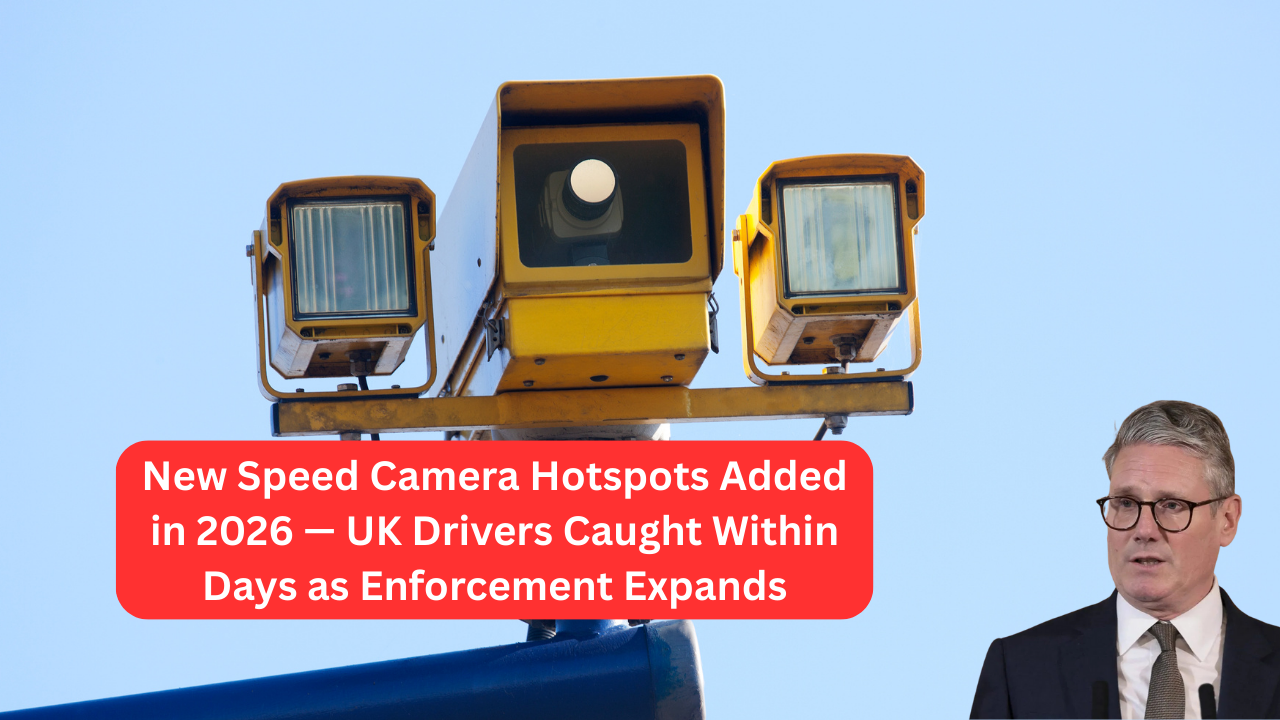
For many drivers, the first sign of a new speed camera isn’t a warning sign — it’s a letter through the door. That’s exactly what’s happening across parts of the UK in 2026, as new speed camera hotspots are rolled out and motorists report being caught within days of the cameras going live.
Local authorities say the changes are about safety. Drivers say the rollout has been quiet, fast, and unforgiving — especially for those who use the same routes every day and didn’t realise anything had changed.
Here’s where the new hotspots are appearing, why they’ve been added, and what drivers need to know now.

What’s Changed in 2026
Councils and police forces have expanded speed enforcement in response to collision data and public complaints. The result is a fresh wave of newly activated speed cameras, including:
- Fixed roadside cameras
- Average-speed camera zones
- Mobile enforcement units
- Temporary cameras near roadworks
In many areas, cameras were installed or activated with minimal public notice beyond statutory signage.
Why Drivers Are Being Caught So Quickly
Drivers are being caught within days — sometimes hours — for a few key reasons:

- Routes feel familiar, so speeds don’t change
- Limits have been reduced recently
- Average-speed zones catch gradual speeding
- Cameras operate 24/7
- Mobile vans appear at peak commuting times
“I’ve driven that road for ten years,” said Mark Willis, 46, from Essex.
“I didn’t even realise the limit had changed until the fine arrived.”
Where New Hotspots Are Appearing
While locations vary by region, authorities say new cameras are being prioritised in areas with:
- Recent accident clusters
- Speed-related injury data
- Schools and pedestrian zones
- Long straight roads with speeding history
- Temporary road layouts
Urban outskirts and commuter routes are among the most affected.

Real Stories From Drivers Caught Out
Sophie Lang, 29, from Milton Keynes, was caught in a new average-speed zone.
“I was only a few miles over, but it averaged out over the stretch,” she said. “Three days later, I had the notice.”
In West Yorkshire, delivery driver Tom Harris received two penalties in one week.

“The van was there Monday, gone Tuesday, back Thursday. You never knew.”
What Authorities Are Saying
Local officials say enforcement is a response to safety concerns, not revenue.
A council transport spokesperson said:
“These locations were chosen because of repeated incidents. Speed enforcement saves lives.”

They also point out that warning signs are legally required — even if drivers miss them.
Common Misunderstandings About Speed Cameras
Many drivers assume:
- Cameras only operate at certain times
- A small amount over the limit is ignored
- Familiar roads are safe from new enforcement
- Mobile cameras are rare
In reality, enforcement has become more consistent and less forgiving.

Speed Camera Rules Drivers Often Forget
Key points to remember:
- Speed limits can change without major publicity
- Average-speed cameras measure over distance
- Mobile units can operate anywhere permitted
- Penalties apply even for short stretches
- Repeat offences escalate quickly
A moment’s inattention can now have lasting consequences.
Penalties Drivers Are Facing
Being caught speeding can lead to:

- Fixed penalty fines
- Penalty points on your licence
- Speed awareness courses (in some cases)
- Higher insurance premiums
- Risk of disqualification for repeat offences
For professional drivers, even one penalty can affect work.
What Drivers Should Do Now
To avoid being caught out:
- Watch for speed limit changes, not just cameras
- Use in-car alerts cautiously — they’re not always updated
- Slow down in average-speed zones
- Be extra careful near roadworks and schools
- Assume enforcement could be active anywhere
Adjusting habits now is cheaper than paying later.

Questions and Answers
1. Are new speed cameras being added in 2026?
Yes, across multiple regions.
2. Do councils have to warn drivers?
Yes, signage is required — but not always prominent.
3. Are average-speed cameras stricter?
They’re harder to avoid because they track distance.
4. Can mobile cameras operate every day?
Yes, including weekends.
5. Are limits being lowered as well?
In some areas, yes.
6. Is there a grace period for new cameras?
No official grace period exists.
7. Can I appeal if I didn’t know?
Lack of awareness is rarely accepted.
8. Do cameras work at night?
Yes.
9. Are motorway cameras included?
Some smart motorway enforcement has expanded.
10. How soon do fines arrive?
Often within days.
11. Do speed awareness courses still exist?
Yes, depending on speed and history.
12. What’s the safest assumption?
That enforcement is active everywhere.
Why This Matters for Drivers in 2026
With more cameras, fewer warnings, and tighter enforcement, the margin for error has shrunk. What once resulted in a warning may now bring points and a fine.
For drivers, especially those on familiar routes, the biggest risk in 2026 isn’t reckless speeding — it’s assuming nothing has changed.










Leave a Comment