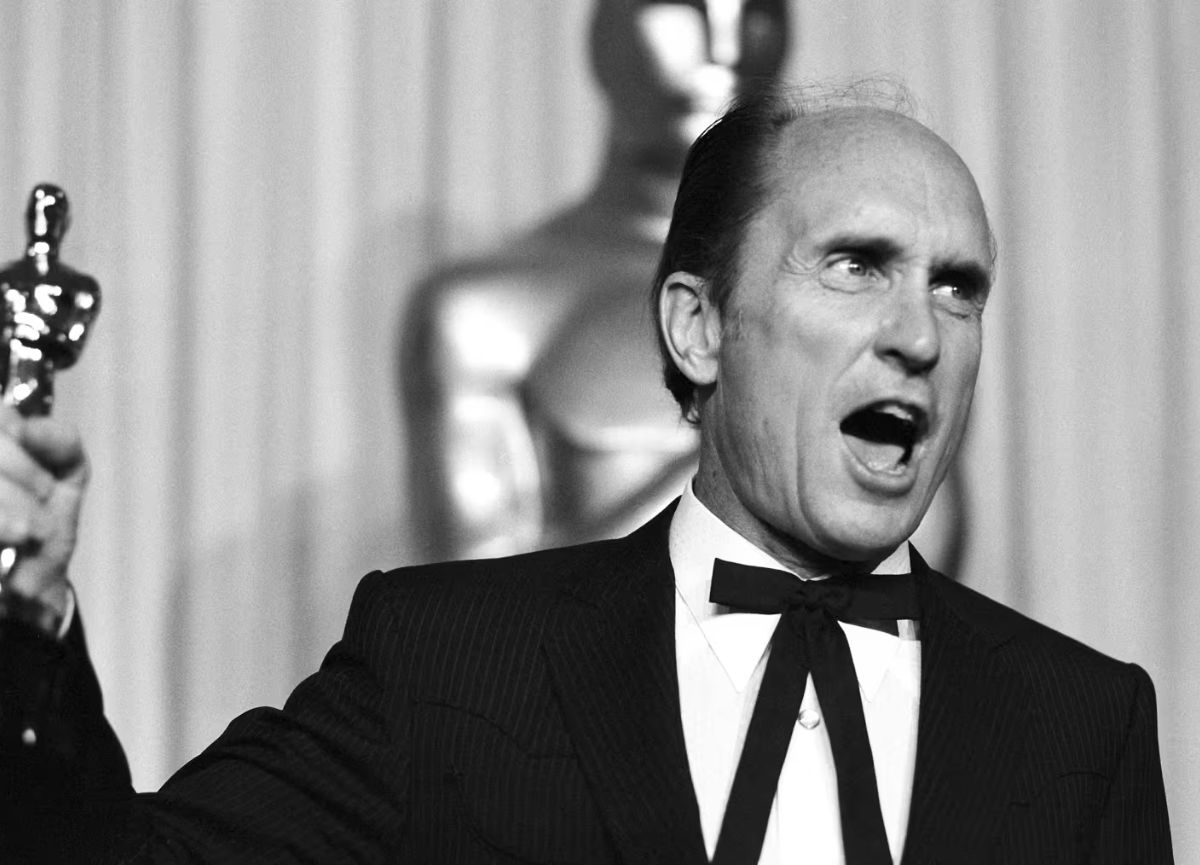
Robert Duvall, the iconic American actor whose steely gaze and commanding presence defined generations of cinema over a remarkable six-decade career, was best known for his rugged, no-nonsense roles even as his off-screen life remained far more grounded and disciplined than the characters he portrayed.
Following his passing on February 15, 2026, at the age of 95 in Middleburg, Virginia, questions have swirled about his personal habits, particularly one that often blurs the line between fiction and reality: Was Robert Duvall an alcoholic?
The short answer is no; Duvall was not an alcoholic and, by all accounts, abstained from drinking and smoking throughout his life.
This distinction is crucial, as his Oscar-winning performance as a troubled, booze-soaked country singer in the 1983 film Tender Mercies might have led some to confuse art with life.
Born on January 5, 1931, in San Diego, California, Robert Selden Duvall grew up as the second of three sons in a military family.

His mother, Mildred Virginia Duvall, was an amateur actress, while his father, William Howard Duvall, rose to the rank of rear admiral in the U.S. Navy.
This disciplined upbringing likely shaped Duvall’s own sense of structure and restraint, traits that extended to his personal choices, including his avoidance of alcohol.
After high school, Duvall served in the U.S. Army from 1953 to 1954 during the Korean War era, an experience that honed his work ethic and perhaps influenced the authoritative military figures he later portrayed on screen.

Duvall’s entry into acting was anything but glamorous. He began his professional career at the Gateway Playhouse, an Equity summer theater in Bellport, Long Island, New York.
After his military service, he returned for the 1955 season, taking on roles like Eddie Davis in Ronald Alexander’s Time Out for Ginger and Hal Carter in William Inge’s Picnic.
These early-stage gigs built his foundation, leading to his first television appearance in 1959 on Armstrong Circle Theatre in the episode “The Jailbreak.”

But it was his film debut in 1962 as the enigmatic Boo Radley in the critically acclaimed To Kill a Mockingbird that truly put him on the map.
Recommended for the part by screenwriter Horton Foote, whom Duvall had met during a 1957 production of Foote’s play The Midnight Caller at the Neighborhood Playhouse, this role showcased his ability to convey quiet intensity—a hallmark of his style.
By the 1970s, Duvall had become a staple in American cinema, earning a reputation as “Hollywood’s No. 1 No. 2 lead” from People magazine for his masterful supporting turns.

His collaboration with Francis Ford Coppola proved transformative. In 1972’s The Godfather, Duvall delivered a pitch-perfect performance as Tom Hagen, the calm, calculating consigliere to the Corleone family. He reprised the role in The Godfather Part II (1974), earning his first Academy Award nomination.
Their partnership continued with the visceral Apocalypse Now (1979), where Duvall’s unforgettable Lt. Col. Bill Kilgore famously declared, “I love the smell of napalm in the morning.”
These roles cemented his status as a go-to actor for tough, authoritative figures, but Duvall’s real-life demeanor was markedly different—reserved, health-conscious, and free from the vices that plagued many in the industry.
The misconception about Duvall’s drinking habits likely stems from his immersive portrayals of alcoholics. In Tender Mercies, he played Mac Sledge, a washed-up country star grappling with addiction and redemption.
Duvall not only acted the part but sang his own songs, insisting on it in his contract, and his raw, authentic performance earned him the Academy Award for Best Actor.
In interviews, Duvall admitted he drew from observations rather than personal experience, having studied drunks in places like New York’s Bowery during his early acting days. “I don’t really drink at all,” he once shared, emphasizing that his craft relied on empathy and imagination, not lived turmoil.

This role, along with others like the boozy characters in films exploring addiction, highlighted Hollywood’s fascination with alcoholism, but Duvall himself remained teetotal, a choice that aligned with his disciplined lifestyle.
Duvall’s career continued to flourish into the 1990s and beyond. He declined to reprise Tom Hagen in The Godfather Part III (1990) unless paid comparably to Al Pacino, a stand that spoke to his self-assured professionalism.
He ventured into directing with films like The Apostle (1997), where he also starred as a flawed preacher seeking atonement, earning another Oscar nod.
Over his lifetime, Duvall amassed seven Academy Award nominations, along with Emmy and Golden Globe wins, proving his versatility across genres from Westerns to dramas.
On a personal note, Duvall was married four times but had no children. His longest and final marriage was to Argentine actress and director Luciana Pedraza, whom he wed in 2005 after meeting her in 1996.
They shared a passion for tango dancing and lived on a sprawling farm in Middleburg, Virginia, where Duvall enjoyed a quiet life away from Hollywood’s excesses.
Politically outspoken, he was a conservative who supported figures like Arnold Schwarzenegger and attended Republican conventions, but he kept his views balanced with a focus on storytelling over ideology.
Duvall’s death at his Virginia farm was announced by Luciana in a heartfelt statement that omitted the cause, sparking speculation but respecting his privacy.
At 95, his passing marked the end of an era for New Hollywood, where he bridged the gap between method acting and larger-than-life personas.
While he memorably brought alcoholics to life on screen, think the haunted souls in Tender Mercies or echoes in other addiction-themed films, Duvall’s own story was one of sobriety, dedication, and quiet strength.
In a town rife with tales of excess, he stood as a testament to living clean, proving that true toughness comes from within.
As we remember Robert Duvall, it’s clear his legacy isn’t tainted by personal demons but elevated by his ability to portray them with unflinching honesty.
From the stages of Long Island to the annals of film history, he remains a giant whose work continues to inspire.






Leave a Comment