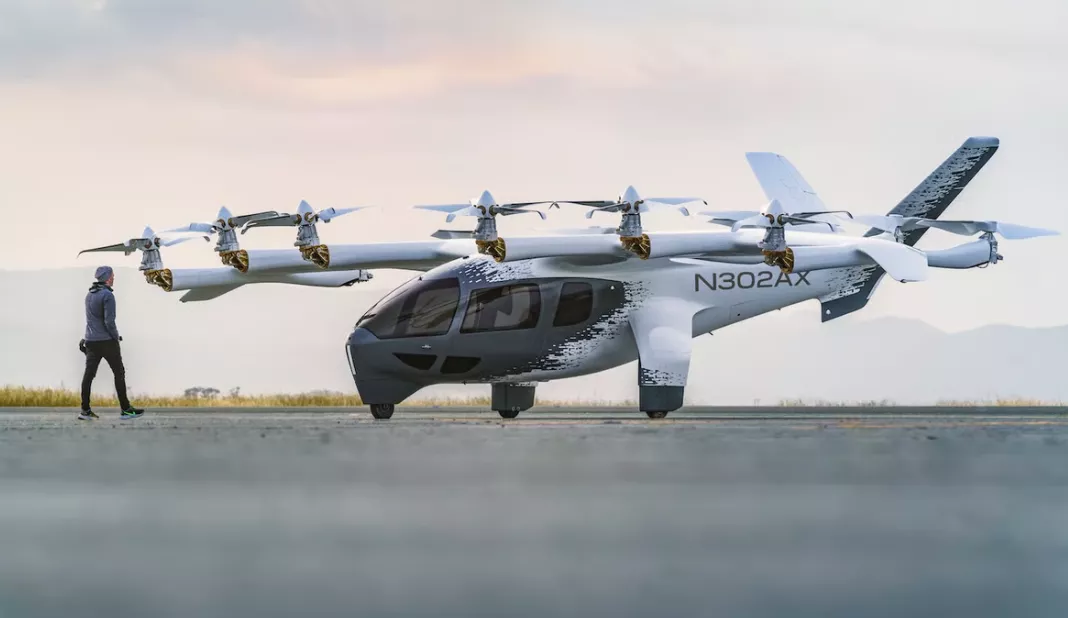
A headline patent fight filed on 23 February 2026 has turned an industry race into a courtroom battle. Archer Aviation this week lodged a patent-infringement complaint in the U.S. District Court for the Eastern District of Texas, alleging that the recently unveiled Valo air taxi from Vertical Aerospace copies key design and technical elements of Archer’s Midnight eVTOL.
Archer is seeking an injunction to stop Vertical from using the contested elements and unspecified damages for alleged past infringement.
The dispute is about more than aesthetics. Archer’s complaint points to at least two design patents covering the look and configuration of its Midnight aircraft and one or more utility patents tied to flight-control and propulsion management systems.

The company says Valo’s overall silhouette, propulsor arrangement, and certain flight-control behaviours are close enough to its patented technology that the court should step in. Vertical has publicly denied the claims and said its Valo was independently developed and supported by its own intellectual-property portfolio.
What makes this case consequential is who is watching. Global airlines that have staked strategic bets on short airport-to-city air-taxi links—most notably United Airlines, Delta Air Lines, and American Airlines in the United States, and British Airways and Virgin Atlantic in the UK, are closely monitoring the legal filings.
Airlines see eVTOL networks as a potential extension of premium services and loyalty ecosystems: faster airport transfers could boost high-yield business and short-stay leisure travel, reshape booking products and become an upsell for premium cabins.

Both competitors have sketched ambitious airport-to-city plans. Archer has publicly outlined a New York network idea, short hops linking Manhattan with area airports to slash commute times, while Vertical has pitched Valo for routes such as Canary Wharf to Heathrow in London, promising journey times measured in minutes instead of hours.
Those route concepts depend on aircraft certification, vertiport infrastructure, and commercial partnerships; a prolonged legal dispute could slow or reshape who gets first access to those lucrative markets.

Regulation remains the gating factor. Certification processes at the Federal Aviation Administration and the UK Civil Aviation Authority require extensive testing, data, and demonstration of safety margins.
Even absent litigation, timelines to full commercial operation are measured in years; with intellectual-property claims potentially tying up designs or forcing rework, certification schedules and go-to-market plans could be pushed further into the future.
That potential delay matters to airlines and tourism stakeholders alike, because airport connectivity is a link in the broader travel value chain, from flight bookings to ground transfers, hotels, and meetings business.

Tourism bodies and city planners are watching the knock-on effects. Faster, reliable transfers would be a selling point for short-stay visitors and corporate event organisers, with studies showing that improved last-mile connectivity can increase hotel occupancy and business travel spending.
If litigation delays eVTOL rollouts, hospitality and transport planners will need to stick with existing rail, express train and road solutions, some of which already offer competitive, regulated alternatives such as the Heathrow Express and New York regional rail links.

For the eVTOL industry itself, the Archer-Vertical fight signals a maturing competitive landscape where intellectual property becomes a primary strategic asset.
Startups and established aerospace players alike are investing heavily in patents and design protection as they move from prototyping to certification.
A court decision favouring Archer could stiffen barriers to entry and channel innovation toward licensing or cross-licensing deals; a favourable ruling for Vertical could embolden other entrants that prioritise alternative architectures.

Financially, major carriers will likely adopt a cautious stance: partnership announcements and route plans may be delayed or structured with opt-out clauses to protect airlines from timetable risk.
Insurers, vertiport developers, and investors will weigh legal exposure alongside technology and regulatory risk when deciding which programmes to underwrite or fund.
At stake is a formative question for how cities such as New York and London will plug airport terminals into their urban cores. If the legal clash is resolved quickly, by settlement or a clear judicial finding, commercial pilots and limited service rollouts could proceed on a revised timetable.

If the case drags on, airlines and tourism boards may have to postpone strategic bets on ultra-fast air taxi links, limiting first-mover advantages for premium travel segments.
This lawsuit is likely only the first of several high-profile contests over eVTOL design and systems as the market commercialises.
For now, carriers and travellers should expect cautious optimism: the promise of 10–15 minute airport flights remains attractive, but the timetable for when that promise becomes a reliable, bookable reality now depends not only on regulators and engineers, but also on the outcome of a courtroom demonstration about who truly owns the blueprints for the future of urban air mobility











Leave a Comment