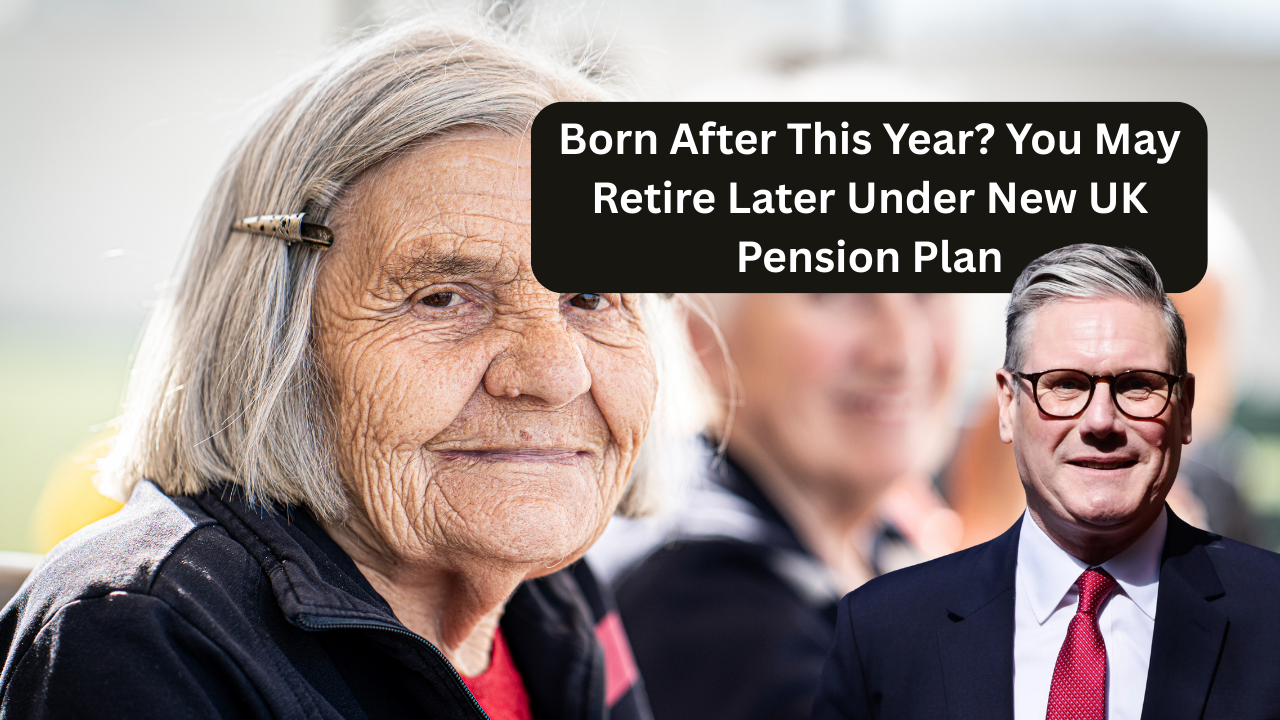
For millions of workers, retirement has always felt like a fixed point on the horizon — a date you work toward, plan around, and build your future on. But for people born after a certain year, that certainty is starting to shift. The UK government has confirmed that future retirees could face a later State Pension age under a new long-term pension plan now taking shape.
Nothing is changing overnight. But for younger workers and those in mid-career, the message is clear: the age you retire may not be the age you expect.
Here’s what’s being proposed, who it affects most, and why your year of birth matters more than ever.

What the New UK Pension Plan Is About
The government is reviewing the State Pension age as part of a broader plan to ensure the system remains affordable over coming decades.
The review is being overseen by the Department for Work and Pensions, alongside independent advisers, and focuses on:
- Rising life expectancy over time
- The cost of paying pensions for longer
- The balance between working years and retirement years
- Long-term sustainability of public finances
The outcome could be a gradual increase in the State Pension age for future generations.

Why Year of Birth Is So Important
The key factor isn’t your current age — it’s when you were born.
Under the current system:
- State Pension age is 66
- It is already scheduled to rise to 67
- A further rise to 68 is under review
The new plan could accelerate or extend these increases, meaning people born after certain cutoff years may have to wait longer before they can claim.

Someone just a few years younger than you could face a different retirement age, even with similar work histories.
Who Could Be Affected Most
The proposals mainly affect younger workers, not current pensioners.
Groups most likely to be impacted include:

- People currently in their 30s, 40s, and early 50s
- Workers born after the mid-1970s
- Those planning retirement around age 66 or 67
- People relying heavily on the State Pension
Those already at or near pension age are unlikely to see changes.
Why the Government Says Change Is Needed
Ministers argue that the system must reflect demographic reality.
Key pressures include:

- People living longer on average
- Fewer workers supporting more retirees
- Rising cost of public pensions
- Strain on public finances
A government source said the goal is to keep the State Pension “fair and affordable for future generations”.
Campaigners argue that healthy life expectancy hasn’t risen equally, especially for manual workers and people in poorer areas.
What This Does Not Mean
Despite alarming headlines, some things are clear.

The proposals do not mean:
- ❌ Retirement age is changing immediately
- ❌ Everyone will suddenly work longer
- ❌ Current pensioners are affected
- ❌ Private pensions are being altered
Any changes would be phased in slowly, with years of notice.
Why This Feels Personal for Many Workers
For people who have paid National Insurance for decades, the idea of working longer feels like the goalposts moving.

“I’ve worked since I was 16,” said warehouse supervisor Mark Hughes from Wolverhampton.
“The idea I might have to wait longer than planned doesn’t feel fair.”
That sense of unfairness is strongest among those in physically demanding jobs.
How the Pension Age Has Already Shifted
It’s worth remembering this wouldn’t be the first change.

In recent decades:
- Women’s pension age rose significantly
- The age moved from 65 to 66
- Further rises to 67 are already planned
Each change affected different birth cohorts differently — often with little public awareness at the time.
Before vs Possible Future
| Area | Now | Under New Plan |
|---|---|---|
| State Pension age | 66 | 67–68 (for some) |
| Impact on current pensioners | None | None |
| Notice period | Long | Long |
| Effect by birth year | Minor | Significant |
| Planning certainty | Higher | Lower |
The biggest change is uncertainty for younger workers.
What Workers Should Do Now
While no immediate action is required, experts advise:
- Checking your State Pension forecast
- Understanding your National Insurance record
- Considering private or workplace pensions
- Avoiding reliance on a single retirement age
- Keeping informed as reviews progress
Planning for flexibility is becoming more important than planning for a fixed date.
Common Misunderstandings
Many people believe:
- “Everyone will retire at the same age”
- “The pension age is fixed forever”
- “Only young people need to worry”
- “Changes come without warning”
In reality, birth year has always mattered — it just isn’t widely understood.
Questions and Answers
1. Is the State Pension age changing now?
No.
2. Who could be affected in the future?
People born after certain years.
3. Will current pensioners be affected?
No.
4. Is retirement age rising to 68?
It’s under review, not confirmed.
5. How much notice would people get?
Years, not months.
6. Does this affect private pensions?
No.
7. Why is the government considering this?
Long-term affordability.
8. Can the plan still change?
Yes.
9. Are manual workers considered?
Campaigners say not enough.
10. Should I delay retirement plans now?
Not yet — but stay informed.
11. Where can I check my forecast?
Through official government services.
12. What’s the biggest takeaway?
Your birth year matters more than you think.
Why This Matters
For younger generations, retirement is becoming less about a fixed age and more about a moving target. The proposed pension changes don’t remove the State Pension — but they may delay access for millions born after certain years.
The most important thing workers can do now is simple: don’t assume the rules you grew up with will be the rules you retire under. Planning early — and staying informed — is the only way to stay ahead of the changes.









Leave a Comment