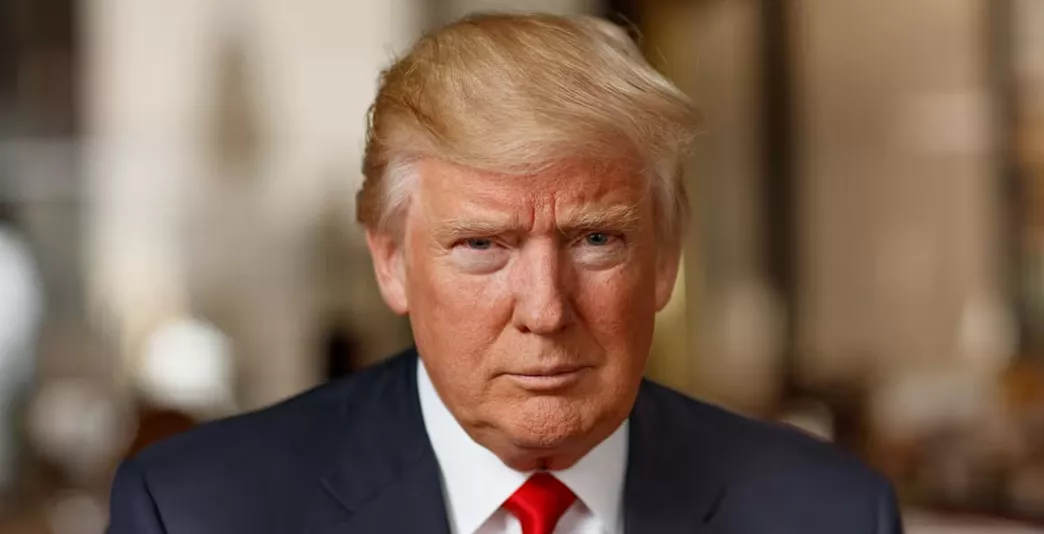
Feb. 20, 2026 — The United States Supreme Court handed President Donald Trump a major legal defeat on Friday, ruling 6–3 that his sweeping global tariffs imposed under the International Emergency Economic Powers Act were unlawful.
The decision rejects the administration’s central claim that the president can use that emergency statute to levy wide-ranging import duties without clear approval from Congress.
Chief Justice John Roberts wrote for the majority that the Constitution vests taxing power with Congress and that a president seeking to impose tariffs of this magnitude must point to “clear congressional authorization.”

Roberts added that prior presidents never used IEEPA in this way and that the court would not allow a dramatic expansion of executive power on so large an economic question.
The ruling is a sweeping rebuke of the legal theory behind the tariff campaign.
The practical stakes are enormous. Economists and budget models estimate more than $100 billion and possibly as much as $175 billion in tariff collections flowed to the Treasury under the IEEPA-based duties.

With the court’s decision, companies that paid those tariffs are already lining up in court to demand refunds, and analysts warn the process of returning billions could be complex and prolonged.
The justices left the question of refunds unresolved, prompting immediate legal and financial uncertainty.
The decision drew broad media and market attention. Reporters noted the ruling could reshape U.S. trade policy and curb the administration’s ability to unilaterally wield tariffs as a blunt instrument for economic and foreign policy.

Global markets reacted to the news as traders assessed the likely impact on trade flows and corporate costs.
Observers said the ruling reinforces the constitutional balance between the executive and Congress on major economic policy choices.

Justices Clarence Thomas, Samuel Alito, and Brett Kavanaugh dissented. In a dissenting opinion, Justice Kavanaugh argued the statutes and historical practice gave the executive broader authority and warned that unwinding the tariff regime could produce a “mess” for companies and the government as courts and agencies grapple with refunds and logistics.
The split highlights big differences in how the high court views the scope of presidential power in economic emergencies.
The tariffs at issue were central to the administration’s trade strategy in 2025 and early 2026.

The White House had invoked IEEPA to impose a wide set of duties, including so-called reciprocal tariffs and measures tied to alleged fentanyl trafficking, covering goods from many trading partners.
The administration argued the statute’s language allowing the president to “regulate” importation authorized such measures; the court disagreed.
Responding to the ruling, spokespeople for the administration signaled they would look for other legal paths to preserve some duties, pointing to statutory provisions tied to national security or unfair trade practices that require different processes and, in some cases, congressional input.

Treasury officials and trade advisers face a narrower toolkit going forward, and lawmakers from both parties said they expect follow-up hearings and legislative scrutiny.
Legal scholars say the opinion applies the court’s so-called “major questions” doctrine, which demands clear congressional authorization when the executive claims unusually large regulatory authority.
SCOTUSBlog and other legal analysts emphasized that the ruling signals the justices will not lightly bless expansive unilateral actions that carry vast economic consequences.

That principle could ripple into other contested areas of executive power. For businesses, the immediate questions are practical and pressing.
Importers who paid higher duties will likely press refund claims, while companies that priced products based on tariff expectations must rework margins and supply plans.
Some firms had already sought judicial relief and regulatory guidance; expect a deluge of litigation as courts sort claims and agencies issue instructions on how to proceed.

Politically, the ruling is a symbolic and substantive setback for the president. Tariffs were a signature element of his second-term economic program, touted as a way to level the playing field and raise revenue.
The court’s decision hands opponents a concrete example of a limits-of-power argument and forces the administration to rely more on Congress or narrower authorities to pursue trade goals.
Supporters of the tariff policy said the court was overreaching; critics called the ruling a win for constitutional limits and consumer interests.
What happens next will be watched closely. Congress could consider legislation that explicitly authorizes elements of the tariff plan, though major trade bills require lengthy negotiations.
The administration may pivot to targeted measures allowed under existing statutory authorities, but legal experts cautionthat those tools are narrower and slower.
In the short term, the marketplace and legal system will wrestle with the fallout of a decision that rewrites a central pillar of recent U.S. trade policy.









Leave a Comment