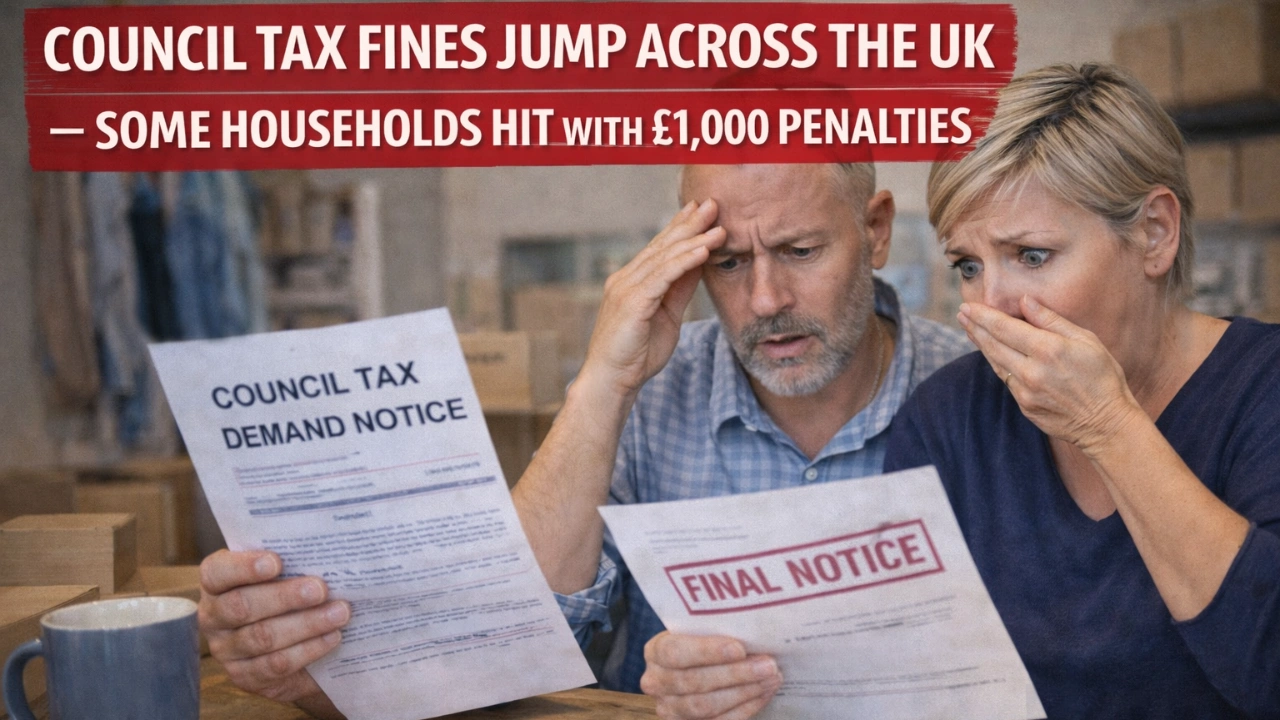
Across the UK, thousands of households are opening letters that come as a shock. Missed Council Tax payments — sometimes by just a few weeks — are now escalating into four-figure penalties, with some families facing bills close to £1,000 or more once court costs and enforcement fees are added.
Local authorities say the rise reflects tougher recovery action, while advice groups warn that many households simply do not realise how quickly Council Tax debt can spiral out of control.
Here’s a detailed look at what’s driving the surge, how the fines build up, and what households need to know in 2026.

What’s Changing / What’s New in 2026
Council Tax rules themselves have not changed dramatically, but how councils enforce them has.
Key developments this year include:
- Faster progression from missed payment to court action
- Increased use of liability orders through magistrates’ courts
- Higher enforcement agent (bailiff) involvement
- Less flexibility once a case reaches enforcement stage
- Reduced tolerance for partial or late payments
Councils say rising arrears after years of cost-of-living pressure have forced them to act more decisively to protect local services.

How Council Tax Debt Turns Into a £1,000 Penalty
Many people assume Council Tax works like other household bills. In reality, it follows a strict legal process that can escalate quickly.
Here’s how a typical £150–£200 missed bill can grow:
- Missed instalment — payment not received on time
- Reminder notice — usually gives 7 days to pay
- Final notice — full year’s balance becomes due
- Court summons — adds court costs (often £70–£120)
- Liability order granted — legal enforcement approved
- Enforcement agent fees — £75 compliance fee, £235 visit fee, plus extras
By the time enforcement agents are involved, total charges can easily exceed £1,000, even if the original debt was much smaller.

Who Is Most at Risk
Certain households are being hit harder than others, particularly those already under financial strain.
Higher-risk groups include:
- Low-income households not claiming Council Tax Reduction
- People who have recently moved home
- Self-employed workers with irregular income
- Households with missed benefit updates
- Residents who ignore reminder letters, assuming they can “catch up later”
Once a liability order is issued, councils are legally entitled to recover the debt using stronger methods.

Council Tax Reduction: A Key Detail Many Miss
One major reason fines are rising is that millions of eligible households are not claiming Council Tax Reduction.
This support can:
- Reduce Council Tax bills by up to 100% for some households
- Apply to people on Universal Credit, low wages, or pensions
- Be backdated in some cases
Because schemes are run locally, many residents assume they are not eligible when they actually are.

Government Position
Oversight of Council Tax policy sits with the Department for Levelling Up, Housing and Communities, which has acknowledged growing arrears but maintains that councils must balance fairness with funding pressures.
Officials have emphasised that councils are expected to offer repayment options early — but once debts reach court, options narrow significantly.
Enforcement Powers Councils Can Use
Once a liability order is in place, councils may legally:

- Use enforcement agents (bailiffs)
- Deduct money directly from wages
- Deduct from certain benefits
- Apply for charging orders in extreme cases
- In rare situations, pursue committal proceedings
Most cases never reach the most severe stages, but early engagement is critical.
Comparison: Early Action vs Late Action
| Stage of Action | Likely Outcome |
|---|---|
| Payment made after reminder | No extra costs |
| Contact council early | Affordable repayment plan |
| Ignore summons | Court costs added |
| Liability order issued | Enforcement action allowed |
| Bailiff visit | Hundreds added in fees |
| Continued non-payment | Risk of £1,000+ total debt |
What Households Should Do Immediately
If you are struggling with Council Tax in 2026, acting early can prevent serious penalties.
Key steps include:

- Open and read all council letters immediately
- Contact the council as soon as a reminder arrives
- Ask about Council Tax Reduction eligibility
- Request a repayment plan in writing
- Seek advice before enforcement agents are involved
Once bailiff action begins, councils often have limited ability to intervene.
Questions and Answers
1. Can Council Tax fines really reach £1,000?
Yes. Court and enforcement fees can push debts to that level.
2. Is Council Tax debt a criminal offence?
No, but it is enforced through the courts.

3. How fast does a missed payment escalate?
Sometimes within weeks if reminders are ignored.
4. Can bailiffs force entry?
Usually no, but rules depend on circumstances.
5. Will paying late once cause problems?
Repeated late payments can trigger loss of instalments.
6. Can councils take money from benefits?
Yes, for certain benefits.
7. Does moving house stop enforcement?
No. Debts follow the person, not the property.
8. Can I challenge court costs?
Rarely, once a liability order is granted.
9. What if I can’t afford the full bill?
You should contact the council immediately.
10. Are pensioners affected?
Yes, especially if not claiming reductions.
11. Can Council Tax Reduction be backdated?
Sometimes, depending on council rules.
12. Do all councils charge the same fees?
Court costs vary, enforcement fees are set nationally.
13. What happens if I ignore bailiffs?
Fees increase and enforcement escalates.
14. Can councils write off debt?
Rare, but possible in exceptional hardship cases.
15. What’s the safest approach?
Engage early and never ignore letters.










Leave a Comment