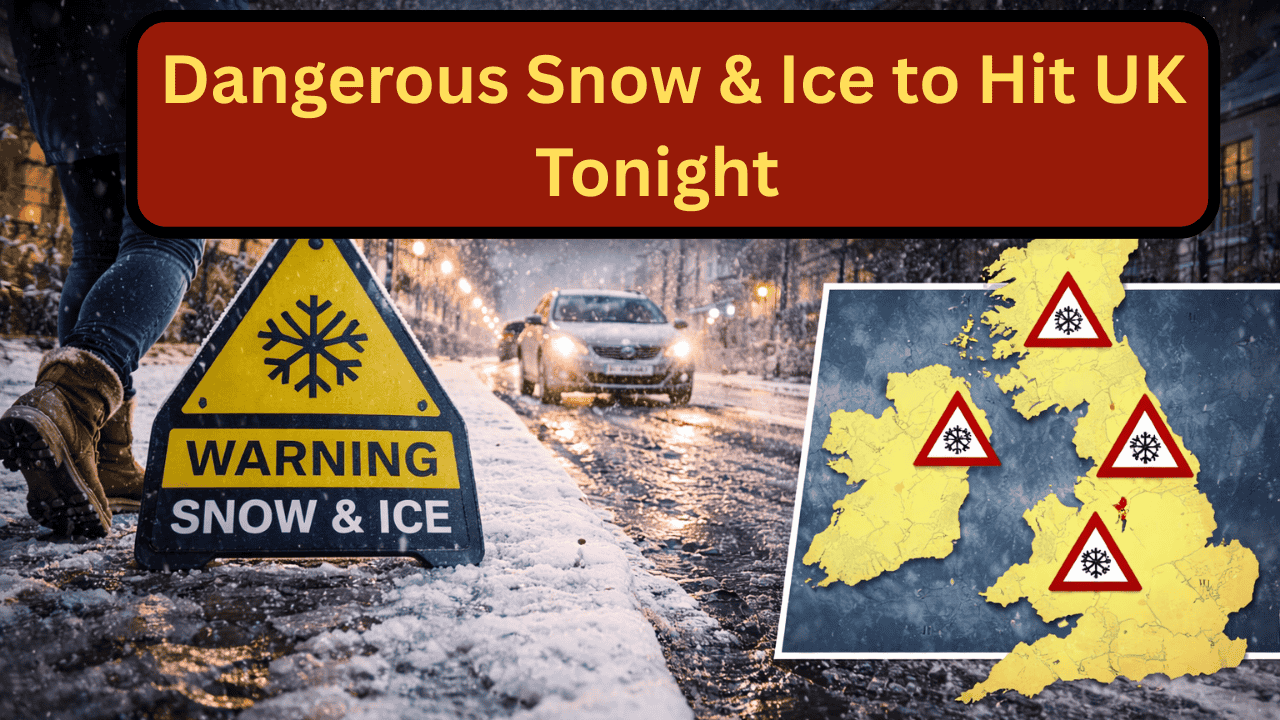
Large parts of the UK are facing dangerous snow and ice tonight, with conditions expected to deteriorate rapidly after dark. Weather officials are warning that a combination of falling temperatures, snow showers, and widespread ice could create hazardous conditions on roads, pavements, and rural routes.
Drivers and older residents are being urged to take precautions immediately, as the most dangerous conditions are forecast to develop overnight and into the early morning hours.
What’s Happening Tonight
According to forecasts, a cold air mass moving across the UK is bringing:
- Snow showers in exposed and higher areas
- Rapid ice formation as temperatures drop below freezing
- Slippery surfaces even where snow is light or brief
The biggest risk comes after sunset, when melting snow refreezes and untreated roads become icy without warning.
Weather warnings have been issued by the Met Office, highlighting the potential for travel disruption and increased accident risk.
Areas Most at Risk
While conditions will vary, the highest risk zones include:

- Northern England
- The Midlands
- Wales
- Scotland
- Parts of eastern and southern England overnight
Rural roads, bridges, shaded streets, and pavements are especially vulnerable to sudden ice.
Why Tonight Is Especially Dangerous
This weather system is particularly risky because:
- Temperatures are dropping quickly, not gradually
- Snow may fall briefly, then freeze solid
- Roads that look wet may actually be black ice
- Overnight gritting may not reach all areas
Drivers often underestimate how quickly conditions change after dark.

Advice for Drivers
Motorists are being urged to:
- Avoid unnecessary journeys overnight
- Reduce speed well below normal limits
- Increase stopping distances
- Avoid sudden braking or steering
- Carry warm clothing and a charged phone
Even short trips can become dangerous if vehicles lose traction on ice.
Why Seniors Are Being Urged to Act
Older people face higher risk from:

- Slips and falls on icy pavements
- Reduced balance and slower reaction times
- Cold-related health issues
Health officials recommend:
- Avoiding going out after dark if possible
- Wearing footwear with good grip
- Keeping homes warm overnight
- Checking heating systems now, not later
Family members are encouraged to check in on older relatives, especially those living alone.
Impact on Transport and Services
Overnight conditions may lead to:

- Early-morning travel delays
- School and service disruptions
- Reduced public transport reliability
- Emergency services taking longer to reach incidents
Authorities warn that conditions may still be hazardous during the morning commute.
What to Do Right Now
Before nightfall:
- Finish essential travel early
- Grit or salt paths if possible
- Prepare for potential power or heating issues
- Keep emergency numbers accessible
Small preparations now can prevent serious problems later.

What Has Not Changed
- This is a weather-related risk, not a new law or restriction
- There are no blanket travel bans
- Conditions may vary by location
However, officials stress that personal responsibility is crucial during overnight ice events.
Questions and Answers
1. When will the worst conditions hit?
After sunset and overnight.
2. Is snow guaranteed everywhere?
No, but ice can form even without snow.

3. What is black ice?
Invisible ice that looks like wet road surface.
4. Are main roads safer?
Usually, but not always — especially late at night.
5. Should I drive if I don’t have to?
No, unnecessary travel is discouraged.

6. Are pavements dangerous too?
Yes, slips and falls are a major risk.
7. Are seniors at higher risk?
Yes, especially from falls and cold exposure.
8. Will gritting solve the problem?
It helps, but not all areas are treated.
9. Could conditions affect the morning commute?
Yes, icy patches may remain.
10. What footwear is best?
Shoes or boots with good grip.
11. Should I check on elderly neighbours?
Yes, especially those living alone.
12. Can temperatures drop suddenly?
Yes, that’s a key risk tonight.
13. Are bridges more dangerous?
Yes, they freeze faster.
14. Will conditions improve tomorrow?
Gradually, but some icy spots may linger.
15. What’s the biggest danger?
Underestimating how slippery surfaces become overnight.









Leave a Comment