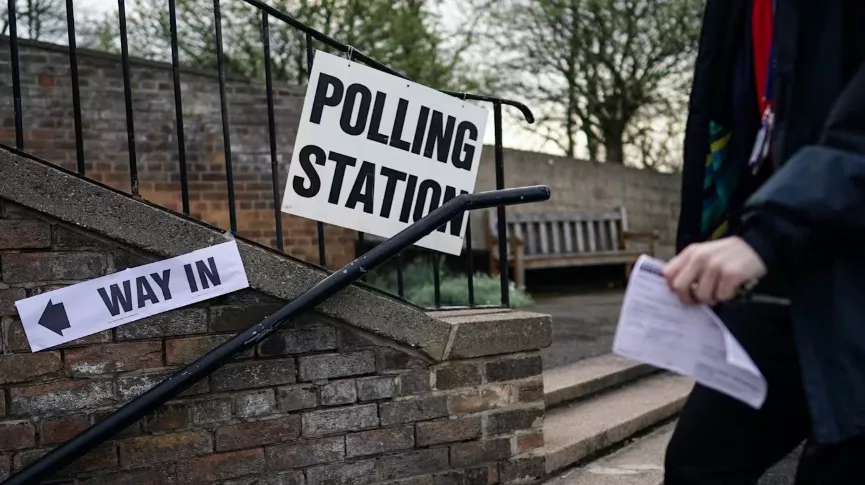
Election observers from Democracy Volunteers say they recorded unusually high levels of apparent collusion at polling stations during the Gorton and Denton by-election, reporting 32 instances of so-called “family voting” after monitoring 22 of the constituency’s 45 stations.
The observers, who worked in pairs under the direction of Dr. John Ault and with support from Prof Robert Haywood, spent roughly 30 to 45 minutes at each location and watched a sample of 545 voters.
They said family voting, where one person appears to influence or accompany another inside the voting booth, potentially undermining the secrecy of the ballot, was observed at 15 of the 22 stations they visited and accounted for about 12 percent of the votes they saw. In one polling place, the group recorded nine such incidents.

Director John Ault described the levels as “concerningly high,” saying the organisation had not seen rates like this in a decade of observing UK elections. The observers also noted that following the Ballot Secrecy Act of 2023, signage discouraging family voting was present in fewer than half of the stations they monitored.
Manchester City Council pushed back on the suggestion of systemic problems, saying polling staff are trained to detect voter interference and that no concerns were reported to council officers while polls were open. The acting returning officer added that a central byelection hub was operating through the day, liaising with police where necessary, and said police officers were present at every polling station. The returning officer said that, had Democracy Volunteers raised issues during polling hours, station staff could have taken immediate action.
Political reaction was swift. The Labour Party called the reports extremely worrying and said it would want to see the full evidence and report before deciding what to request from the authorities. Anna Turley, the Labour Party chair, told broadcasters the findings warranted scrutiny.

The Green party leader said he would back any investigation that promoted transparency, and Reform UK’s leadership urged that any concerns be formally reported and investigated in line with the law.
Democracy Volunteers compared the Gorton and Denton figures with other recent contests, saying family voting affected 12 percent of the voters they observed here versus 1 percent in a recent Westminster by-election in Runcorn and Helsby. The observers characterised the 68 percent station rate they reported in Gorton and Denton as unusually high.

The observers also recorded smaller but related issues, including instances where voters photographed ballot papers and a case in which someone was allowed to vote despite records indicating they had already done so earlier in the day.
The group said it had also seen people turned away, but that those incidents were linked to registration eligibility, for example, residents with EU citizenship who are not eligible to vote in UK parliamentary elections.
Election observers do not have enforcement powers; their role is to report what they see to authorities and to the public.
Officials stressed that the volunteers’ observations remain allegations until examined formally. Police and returning officers said they would consider any formal complaints or evidence submitted after the vote.
The by-election itself drew national attention because of a close contest involving the Labour Party, the Green Party of England and Wales, and Reform UK, and the observer data has already entered the political debate.
Parties have called for the volunteers’ full report to be published so that election officials and, if necessary, law enforcement can judge whether further investigation is required.

For now, the findings stand as a documented set of observations from a single monitoring group. They will be weighed alongside polling station logs, any formal complaints, and any material passed to returning officers or police. If the data prompts further action, that will be handled through the usual channels for electoral complaints and investigation.
Election observers from Democracy Volunteers say they recorded unusually high levels of apparent collusion at polling stations during the Gorton and Denton by-election, reporting 32 instances of so-called “family voting” after monitoring 22 of the constituency’s 45 stations.
The observers, who worked in pairs under the direction of Dr. John Ault and with support from Prof Robert Haywood, spent roughly 30 to 45 minutes at each location and watched a sample of 545 voters.

They said family voting, where one person appears to influence or accompany another inside the voting booth, potentially undermining the secrecy of the ballot, was observed at 15 of the 22 stations they visited and accounted for about 12 percent of the votes they saw. In one polling place, the group recorded nine such incidents.
Director John Ault described the levels as “concerningly high,” saying the organisation had not seen rates like this in a decade of observing UK elections.
The observers also noted that following the Ballot Secrecy Act of 2023, signage discouraging family voting was present in fewer than half of the stations they monitored.

Manchester City Council pushed back on the suggestion of systemic problems, saying polling staff are trained to detect voter interference and that no concerns were reported to council officers while polls were open.
The acting returning officer added that a central byelection hub was operating through the day, liaising with police where necessary, and said police officers were present at every polling station.
The returning officer said that, had Democracy Volunteers raised issues during polling hours, station staff could have taken immediate action.
Political reaction was swift. The Labour Party called the reports extremely worrying and said it would want to see the full evidence and report before deciding what to request from the authorities.
Anna Turley, the Labour Party chair, told broadcasters the findings warranted scrutiny. The Green party leader said he would back any investigation that promoted transparency, and Reform UK’s leadership urged that any concerns be formally reported and investigated in line with the law.
Democracy Volunteers compared the Gorton and Denton figures with other recent contests, saying family voting affected 12 percent of the voters they observed here versus 1 percent in a recent Westminster by-election in Runcorn and Helsby.
The observers characterised the 68 percent station rate they reported in Gorton and Denton as unusually high.
The observers also recorded smaller but related issues, including instances where voters photographed ballot papers and a case in which someone was allowed to vote despite records indicating they had already done so earlier in the day.
The group said it had also seen people turned away, but that those incidents were linked to registration eligibility, for example, residents with EU citizenship who are not eligible to vote in UK parliamentary elections.
Election observers do not have enforcement powers; their role is to report what they see to authorities and to the public.
Officials stressed that the volunteers’ observations remain allegations until examined formally. Police and returning officers said they would consider any formal complaints or evidence submitted after the vote.
The by-election itself drew national attention because of a close contest involving the Labour Party, the Green Party of England and Wales, and Reform UK, and the observer data has already entered the political debate.
Parties have called for the volunteers’ full report to be published so that election officials and, if necessary, law enforcement can judge whether further investigation is required.
For now, the findings stand as a documented set of observations from a single monitoring group. They will be weighed alongside polling station logs, any formal complaints, and any material passed to returning officers or police.
If the data prompts further action, that will be handled through the usual channels for electoral complaints and investigation.









Leave a Comment