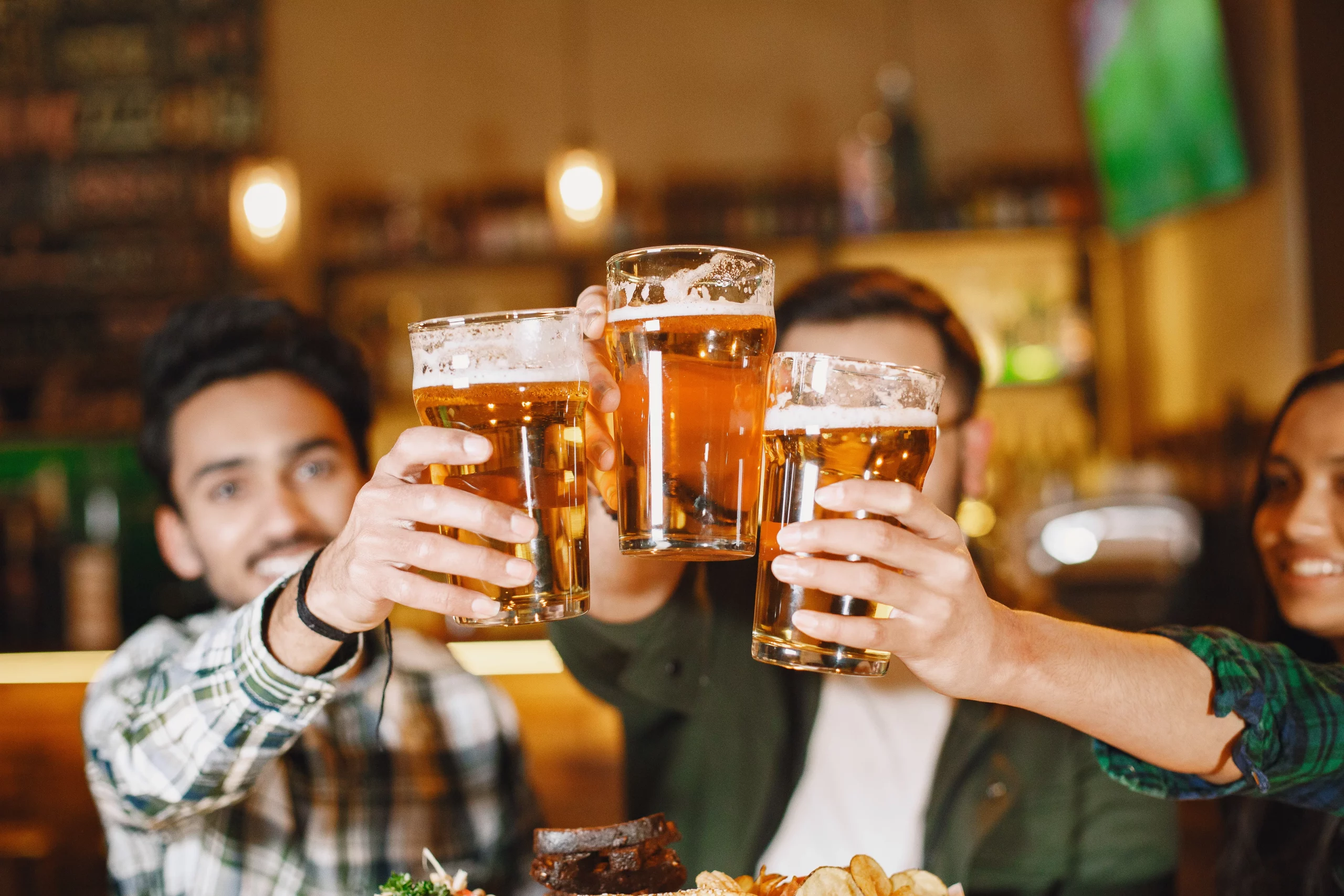
Younger adults are drinking less, and that shift is already reshaping the alcohol market. The change is not a short-lived fad.
It is a generational move away from routine drinking, driven by health concerns, changing social habits, and new alternatives, and it is producing a clear economic impact across beer, wine, and spirits.
Recent polling shows the scale of the change. A national survey by Gallup found that the overall share of Americans who say they drink alcohol has fallen to levels not seen in decades, and the decline is concentrated among people under 35.

That group is far less likely to drink regularly than previous generations were at the same age. At the same time, public health data shows measured alcohol consumption is flat or sliding.
Annual surveillance by the NIAAA reports a modest drop in per capita ethanol consumption from recent peaks, a signal that routine intake is easing off rather than shifting entirely to new venues or formats.
Why younger people are drinking less is straightforward to describe and complicated to reverse. Health consciousness plays a central role.

Many younger adults now view even moderate drinking as a health risk and prefer clarity for work and study. Mental health and performance culture have made sobriety or moderation a socially acceptable choice rather than an outlier.
Social life has changed, too. Nightlife habits that once revolved around bars and clubs are now more diverse; digital socialising and daytime activities are common, reducing the occasions where alcohol is central.
Finally, alternatives are available that did not exist at scale a decade ago. High quality non alcoholic beer, wine, and spirit alternatives have become mainstream, and in some markets, legal cannabis, vapes, and related products provide another substitute.

The financial effect on the industry is real. Volumes of beer and wine among younger cohorts have fallen fastest, which matters because those categories historically formed the entry point for long-term customer relationships.
Analysts and trade reporting show strong growth in no and low alcohol products, but that market still starts from a much smaller base and cannot yet make up for lost volumes in core categories.

Market trackers report double-digit growth rates in no and low alcohol from low sales bases, while the overall category growth in mature markets is sluggish.
The mismatch between rapid percentage growth in alternatives and shrinking absolute volume in mainstream categories is one reason forecasts that assumed each generation would drink at similar levels are now being revised downward.
The shift is changing corporate strategy and investor expectations. Large producers that once relied on steady replacement by younger drinkers now face a future where fewer people routinely drink at midlife.

Some companies are reallocating capital toward premium brands and international markets where drinking is still growing.
Others are investing in alternative drink categories and acquiring smaller brands that appeal to younger consumers. For investors, the question is whether those shifts will preserve margins and top-line growth in an era where the base of habitual drinkers is smaller.
There are broader public consequences as well. From a health perspective, the trend is welcome. Lower routine drinking implies fewer alcohol related harms over time, fewer hospital admissions, and reduced long term disease burden.

For regions dependent on beverage manufacturing and hospitality, the adjustment will be harder. Reduced domestic demand can depress employment in breweries, vineyards, and distilleries and shrink the local economies that cluster around them.
That creates a policy trade-off: public health gains on the one hand, and the need for transition support for workers and communities on the other.

Culture and identity play a continuing role. For many young people, abstaining from alcohol is an identity choice as much as a health one. Sober curious movements and social media communities normalise not drinking, and that changes how brands can speak to audiences.
Younger consumers are skeptical of messaging that feels inauthentic, so simple repositioning of old brands rarely works; alternatives must deliver on taste and experience.
This is not uniform across the world. In many emerging markets, alcohol consumption continues to grow with rising incomes and urbanisation.

The immediate pressure is most acute in developed markets where younger cohorts are a larger share of the population and where alternatives are readily available. How companies respond will determine where growth pockets remain.
The firms that find new value will be those that treat taste experiences and occasion design as the thing to sell, not intoxication alone.
The industry faces a clear choice between adaptation and complacency. Ignoring the generational shift and hoping consumption returns risks creating a long term decline in demand. Rapidly chasing every trend risks losing credibility with younger consumers.
The pragmatic path is redesigning product portfolios and marketing in ways that respect new consumer sensibilities while protecting livelihoods tied to production.
The generational change in drinking is already baked into market numbers. It will not reverse quickly.
For companies, policymakers, and workers, the coming years will be about recession and recovery planning, about innovation and social policy, and about whether entire categories can be reimagined for a generation that values health and choice more than conformity.
The economic consequences are serious, but they are also an opportunity to remake how people socialise and how the industry provides taste and ritual without assuming alcohol must always be the centerpiece.











Leave a Comment