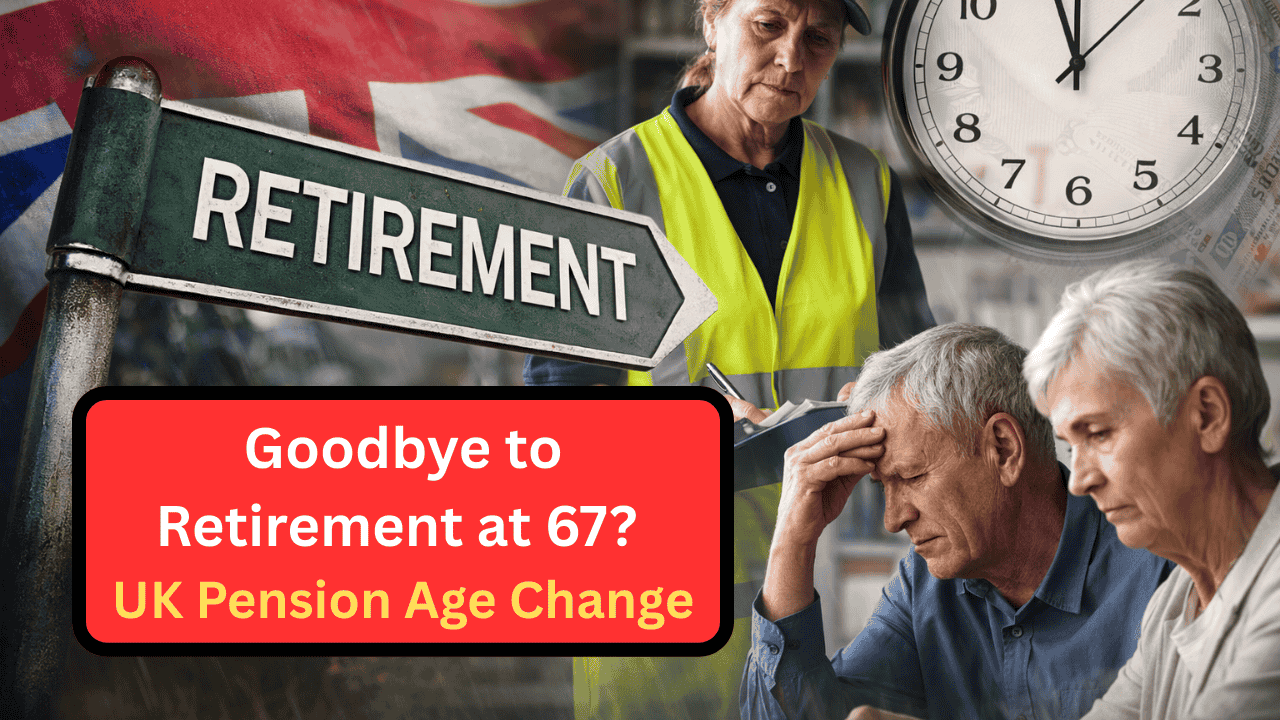
For decades, the idea of retiring in your late 60s has been treated as a fixed destination — a point where work ends and a new chapter begins. For millions of people across the UK, 67 has become that number. But growing debate in Westminster is now raising an uncomfortable question: is retirement at 67 already on borrowed time?
As the cost of pensions rises and people live longer, pressure is mounting on the government to rethink when the State Pension should be paid. While nothing has changed yet, experts warn the direction of travel is clear — and workers need to understand what may be coming.
What Is the UK State Pension Age Right Now?
Under current law, the UK State Pension age is already on a rising path:

- It is increasing to 67 for both men and women by 2028
- It is scheduled to rise again to 68 between 2044 and 2046
These changes were set years ago, but what has changed is the likelihood that the move to 68 could happen earlier than planned.
That possibility has triggered renewed concern among workers in their 40s, 50s, and early 60s — many of whom feel they are already close to their physical or financial limits.
Why the Pension Age Is Being Reconsidered
The review process is overseen by the Department for Work and Pensions, which is legally required to assess whether the State Pension system remains sustainable.

Several long-term pressures are driving the debate:
- Longer life expectancy, meaning pensions are paid for more years
- An ageing population, with fewer workers supporting more retirees
- Rising public spending, especially on health and social care
- State Pension costs, now one of the largest items in the UK budget
Put simply, the system was designed for a very different demographic reality.
A senior policy adviser involved in pensions reform, speaking anonymously, summed it up:

“The question isn’t whether the system is generous — it’s whether it can survive unchanged when people are living longer and retiring later.”
What the Government Is Saying
So far, ministers have been careful with their language.
The official position is that no immediate change has been announced, and retirement at 67 remains the law. However, they have not ruled out accelerating the rise to 68.

A government spokesperson previously said:
“Any future decisions on the State Pension age will be based on evidence, fairness, and long-term affordability for taxpayers.”
That reassurance has done little to calm nerves, particularly among workers who feel they have little room to adapt.

Real Lives Behind the Numbers
For Angela Brooks, a 54-year-old care worker in the North East, the debate feels personal.
“I already work shifts that take a toll on my body. I can’t imagine doing this job well into my late 60s, let alone beyond,” she said.
Stories like Angela’s highlight a key tension in the debate: not all jobs are equal, and not all workers age in the same way.

Manual workers, carers, delivery drivers, cleaners, and warehouse staff often face physical limits that office-based workers may never encounter.
Expert Analysis: Who Loses Most When the Age Rises?
Pensions experts consistently warn that raising the pension age has unequal effects.
Research shows that:

- Higher earners tend to live longer and draw pensions for more years
- Lower-income workers rely more heavily on the State Pension
- Manual workers experience poorer health earlier in life
Dr Simon Wallace, a pensions policy analyst, explains:
“Raising the pension age looks neutral on paper, but in reality it hits people with shorter life expectancy and fewer savings the hardest.”
He adds that without flexibility or exemptions, later retirement risks deepening inequality.

A Look Back: How Quickly Things Have Changed
| Year | State Pension Age | Context |
|---|---|---|
| Pre-1995 | 60 (women), 65 (men) | Shorter life expectancy |
| 2010s | 66 introduced | Cost pressures grow |
| 2028 | 67 | Already legislated |
| Future | 68 or higher | Under active review |
What stands out is the speed of change. In just over a generation, the pension age has shifted dramatically — and could move again.
Why 67 May Not Be the End Point
The government uses a rule of thumb that people should spend no more than one-third of adult life in retirement. As life expectancy increases, that formula almost automatically pushes the pension age higher.
While improvements in longevity have slowed in recent years, officials argue the long-term trend still justifies change.
Critics counter that:
- Healthy life expectancy has not risen at the same pace
- Regional and class-based life expectancy gaps remain stark
- Many workers cannot realistically extend their careers
This tension sits at the heart of the debate.
What This Means for People Still Working
Even without an immediate change, the direction is clear: retirement planning now carries more uncertainty than ever.
Key implications include:
- Greater reliance on workplace and private pensions
- Increased pressure to work longer or retrain later in life
- More people bridging the gap with savings or benefits
- Heightened anxiety for those close to retirement age
Financial advisers increasingly warn clients not to treat the State Pension age as guaranteed.
Could There Be Exceptions or Flexibility?
Some campaigners are calling for:
- Earlier access for people in physically demanding jobs
- Flexibility based on health conditions
- Better support for those unable to keep working
So far, the government has shown little appetite for occupation-based pension ages, arguing they are complex and costly to administer.
However, political pressure on this issue is growing.
What You Should Know Right Now
- Retirement at 67 remains the law
- A faster rise to 68 is being seriously considered, but not confirmed
- Any change would require legislation and advance notice
- People in their 40s and 50s are most exposed to future changes
- Private pension planning is becoming increasingly important
Uncertainty, rather than immediacy, is the defining feature of the current moment.
Questions People Are Asking
Is the pension age changing this year?
No. There is no immediate change.
Could retirement move beyond 67 sooner than planned?
Yes. That possibility is under active review.
Who would be most affected?
Workers nearing retirement who rely mainly on the State Pension.
Will people be warned in advance?
Yes. Any change would require legislation and notice.
Does this affect private pensions?
Not directly, but it increases reliance on them.
Is this only happening in the UK?
No. Many countries are raising retirement ages.
Why not keep the age at 67?
The government argues it may not be affordable long-term.
Are manual workers treated differently?
Currently no, which is a major source of criticism.
Can I still retire earlier?
Yes, but without the State Pension until eligible age.
Is 68 the final limit?
No fixed upper limit exists under current policy.
For now, retirement at 67 remains intact. But the growing debate makes one thing clear: the idea of a fixed, predictable retirement age is fading. For workers across the UK, planning ahead — and planning flexibly — has never been more important.









Leave a Comment