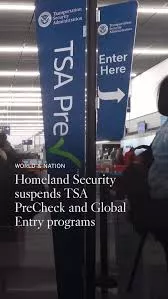
Travelers are rightly unnerved by the recent funding fight that put TSA PreCheck at risk. After a lapse in Department of Homeland Security funding, officials briefly announced plans to suspend expedited screening programs, including PreCheck and Global Entry.
That announcement triggered an immediate backlash from airlines, airports, and lawmakers. Within about a day DHS reversed its decision for PreCheck and said the program would remain operational for now.
Global Entry remains suspended, and users should expect standard passport control processing until that changes.

The reversal does not remove the risk. DHS made clear the comeback is conditional. If staffing shortfalls grow because agents are furloughed, reassigned, or simply unavailable, TSA may be forced to scale back PreCheck lanes at particular airports or during peak windows.
Those adjustments can happen quickly and unevenly, meaning one airport might keep expedited lanes while another reduces them. The only true fix is congressional action to restore DHS funding.
Predicting an exact timeline is impossible because this is a political problem, not an operational one. If lawmakers pass a short-term funding bill or continuing resolution in the next few days, operations can stabilize almost immediately and any temporary restrictions can be reversed.

If the funding gap hangs on for several days to a couple of weeks, expect a rolling pattern of localized reductions and selective closures of PreCheck lanes.
If the shutdown stretches into multiple weeks, the risk of broader and longer suspensions grows, and Global Entry will remain unavailable for routine use.
A realistic planning window for travelers is therefore several days up to a couple of weeks, with the caveat that a longer shutdown would push that window out further.

Given how quickly the agency backed down under pressure, the most likely short-term outcome is limited disruption rather than a full national cutoff. But small disruptions can still cause long lines, missed connections, and widespread frustration, so preparing for the worst while hoping for a quick resolution is sensible.
Practical steps for anyone flying right now are straightforward. Check tsa.gov, your airline, and the departure airport within 24 hours of travel for the latest operational notices.
Allow extra time at the airport. Even with PreCheck lanes open, staffing pressures can slow processing. If you rely on Global Entry for fast reentry to the United States, expect to use the standard passport control lines until the suspension is lifted. Keep travel documents and boarding passes easily accessible and use airline apps for real time updates.

If your itinerary is flexible, consider traveling at off-peak times to reduce exposure to crowds and lane closures. If you have a tight connection and PreCheck would have been critical, contact your airline to discuss alternatives or to request assistance.
Business travelers who regularly use expedited screening should flag trips with their firms and consider contingency plans. Frequent flyers with lounge access may find it worth arriving early and waiting in quieter terminal areas if lines form.
Watch three things closely. First, official DHS and TSA statements provide the clearest guidance about national policy and any formal lane closures. Second, major airports and airlines post local advisories and will often provide the first signs of lane reductions. Third, congressional calendars and news about funding votes are the real predictors of how soon the situation will normalize.

The political context matters. The move to suspend programs reflected a strict reading of what non-funded agencies can and cannot sustain.
The rapid reversal reflected the operational reality that shutting PreCheck would cause immediate disruption and backlash. What remains unresolved is whether the administration will find alternative legal or administrative tools to keep expedited programs running if funding remains paused.
Those options exist but are narrower and slower than the authority DHS claimed when it first announced the tariffs would be suspended.

In short, PreCheck is working now, but the program is operating under a cloud. The timetable depends entirely on Congress.
For most travelers, the sensible assumption is uncertainty for the next several days to a couple of weeks. Plan extra time, monitor official channels, and be prepared to use standard security and customs processing if the situation changes.









Leave a Comment