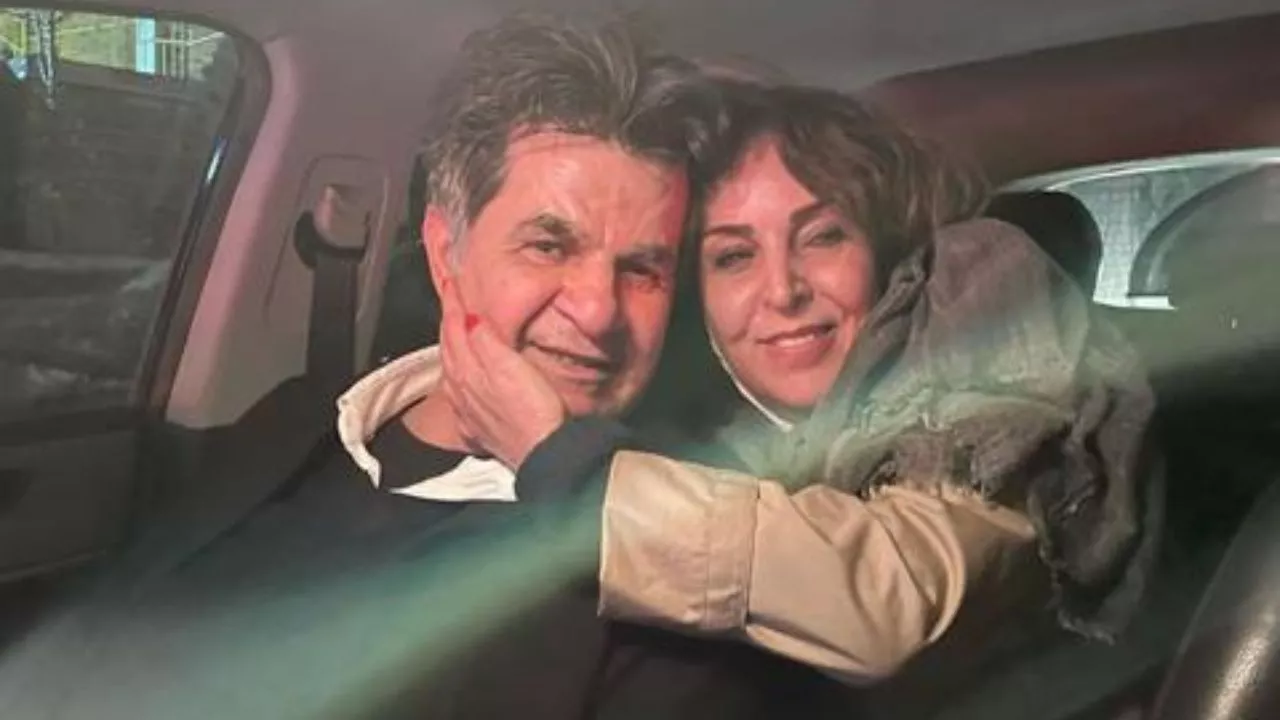
The wife of acclaimed Iranian filmmaker Jafar Panahi has spoken out forcefully against his latest imprisonment, describing it as nothing less than a kidnapping.
Tahereh Saeedi’s remarks come at a time when the director once again finds himself at the center of Iran’s ongoing crackdown on dissenting voices within its artistic community.
Panahi, widely regarded as one of Iran’s most important contemporary directors, was detained after going to a prosecutor’s office in Tehran to inquire about the arrests of fellow filmmakers.

Authorities subsequently moved to enforce a previously suspended six year prison sentence that had originally been handed down in 2010. That earlier conviction was tied to allegations of propaganda against the political system, along with a lengthy ban on filmmaking and travel.
Saeedi, speaking to BBC Persian, questioned the legality and fairness of the process that led to her husband’s detention. She argued that due process had not been followed and that imprisoning someone who was seeking information about colleagues raised serious concerns.
Her use of the word kidnapping reflects the depth of frustration felt by Panahi’s family and supporters, who see his detention as emblematic of broader restrictions on free expression in Iran.

Panahi’s career has long unfolded in tension with the authorities. He first gained international recognition with The White Balloon, which won the Caméra d’Or at the Cannes Film Festival in 1995.
Over the years he continued to build a reputation for intimate, socially observant storytelling that often focused on the lives of ordinary Iranians. His later works, however, were created under increasing scrutiny and limitation.
After his 2010 conviction, Panahi was officially barred from making films, yet he continued to work in defiance of the ban. One of his most famous acts of creative resistance was This Is Not a Film, a project shot largely inside his apartment and reportedly smuggled out of the country on a USB drive hidden in a cake.

He followed this with other clandestine productions, including Taxi, which went on to win the Golden Bear at the Berlin International Film Festival. Through these works, Panahi demonstrated that restrictions could not entirely silence his voice.
His more recent film projects have continued to draw global attention, even when he has been unable to travel to promote them. International festivals have repeatedly screened his films in his absence, turning empty chairs into symbols of artistic repression.
Colleagues and film organizations around the world have frequently called for his release during previous detentions, framing his case as part of a wider struggle for creative freedom in Iran.

Panahi’s latest imprisonment occurs against the backdrop of social and political tensions within the country. In recent years, protests over economic pressures, governance issues and social policies have prompted stronger enforcement measures by the authorities. Artists, filmmakers and documentarians have found themselves particularly vulnerable when their work intersects with political themes or public criticism.
For many in the global film community, Panahi represents more than a single director facing legal trouble. He embodies the resilience of artists who persist despite systemic obstacles.
Saeedi’s statement underscores the human toll of that resilience. Behind the accolades and festival honors stands a family coping with uncertainty and separation.

As calls for his release circulate once again, Panahi’s situation highlights the continuing friction between artistic expression and state power.
Whether through international awards or outspoken advocacy from loved ones, his name remains firmly in the public eye, even as he sits behind prison walls.











Leave a Comment