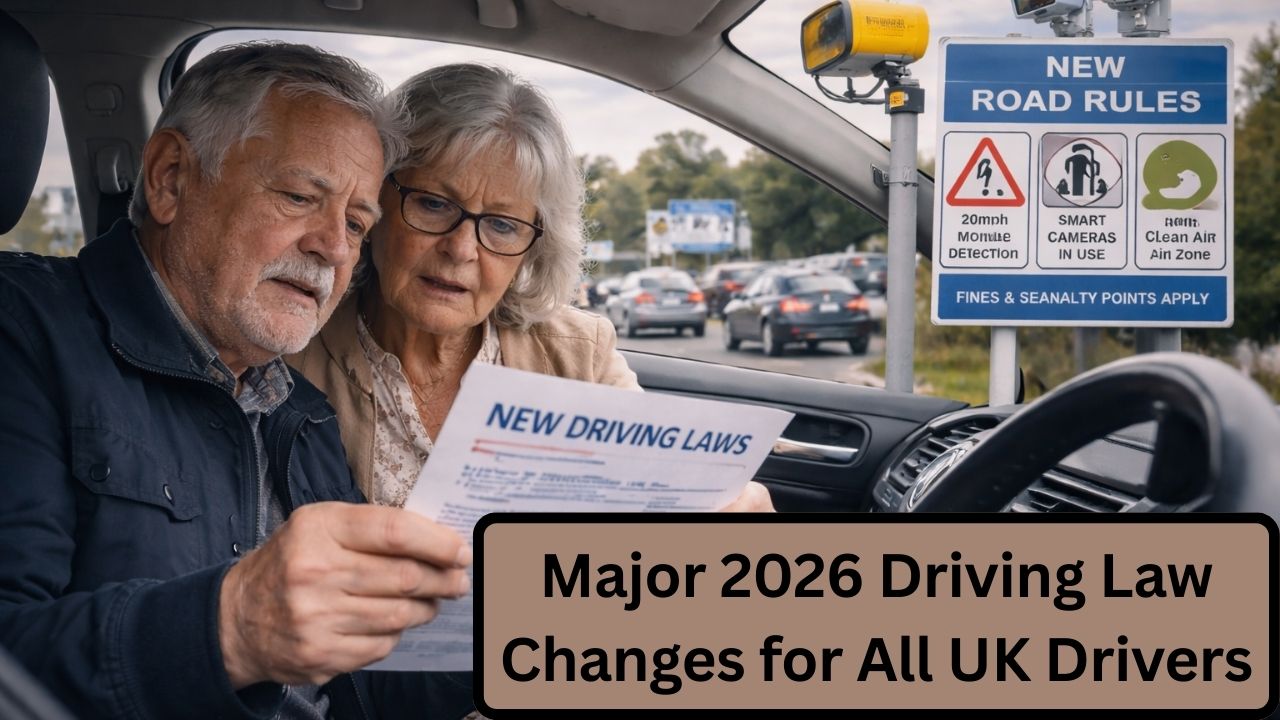
For drivers across the UK, 2026 is shaping up to be a year of significant change. From city streets to motorways, new driving laws and enforcement measures are coming into force that will affect how people drive, what they’re fined for, and how closely they’re monitored.
Many of these changes are being introduced quietly — through updated regulations, expanded powers for councils, and evolving road safety policy — meaning some motorists may only realise the rules have changed after receiving a fine or penalty notice.
Here’s a clear, up-to-date breakdown of the major 2026 driving law changes all UK drivers need to know.

What’s Changing in 2026 — At a Glance
Key updates affecting drivers nationwide include:
- Expanded use of smart enforcement cameras
- Stricter penalties for mobile phone use
- New default speed limit zones
- Stronger enforcement of careless and dangerous driving
- Tighter rules around vehicle condition and emissions
- Greater local authority powers over traffic rules
These changes apply to all drivers, not just new or professional motorists.
1. Tougher Penalties for Mobile Phone Use
Using a handheld mobile phone while driving has been illegal for years, but enforcement and penalties are tightening further in 2026.

What drivers should know:
- Any hand-held interaction with a phone is an offence
- Enforcement cameras can now detect phone use more accurately
- Penalties typically include £200 fines and six penalty points
- New drivers risk immediate licence loss
Authorities say mobile distraction remains one of the leading causes of serious collisions.
2. Expansion of Smart Camera Enforcement
2026 will see a major rollout of AI-enabled traffic cameras across the UK.

These cameras can detect:
- Speeding
- Mobile phone use
- Failure to wear seatbelts
- Red-light violations
Unlike older systems, these cameras operate continuously and across multiple offences at once. Drivers may not realise an offence has been recorded until a notice arrives days later.
3. Wider 20mph and Variable Speed Zones
Local councils now have broader powers to set default speed limits.

In 2026:
- 20mph limits continue expanding in residential and urban areas
- More roads use variable speed limits that change by time or conditions
- Drivers are expected to follow posted signs, not historic limits
Failing to notice a changed limit is not considered a valid defence.
4. Harsher Treatment of Careless Driving
Careless driving offences are being more actively enforced, even without a collision.

Examples include:
- Tailgating
- Lane hogging
- Aggressive acceleration or braking
- Ignoring pedestrian priority
Penalties can include fines, points, retraining courses, or court action. Police are being encouraged to intervene earlier, before serious incidents occur.
5. New Focus on Vehicle Condition and Emissions
In line with environmental and safety goals, 2026 brings tighter scrutiny of vehicles themselves.

Drivers may face penalties for:
- Faulty lights or tyres
- Excessive exhaust noise
- Visible smoke or emissions
- Missing or obscured number plates
Enforcement can happen roadside or via camera systems, particularly in clean air and low-emission zones.
Why These Changes Are Being Introduced
The government and local authorities cite several reasons:

- Reducing road deaths and serious injuries
- Adapting to increased traffic and urban density
- Encouraging safer, calmer driving behaviour
- Supporting environmental targets
- Using technology to improve compliance
Officials argue that modern enforcement tools make roads safer — critics argue they increase fines without enough public awareness.
What Drivers Are Most Likely to Be Caught Out By
Based on enforcement trends, drivers are most at risk if they:
- Assume speed limits haven’t changed
- Briefly touch or check a phone at traffic lights
- Rely on outdated satnav data
- Ignore minor vehicle defects
- Drive “as usual” in newly monitored areas
Many offences now carry penalties even when drivers believe they’re behaving safely.

What Drivers Should Do Now
To stay compliant in 2026, drivers are advised to:
- Check local speed limit changes regularly
- Avoid any phone handling while driving
- Keep vehicles well maintained
- Watch for new signage and camera warnings
- Update satnav and driving apps
- Drive defensively and predictably
Small adjustments can prevent fines, points, and insurance increases.
Q&A: UK Driving Law Changes 2026
1. Are these changes nationwide?
Yes, though some enforcement varies by council.
2. Do I need to retake a test?
No.
3. Are penalties higher in 2026?
For some offences, yes.
4. Can cameras really detect phone use?
Yes — with increasing accuracy.
5. Are 20mph zones mandatory?
Yes, where posted.
6. Will satnavs update automatically?
Not always — manual updates may be needed.
7. Are older drivers targeted?
No — rules apply equally to all.
8. Can I appeal fines?
Yes, but evidence standards are strict.
9. Do these changes affect insurance?
Yes — penalties can raise premiums.
10. Are emission rules stricter?
Yes, especially in urban areas.
11. Can councils change limits without warning?
They must signpost changes clearly.
12. Are seatbelt rules changing?
Enforcement is increasing, not the rule itself.
13. Are motorcycles affected?
Yes — the same laws apply.
14. Do these rules apply to visitors?
Yes — all drivers must comply.
15. What’s the biggest risk for drivers?
Assuming old rules still apply.










Leave a Comment