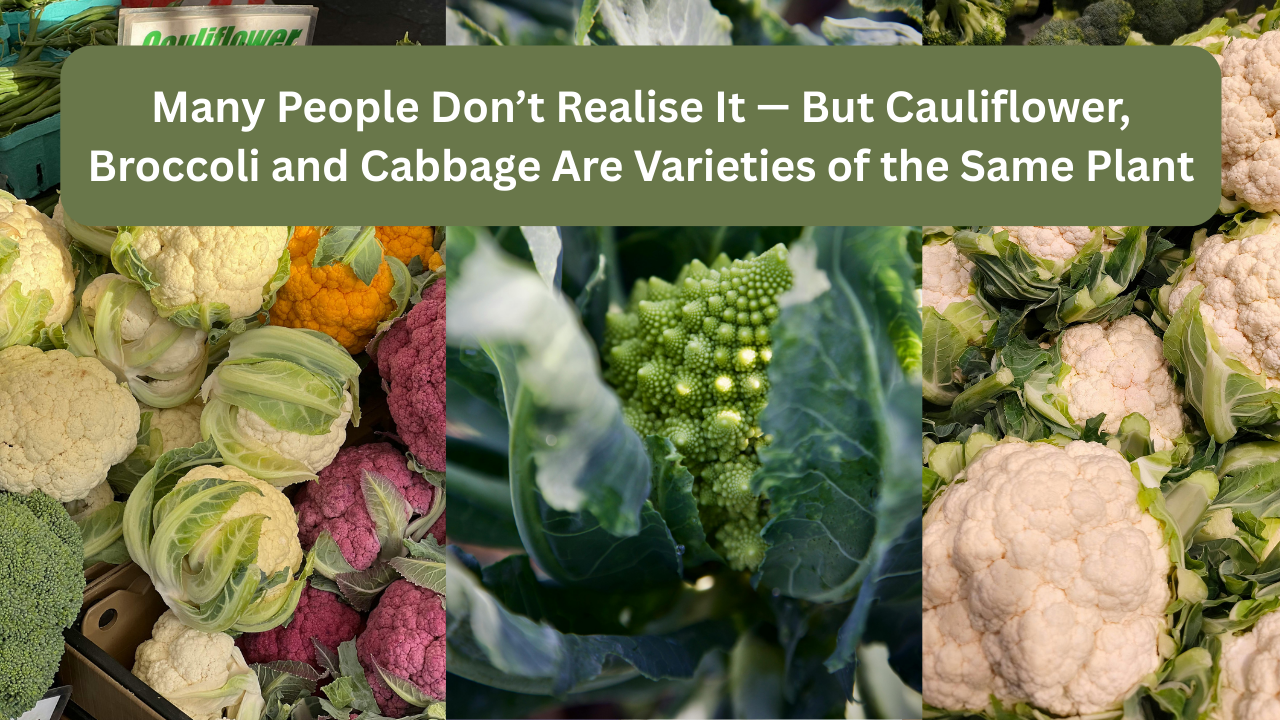
They look different, taste different, and even cook differently — yet cauliflower, broccoli, cabbage, kale, Brussels sprouts, and kohlrabi all come from the same plant species. For many people, this comes as a genuine surprise.
What we think of as completely separate vegetables are actually carefully bred versions of a single wild plant, shaped over centuries by human selection rather than nature alone.
Here’s how one humble plant became so many familiar foods — and why it matters more than you might think.

The One Plant Behind Them All
All of these vegetables belong to the same species: Brassica oleracea.
In the wild, this plant looked nothing like the vegetables we recognise today. It was a leafy, tough plant that grew along European coastlines. Over hundreds — even thousands — of years, farmers selectively bred it to emphasise different parts of the plant.
The result wasn’t one improved vegetable — but many.

How One Plant Became So Many Vegetables
Each familiar vegetable comes from focusing on a different trait of the same species.
Here’s how it breaks down:
- Cabbage → bred for tightly packed leaves
- Kale → bred for large, open leaves
- Broccoli → bred for flower buds and stems
- Cauliflower → bred for undeveloped flower heads
- Brussels sprouts → bred for side buds
- Kohlrabi → bred for a swollen stem
Genetically, they’re extremely similar. Structurally, they’re completely different.

Why They Look So Different
The key lies in selective breeding, not genetic modification.
Farmers repeatedly saved seeds from plants that showed a desired trait — bigger leaves, thicker stems, tighter buds — and replanted them generation after generation.
Over time:

- Small differences became dramatic changes
- The plant’s energy was redirected to one part
- Other parts shrank or became less important
That’s why cauliflower forms a dense white head, while broccoli branches outward with green florets — even though they share the same DNA blueprint.
Taste Differences Explained
If they’re the same plant, why do they taste so different?
It comes down to:

- Sulphur compounds (stronger in cabbage and Brussels sprouts)
- Sugar levels (higher in cauliflower)
- Texture (leafy vs fibrous vs compact)
- Cooking reaction (some release more aroma when heated)
The underlying chemistry is similar — but how it’s expressed varies by plant part.
That’s also why overcooking any of them can produce a strong smell: the same compounds are present in all of them.
Nutritional Similarities You Might Not Notice
Because they’re the same species, they share many nutritional strengths:

- High in fibre
- Rich in vitamin C
- Good source of vitamin K
- Contains antioxidants
- Supports gut health
The differences are mostly in concentration, not type.
For example:
- Kale is higher in vitamin K
- Broccoli has more folate
- Brussels sprouts are fibre-dense
But nutritionally, they’re cousins — not strangers.

Why This Matters for Cooking
Understanding that these vegetables are related explains why:
- They substitute well for each other in recipes
- They roast similarly
- They react similarly to heat and seasoning
- They pair well with the same flavours (garlic, olive oil, lemon, cheese)
If you know how to cook one well, you’re already halfway to mastering the rest.
It Also Explains Garden Variety Packs
Ever seen seed packets labelled “brassicas”?

That’s because gardeners treat these vegetables as part of the same family:
- They attract the same pests
- Prefer similar soil
- Need similar nutrients
- Rotate together in crop planning
From a growing perspective, they’re practically siblings.
A Common Misunderstanding
Many people assume:
- “They must be hybrids”
- “One was genetically modified”
- “They’re related, but not the same”
In reality, they are the same species, shaped by human choice long before modern science existed.
No lab required — just patience and observation.
Why Humans Did This in the First Place
Early farmers weren’t trying to create variety for fun.
They wanted:
- Reliable food sources
- Plants that stored well
- Different textures for cooking
- Seasonal flexibility
- Better yields
By diversifying one hardy plant, they created multiple foods from a single species — a remarkably efficient strategy.
Questions People Often Ask
Are they genetically identical?
No — but they’re genetically very close.
Can they crossbreed?
Yes, under the right conditions.
Is one healthier than the others?
They’re all healthy in different ways.
Why does cauliflower turn yellow sometimes?
Sunlight exposure affects pigment development.
Is broccoli just immature cauliflower?
No — they’re bred for different flower structures.
A New Way to See the Veg Aisle
Once you know this, it’s hard to unsee it.
What looks like variety is really human creativity applied to nature — taking one tough coastal plant and transforming it into half the vegetables on your plate.
Different shapes.
Different tastes.
Same origin.
Next time you’re choosing between broccoli, cauliflower, or cabbage, you’re not picking between strangers — you’re choosing between siblings raised to shine in different ways.










Leave a Comment