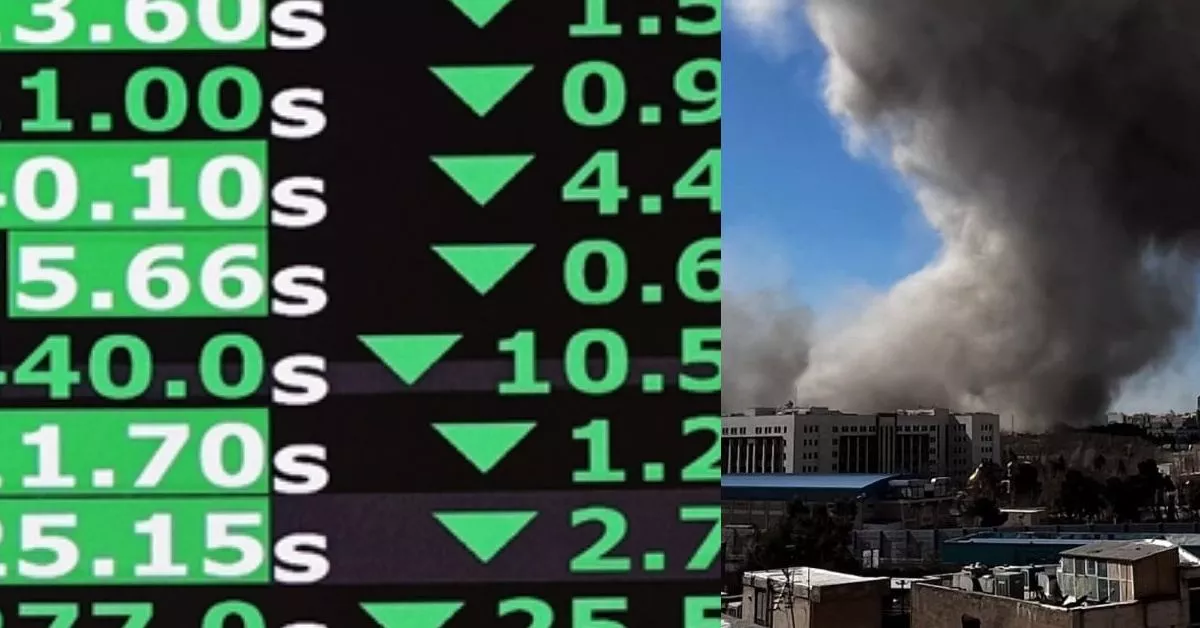
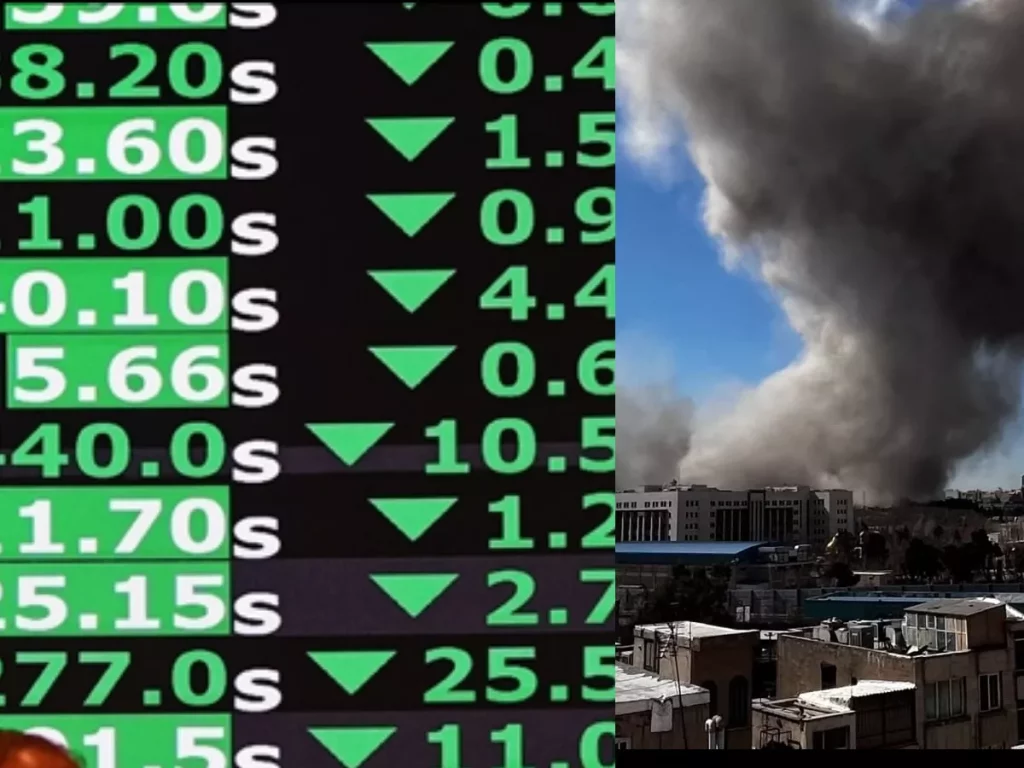
European stocks took a hit on Monday as worries grew over the fighting in the Middle East. The Stoxx Europe 600 index, which tracks a wide range of companies across the continent, dropped by about 1.6 %.
It closed at 623.63 after losing more than 10 points during the day. This slide came right after the United States and Israel carried out major attacks on Iran, starting over the weekend.
The recent strikes killed several important figures in Iran, including Supreme Leader Ayatollah Ali Khamenei. In response, Iran launched drone and missile attacks on Israel and on places in the region where American forces are based.

Amid the chaos, markets across Europe have been affected and felt the pressure.
In Germany, the DAX fell 2.56 % to finish around 24,638, while the UK’s FTSE 100 went down 1.2 % to 10,780.11.
Whereas, France saw its CAC 40 drop 2.17% to 80,394.32, Italy’s FTSE MIB declined 1.7 % to 46,280.40, and Spain’s IBEX 35 lost 2.6% to end at 17,875.80.

Let alone stocks, the chaos has also already affected energy supplies around the world. European gas prices jumped 35. 5% because everyone is concerned about what might happen next to oil and gas flows.
While stocks got hit, oil companies did well in the trading. Norway’s Var Energi rose 6 %, and Equinor climbed 8% as traders bet on tighter supplies ahead.
Defense stocks also moved higher since more conflict often means more demand for military equipment. BAE Systems in the UK gained 6.1 %, Italy’s Leonardo went up 2.5 %, and Germany’s Renk increased 3.3 %.

On the other side, companies tied to travel and tourism suffered since uncertainty in the region makes people think twice about flying or booking trips there.
The European Union Aviation Safety Agency extended its warning for airlines to stay away from airspace over the Middle East and the Gulf until March sixth. Some maritime insurers have pulled back war risk coverage for ships in that area, which adds more risk to global trade routes.
Other news included the euro area manufacturing PMI rising to 50.8 in February. That was the best reading in 44 months and showed the sector starting to grow again.

The euro fell against the dollar, trading at 1.1702, down about 0.95 %
Separately, the European Union and Switzerland signed a big package of agreements to strengthen their ties. However, the main focus remained on the Middle East, where the strikes and counterstrikes have rattled investors and pushed stock prices lower across the board.










Leave a Comment