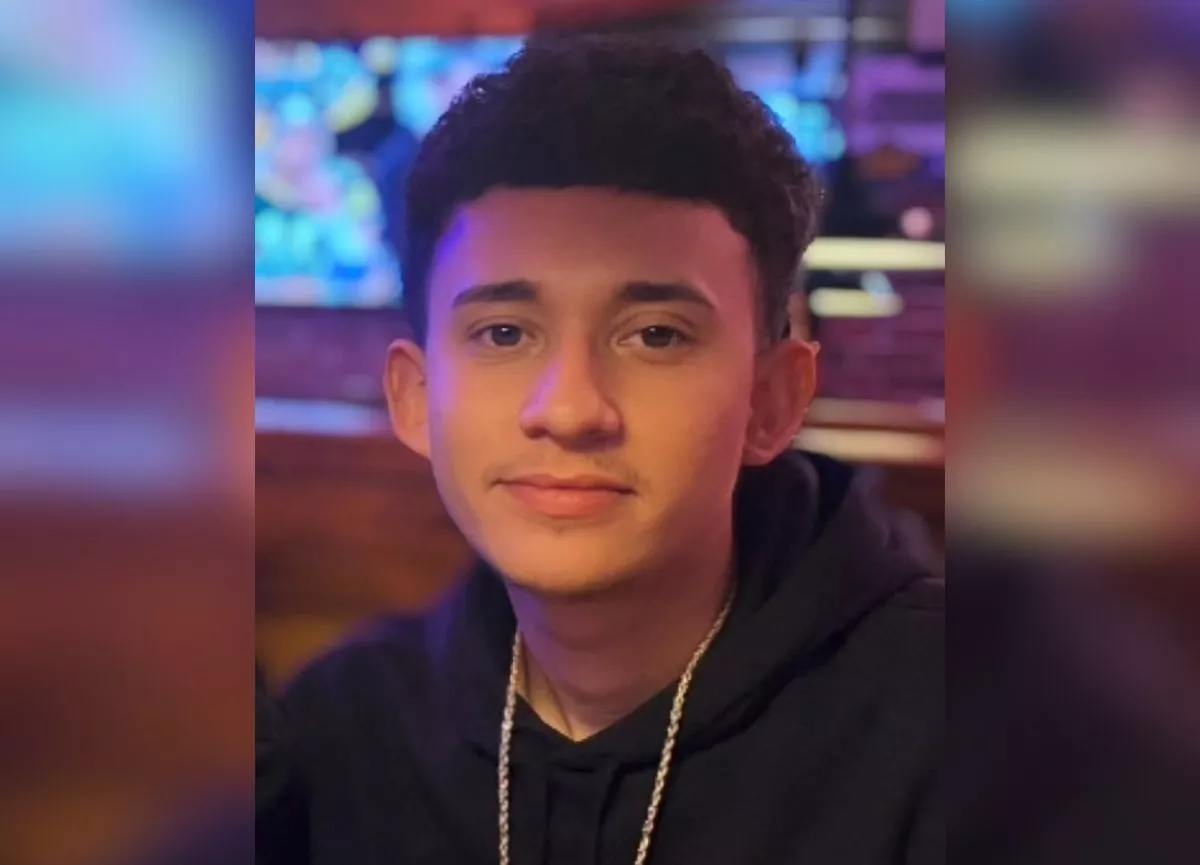
In the early hours of a quiet Saturday morning, 25-year-old Joshua Orta was behind the wheel on a San Antonio highway, speeding through the night with his stepsister and two other passengers.
What started as a routine drive turned deadly when Orta lost control on a curved exit ramp. His car veered off the road, slamming into a utility pole with such force that the vehicle burst into flames.
Despite desperate efforts by his passengers to pull him from the wreckage, Orta couldn’t be saved. He died at the scene, leaving behind a grieving family and a lingering shadow over a high-profile case he was deeply connected to.
This Joshua Orta car accident has raised questions not just about road safety, but about the fate of a crucial eyewitness in a fatal shooting involving federal agents.
Orta wasn’t just any young man; he was the sole passenger and key witness in the March 15, 2025, shooting of his childhood friend, Ruben Ray Martinez, on South Padre Island, Texas.
The two had set out for a spontaneous trip to celebrate Martinez’s 23rd birthday, heading to the popular beach spot to meet friends. They spent the day relaxing in a condo, enjoying a few drinks, hitting a pool party, and grabbing food at Whataburger.
But their fun evening took a tragic turn when they stumbled upon a chaotic scene: a car accident blocking the road, with local police and federal agents directing traffic.
According to the Department of Homeland Security (DHS), Martinez failed to comply with repeated commands to stop and exit the vehicle.
They claimed he accelerated toward officers, even striking a Homeland Security Investigations (HSI) agent, prompting another agent to open fire in self-defense.
Martinez was shot multiple times in the chest and died from his injuries. But Orta’s account painted a very different picture, one that directly challenged the official narrative and could have shifted the course of an ongoing investigation.
In a detailed draft affidavit prepared for Martinez’s family lawyers, Orta described how an officer spotted an open alcohol container in their car and told them to turn around and leave.
Traffic was backed up, making it hard to maneuver, so they inched forward slowly. That’s when, Orta said, a state trooper approached, slapped the hood of the car, and seemed to position himself in front of the vehicle.
More officers surrounded them, shouting to stop and drawing their guns. Orta insisted the car was barely moving—”just crawling”—and that Martinez never hit anyone or accelerated dangerously.
Without any warning or chance to comply, an agent fired point-blank through the driver’s side window, so close that bullet casings landed inside the car.
“I heard Ruben say, ‘I’m sorry,’ and then he slumped backward,” Orta recounted in his statement.
Officers then pulled Martinez from the vehicle, placed him face down on the ground, and handcuffed him, waiting at least 10 minutes before providing medical aid. Martinez, who had no criminal record, was pronounced dead, leaving his mother, Rachel Reyes, devastated and determined to seek justice.
She told reporters that videos obtained by Texas Rangers investigators undercut the DHS’s claims, showing her son wasn’t trying to run over anyone.
Orta had shared this eyewitness testimony with attorneys Alex Stamm and others representing the Martinez family, who are preparing a wrongful death lawsuit against the federal agents involved.
He was set to formally sign the affidavit and cooperate further with the Texas Rangers, who confirmed last week they are probing the shooting. But Orta’s sudden death in the car accident has robbed the case of its most critical voice.
Stamm said.
“First and foremost, Joshua’s death is an awful tragedy for his family and friends, In terms of Ruben’s death, the world has also now lost a critical eyewitness.”
Via wsls
The DHS, for its part, stands firm. On Monday, they issued a brief statement: “We stand by our original statement.” The agents involved were part of a maritime border enforcement task force, reassigned amid heightened immigration efforts under recent policies.
An internal ICE report, released after a Freedom of Information Act lawsuit, detailed their focus on transnational crimes but noted the shift to broader enforcement duties.
This isn’t an isolated incident. Orta’s account echoes other controversial shootings, like the January 2025 killing of Renee Good, a 37-year-old mother in Minneapolis.
There, an ICE officer shot Good in her SUV, initially labeling her a “domestic terrorist” who tried to ram officers. Videos later contradicted that, showing no such threat.
Law enforcement training typically warns against stepping in front of vehicles precisely to avoid these dangers. Like Martinez, Good had no criminal history, highlighting a pattern of quick escalations in encounters with federal agents.
The Joshua Orta car accident has sparked online speculation and concern, with some on social media questioning if it was truly accidental, though police reports confirm high speed and loss of control as the causes, with no evidence of foul play.
Orta’s stepsister and the other passengers survived, but the loss hits hard for both families. Martinez’s mother, Reyes, now faces an uphill battle without her son’s closest friend to testify.
As the Texas Rangers continue their investigation, advocates call for full transparency, including releasing all videos and evidence to the public.
In the end, two young lives cut short, Martinez in a hail of bullets, Orta in a blaze of fire, leave a community searching for answers.
Their stories underscore the human cost of split-second decisions and the fragility of justice when key voices are silenced forever.
May they rest in peace, and may their families find the support they need in this difficult time.



Leave a Comment