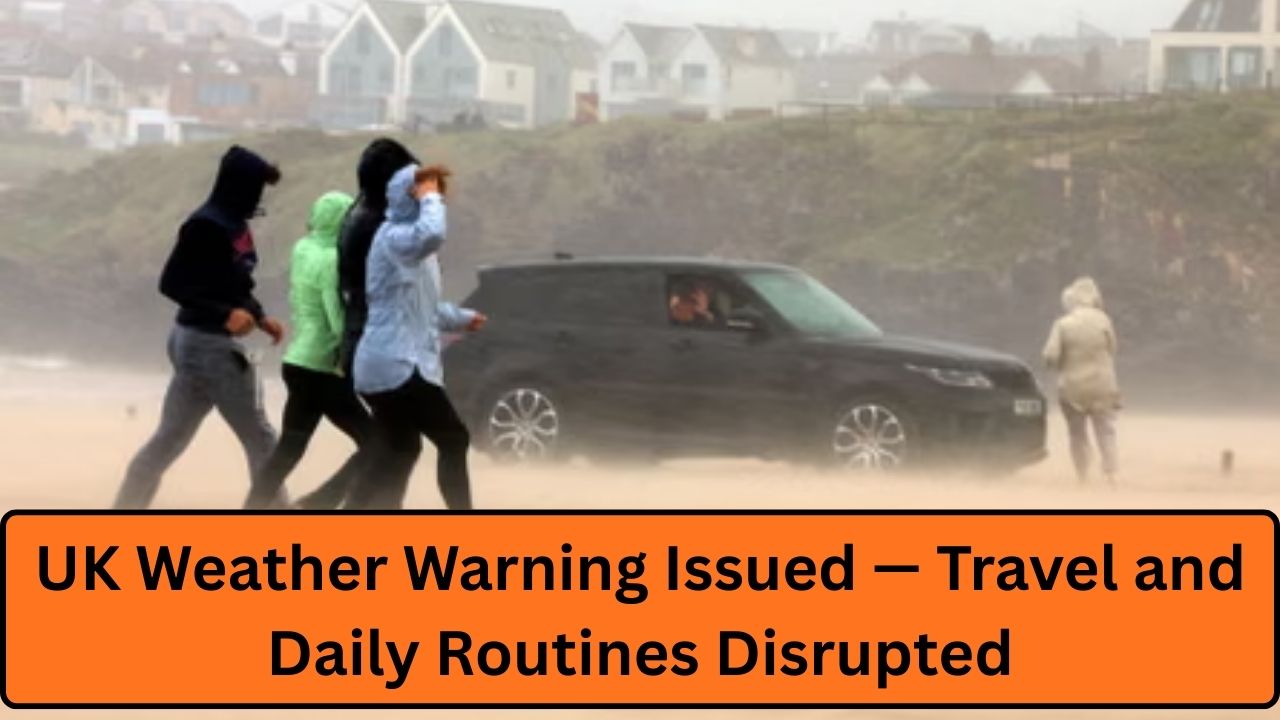
Large parts of the UK are facing disrupted travel and daily routines after fresh weather warnings were issued, with heavy rain, strong winds, and hazardous conditions affecting communities from early morning onward. For many households, the biggest challenge has been sudden disruption — school runs delayed, journeys cancelled, and outdoor plans abruptly shelved.
Officials say the situation remains changeable, with conditions worsening quickly in some areas.
What the Weather Warning Covers
The warning, issued by the Met Office, highlights a combination of:

- Prolonged heavy rainfall
- Strong to gale-force winds in exposed areas
- Risk of localised flooding
- Difficult driving conditions, especially during peak hours
The warning applies to multiple regions, with impacts varying significantly depending on local geography and drainage.
Travel Disruption Already Being Felt
Transport authorities say weather-related disruption is affecting both road and rail networks.
Common issues reported include:
- Flooded or partially flooded roads
- Delays and cancellations on rail services
- Reduced visibility on motorways and rural routes
- Temporary speed restrictions on exposed lines
The Department for Transport has advised travellers to allow extra time and avoid non-essential journeys where possible.
How Daily Life Is Being Affected
Beyond transport, the warning is having a knock-on effect on everyday routines.
Households are reporting:

- School and childcare disruptions
- Delayed medical appointments
- Difficulty for carers visiting older or vulnerable people
- Power interruptions in wind-exposed areas
For people working outdoors or relying on public transport, the impact has been particularly noticeable.
Why This Weather Is Causing Problems
Weather experts say the disruption is less about one extreme factor and more about multiple risks happening at once.
Key concerns include:

- Saturated ground increasing flood risk
- Sudden wind gusts bringing down branches and debris
- Poor visibility during heavy downpours
- Standing water causing aquaplaning
Even moderate rainfall can create significant problems when ground conditions are already wet.
Impact on Older Adults and Vulnerable People
Local councils and community groups are urging extra care for:
- Older adults living alone
- People with mobility issues
- Those relying on home care visits
Missed appointments or delayed visits can have serious consequences during severe weather, particularly for people on fixed routines.

What Authorities Are Advising
Emergency planners recommend:
- Avoid unnecessary travel
- Check public transport updates before setting off
- Drive cautiously and avoid flooded roads
- Secure loose outdoor items
- Check on neighbours where possible
Households in flood-prone areas are advised to prepare in case conditions worsen.
What Has Not Changed
Despite some social media speculation:

- There is no nationwide emergency declaration
- Not all regions are equally affected
- Warnings may be upgraded or downgraded as conditions evolve
Officials stress that localised impacts are likely, even outside warning zones.
Real Experiences From Around the UK
Helen, a commuter in the Midlands, described sudden disruption.
“My train was cancelled with no notice. By the time I checked again, everything had backed up.”
Robert, 81, living alone, said the wind was his main concern.
“It’s the noise and the worry of power going off. I’m staying put until it eases.”

These experiences reflect why authorities are urging caution.
What to Do If Conditions Escalate
If weather conditions worsen:
- Stay indoors if possible
- Keep phones and essential devices charged
- Avoid driving unless absolutely necessary
- Follow local authority and weather updates
Emergency services should only be contacted in genuine emergencies.

Common Questions People Are Asking
1. How long will the disruption last?
It depends on the region, but conditions are expected to ease gradually.
2. Are schools closing?
Some local closures are possible — check local updates.
3. Is it safe to travel?
Only if necessary, and with extra caution.
4. Are floods expected everywhere?
No — risk is localised.
5. Will trains and buses be cancelled?
Some services are affected.
6. Are power cuts likely?
Possible in high-wind areas.
7. Should older people take extra care?
Yes, especially those living alone.
8. Will warnings change?
Yes — they are reviewed frequently.
9. Is this unusual weather?
Severe events are becoming more common.
10. Where should I get updates?
Official weather and transport channels.
Bottom Line
The UK weather warning is already disrupting travel and daily routines across many areas, with heavy rain and strong winds creating challenging conditions. While not everyone will experience the worst impacts, authorities are urging people to stay informed, limit travel, and prioritise safety.
In situations like this, flexibility and caution can prevent small disruptions from turning into serious problems.










Leave a Comment