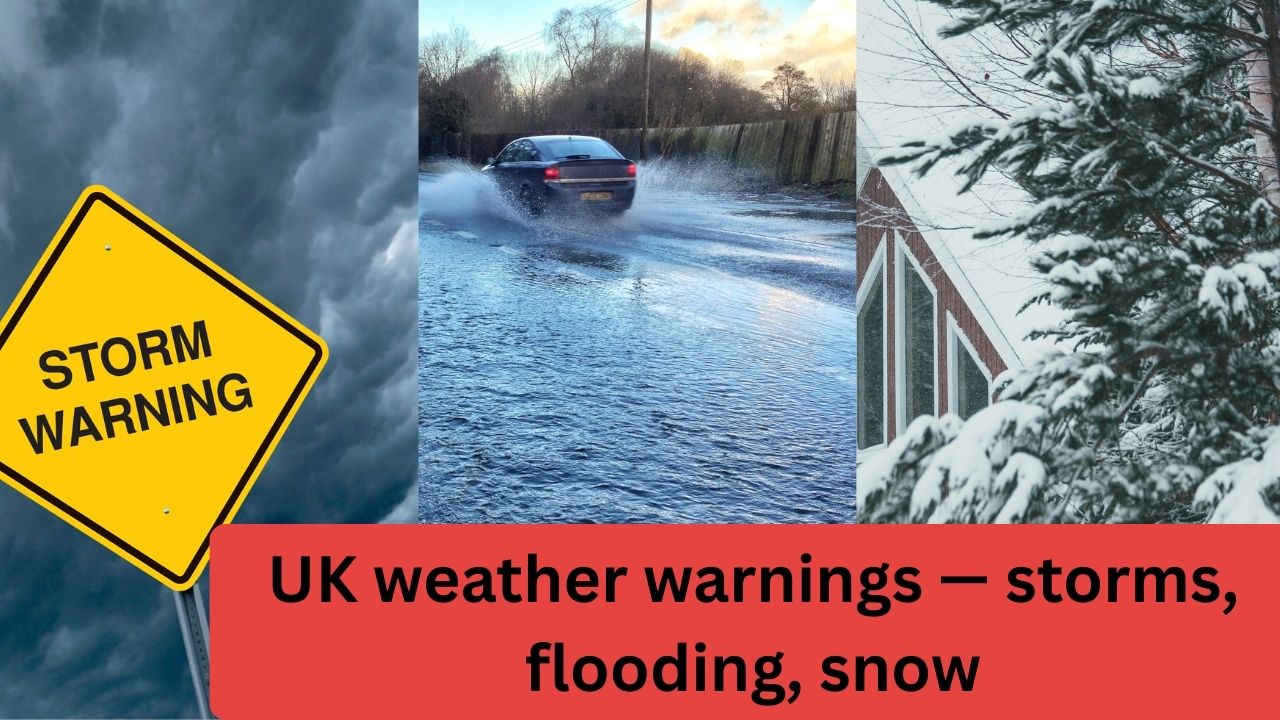
From sudden snowfalls to relentless rain and powerful storms, severe weather has become a familiar disruption for UK households. Travel plans are cancelled, schools close, and flood alerts dominate local news. When official warnings appear, many people are left asking the same question: how serious is this — and what should I do?
Here’s a clear explanation of UK weather warnings, how storms, flooding, and snow are assessed, and what the alerts really mean for everyday life.
Who Issues Weather Warnings in the UK
All official national weather warnings are issued by the Met Office, often in coordination with emergency services, local councils, and infrastructure operators.

Warnings are designed to:
- Protect life and property
- Reduce disruption to transport and services
- Give people time to prepare
They are impact-based, meaning they consider not just the weather itself, but how it will affect people.
The UK Weather Warning System Explained
The UK uses a colour-coded warning system that applies to storms, heavy rain, flooding, snow, ice, and extreme temperatures.
Yellow Warning — “Be Aware”
- Most common level
- Some disruption possible
- Travel delays, difficult driving conditions
- Localised flooding or icy surfaces
Yellow warnings mean stay alert and plan ahead.
Amber Warning — “Be Prepared”
- Higher likelihood of significant disruption
- Flooding of homes and businesses possible
- Dangerous driving conditions
- Power cuts and transport disruption
Amber warnings signal a real risk to safety, especially for vulnerable people.
Red Warning — “Take Action”
- Rare, but serious
- Danger to life is likely
- Widespread disruption
- Emergency response required
Red warnings are issued only when severe impacts are expected.

Storm Warnings: What They Cover
Storm warnings typically involve:
- Very strong winds
- Heavy rain
- Coastal surges
- Flying debris
Storms can:
- Bring down trees and power lines
- Damage buildings
- Disrupt road, rail, and air travel
Even when wind speeds vary regionally, impacts can be severe in exposed areas.

Flood Warnings: Why They’re Increasing
Flood alerts are issued when:
- Rivers rise rapidly
- Prolonged rainfall saturates ground
- Coastal flooding risk increases
Flooding is now one of the most common weather-related risks in the UK, affecting both urban and rural areas.
Local flood warnings may come from environment agencies, but national risk information feeds into Met Office alerts.

Snow and Ice Warnings: Still a Major Risk
Despite milder winters overall, snow and ice remain dangerous.
Warnings may be issued for:
- Heavy snowfall
- Ice forming on untreated roads
- Freezing rain
Even small amounts of snow or ice can:

- Cause serious travel accidents
- Isolate rural communities
- Disrupt healthcare access
The danger often lies in sudden temperature drops, not deep snow.
Real-Life Impact on Communities
Sarah, a nurse in Yorkshire, says amber snow warnings change everything.
“If roads aren’t gritted, I leave hours earlier or stay overnight near work. It’s stressful, but necessary.”
David, whose home flooded twice in three years, says warnings are now part of daily planning.
“When alerts come through, we move valuables upstairs straight away.”

How Warnings Affect Travel and Services
Weather warnings can lead to:
- School closures
- Cancelled trains and flights
- Delayed NHS appointments
- Road closures and diversions
- Emergency service strain
Authorities urge people not to travel unless necessary during amber or red warnings.
Government and Emergency Response
Local authorities, emergency planners, and the UK Government use weather warnings to activate response plans.

This may include:
- Flood barriers and sandbags
- Road gritting and closures
- Emergency accommodation
- Public safety messaging
Warnings are a trigger for action, not just information.
What Has Changed in Recent Years
Experts note several trends:
- More frequent heavy rainfall events
- Milder winters, but sharper cold snaps
- Increased flood risk due to saturated ground
- Greater focus on impact-based warnings
This means warnings may be issued more often, even if conditions look mild.
What You Should Do When a Warning Is Issued
- Check the warning level and affected area
- Avoid unnecessary travel during severe alerts
- Secure outdoor items in storms
- Prepare flood protection if at risk
- Check on vulnerable neighbours or relatives
- Follow official advice, not rumours
Warnings can change quickly — staying updated matters.
Common Questions About UK Weather Warnings
1. Who decides when a warning is issued?
The Met Office, using forecast data and impact assessment.
2. Are yellow warnings serious?
They can be, especially for travel and local flooding.
3. Do warnings mean weather is guaranteed?
No, but risk is high enough to justify preparation.
4. Why are there more warnings now?
Better forecasting and greater weather volatility.
5. Can warnings be upgraded or downgraded?
Yes, as forecasts update.
6. Are all areas affected equally?
No, impacts vary by location and infrastructure.
7. Do warnings apply overnight?
Yes, many hazards worsen overnight.
8. Should I still go to work?
Follow employer and local authority advice.
9. Are schools required to close?
No, decisions are local.
10. What’s the most dangerous weather type?
Flooding and ice cause the most harm overall.
Bottom Line
UK weather warnings for storms, flooding, and snow are not routine alerts — they are risk-based signals designed to keep people safe. Understanding what each warning level means helps households prepare, avoid unnecessary danger, and respond quickly when conditions turn severe.
As weather patterns become more unpredictable, knowing how to act on warnings is becoming an essential life skill.










Leave a Comment