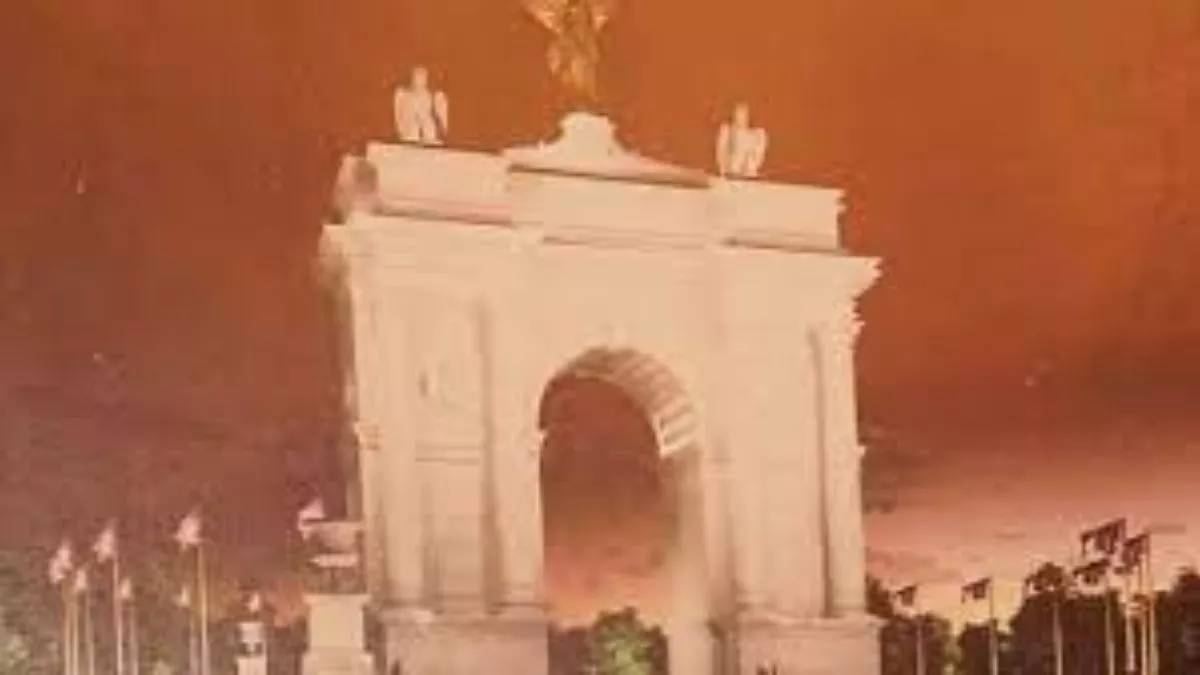
Vietnam War veterans have filed a federal lawsuit seeking to block the Trump administration’s plan to construct a large triumphal arch in Washington, D.C., arguing that the project lacks congressional approval and exceeds executive authority.
The lawsuit, filed on February 20, 2026, challenges the White House’s proposal to build what it has reportedly named the “Independence Arch” at Memorial Circle in the nation’s capital.
According to court documents, three Vietnam War veterans, joined by an architectural historian, are asking the court to prevent construction from moving forward unless Congress formally authorizes the project.

The plaintiffs argue that major monuments and memorial structures in Washington, D.C. have historically required legislative approval, and that bypassing Congress sets a dangerous precedent for federal land use and national memorial planning.
In their filing, the veterans said the proposed arch is not simply a symbolic structure but a massive architectural project that would permanently alter a historic and sensitive area of the capital.
They maintain that such a decision should involve public debate, congressional oversight, and formal authorization, rather than unilateral executive action.
The lawsuit names the Trump administration and seeks an injunction to halt all planning, permitting, and construction activities related to the project.
While the White House has described the arch as a patriotic landmark intended to celebrate American independence and national history, critics argue that the proposal lacks transparency and legal grounding.
This legal challenge comes amid broader national conversations about how monuments and memorials should be planned, funded, and approved.

Vietnam veterans groups have emphasized that memorials carry deep emotional and historical weight, and that their design and placement should involve veterans, lawmakers, historians, and the public.
At the local level, communities across the country are also engaging in their own efforts to honor veterans through memorial projects.
In California, the Citrus Heights City Council recently approved grant funding to support a large-scale veterans memorial initiative in Citrus Heights.

The city awarded $20,000 to the Citrus Heights Veterans Memorial Project, a nonprofit working to build a 95 percent replica of the Vietnam Veterans Memorial Wall.
The replica memorial is planned for the veterans section of Calvary Cemetery and is being developed through a partnership involving local volunteers, the city, and Catholic Funeral and Cemetery Services of the Diocese of Sacramento.
The project is expected to use 470 linear feet of India black granite, with the wall reaching nearly nine and a half feet at its highest point.

Organizers say the memorial will be visible from Interstate 80 and will serve as a lasting public reminder of the service and sacrifice of the 58,318 men and women whose names are engraved on the original wall.
The Citrus Heights project, which is privately funded through donations and community support, is estimated to cost more than $7 million, with millions already pledged. Local leaders have described it as a grassroots effort rooted in collaboration and respect for the veterans’ legacy.
Taken together, the lawsuit in Washington and the community-driven memorial efforts in places like Citrus Heights highlight two very different approaches to honoring military service.

One is being challenged in court over authority and process, while the other is being built through local partnerships, fundraising, and public involvement, underscoring the ongoing national debate over how America remembers its veterans and who gets to decide how that remembrance takes shape.








Leave a Comment