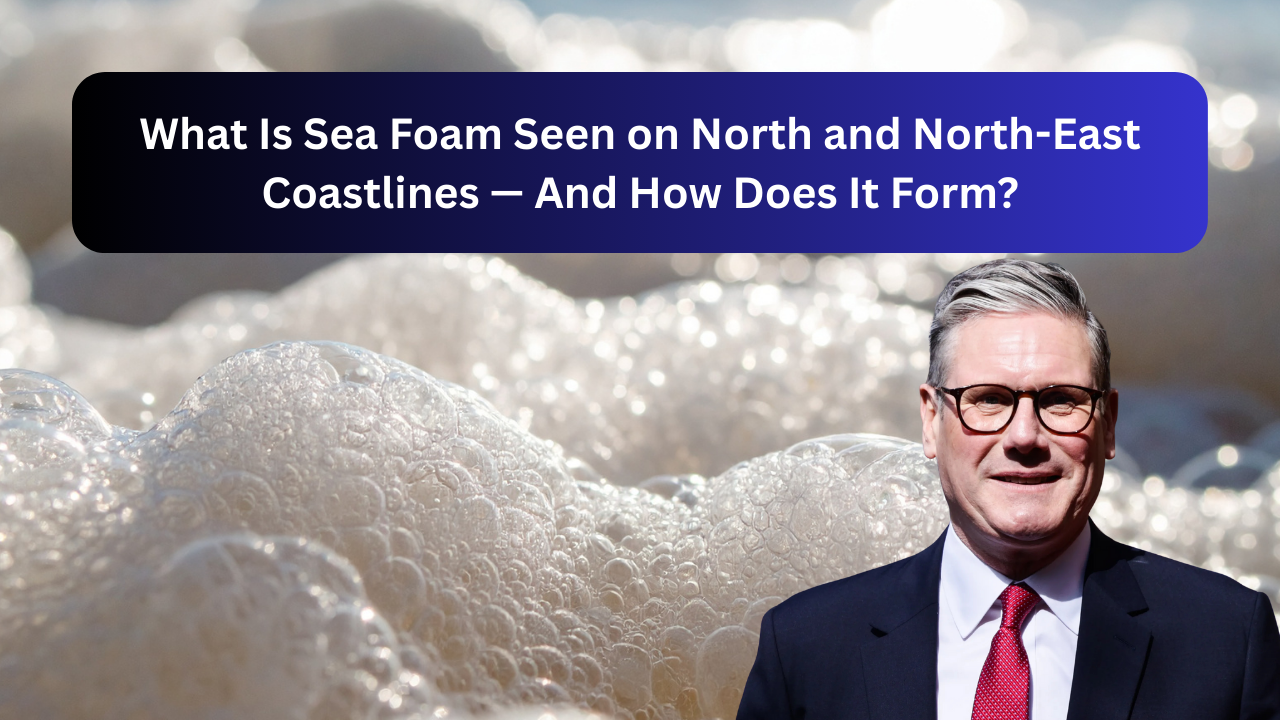
After storms or strong onshore winds, walkers along the UK’s north and north-east coastlines sometimes encounter something unexpected: thick, frothy foam piling up along beaches, rocks, and harbour walls. It can look dramatic — even alarming — but in most cases, sea foam is a natural coastal phenomenon.
Understanding what it is, why it appears, and when it might signal a problem helps separate harmless nature from genuine concern.
What Sea Foam Actually Is
Sea foam is created when organic material in seawater is churned by wind and waves.

At its core, it’s made from:
- Dissolved organic matter (proteins, fats, algae residue)
- Microscopic plankton and plant material
- Natural surfactants released by marine life
When waves break, these substances trap air, forming bubbles that collect into foam — much like soap suds.
Why It’s Common on North and North-East Coasts
Sea foam is more likely to appear on exposed coastlines where conditions are right.

The north and north-east coasts often see:
- Strong winds and rough seas
- Powerful wave action
- Cold, nutrient-rich waters
- Seasonal plankton blooms
These factors combine to churn organic material efficiently, producing larger and longer-lasting foam.
The Role of Algae and Plankton
One of the biggest contributors to sea foam is phytoplankton.

When plankton:
- Grows rapidly (blooms)
- Dies and breaks down
- Releases organic compounds
those compounds act like natural detergents. Storms then whip them into foam that can travel inland from the shoreline.
This is why foam is often seen after storms, not during calm weather.

Why the Foam Can Look Thick — or Even “Snowy”
Sea foam can vary dramatically in appearance.
It may look:
- Light and airy, like shaving foam
- Dense and piled high, like snowdrifts
- Brownish, white, or slightly yellow
Thickness depends on how much organic material is present and how violently the water has been mixed.

In strong winds, foam can even be blown across roads or promenades, creating striking scenes.
Is Sea Foam Dangerous?
In most cases, no — sea foam is harmless.
However, there are a few important cautions:

- Foam can contain bacteria from natural organic matter
- It may trap pollutants already in the water
- It can hide hazards like sharp rocks or debris
- In rare cases, algal toxins may be present
As a rule, it’s best not to play in or ingest sea foam, especially if it’s unusually thick or discoloured.
When Sea Foam Can Signal a Problem
While sea foam is usually natural, certain signs can indicate pollution.
Possible warning signs include:

- Strong chemical or sewage-like smells
- Foam appearing during calm weather
- Unusual colours (grey, oily sheen)
- Fish deaths or distressed wildlife nearby
If these occur together, authorities may investigate water quality.
Why It Appears Suddenly — Then Vanishes
Sea foam often appears quickly and disappears just as fast.
That’s because it depends on:

- Short-term weather conditions
- Tides and wave direction
- Temporary plankton cycles
Once winds drop or tides change, the foam breaks down and disperses naturally.
How Sea Foam Compares to Pollution Foam
| Natural Sea Foam | Pollution-Related Foam |
|---|---|
| After storms | During calm conditions |
| Mild or sea-like smell | Strong chemical odour |
| Linked to plankton | Linked to discharge |
| Disappears quickly | Persists unusually |
Most foam seen after rough weather falls firmly into the natural category.
Why Scientists Study It
Sea foam isn’t just a curiosity — it provides clues about marine ecosystems.
Researchers use it to:
- Track plankton activity
- Study organic carbon cycles
- Monitor coastal water health
- Understand climate-related changes
In this way, foam can act as a visible indicator of invisible processes in the ocean.
Questions and Answers
1. Is sea foam pollution?
Usually no — it’s often natural.
2. Why does it appear after storms?
Storms churn organic matter into bubbles.
3. Is it safe to touch?
Best avoided, especially thick foam.
4. Does it mean sewage is present?
Not in most cases.
5. Why does it smell sometimes?
Decaying organic material can smell sulphurous.
6. Why is it common in colder seas?
Cold, nutrient-rich waters support plankton growth.
7. Can foam harm pets?
Yes — pets should be kept away.
8. Does climate change affect sea foam?
Indirectly, by altering plankton cycles.
9. Is it seasonal?
More common in spring and autumn.
10. Why does it blow inland?
Strong winds can carry it ashore.
11. Does it affect swimming water quality?
Not usually, but caution is advised.
12. Should it be reported?
Only if it shows signs of pollution.
Why It Keeps Capturing Attention
Sea foam looks dramatic because it turns the invisible workings of the ocean into something tangible. What’s normally dissolved in seawater suddenly becomes visible — whipped into froth by wind and waves.
For most people on the north and north-east coastlines, it’s a reminder that the sea is constantly active, complex, and alive — even when it leaves behind something that looks a little strange.










Leave a Comment