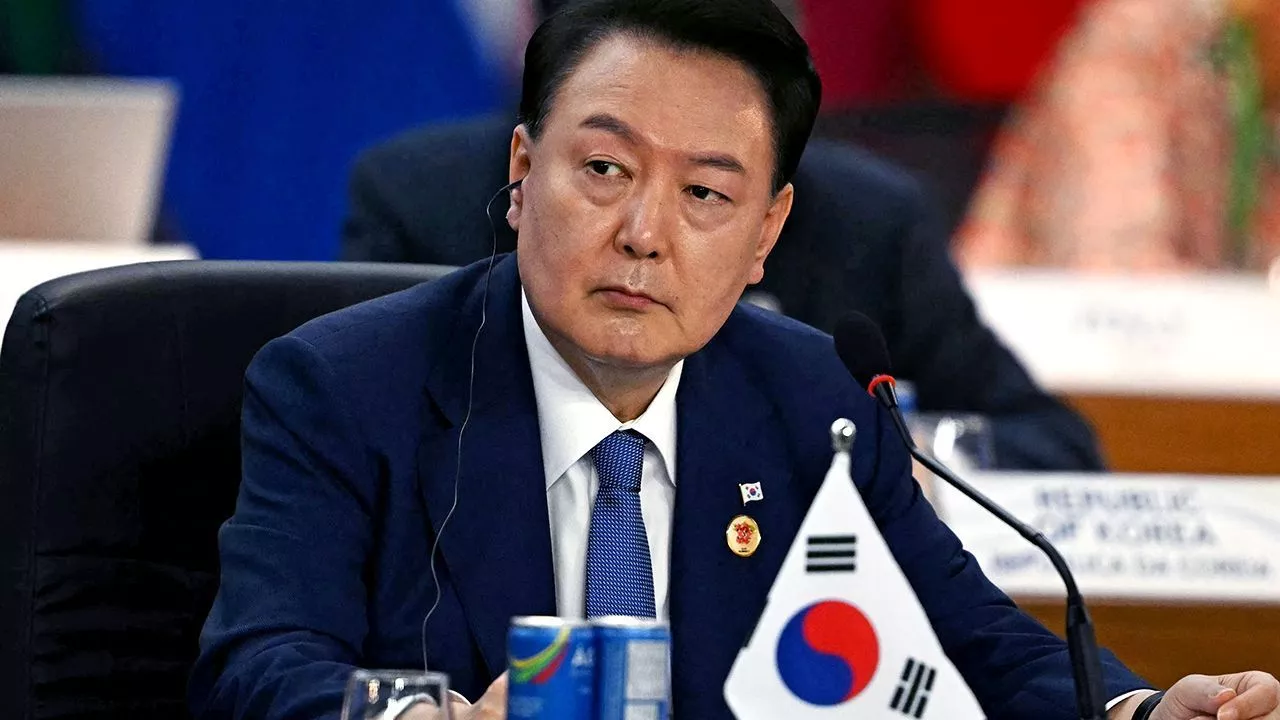
When Yoon Suk Yeol declared martial law on December 3, 2024, he said he was acting to protect South Korea from what he called “anti-state forces” embedded within the opposition-controlled National Assembly.
In reality, his decision followed months of deepening political isolation, intensifying confrontation with lawmakers, and a growing belief that his presidency was under siege.
Yoon, a former prosecutor with no prior elected experience, had built his career on a reputation for uncompromising legal action.

As a prosecutor, he pursued cases against powerful figures across the political spectrum, including former conservative president Park Geun-hye.
That reputation helped propel him into the presidency, but it also shaped the way he governed. He approached politics with a prosecutorial mindset: adversarial, rigid and focused on defeating opponents rather than negotiating with them.
From early in his term, Yoon faced a hostile parliament dominated by the opposition Democratic Party.

After his party suffered a major defeat in midterm parliamentary elections, the opposition gained an even stronger majority, leaving him with limited legislative support.
Lawmakers blocked or revised key elements of his agenda, cut budgets, and pursued investigations into members of his administration, including his wife. Yoon responded with repeated presidential vetoes, escalating the confrontation.
According to court findings later presented at the Seoul Central District Court, Yoon believed the opposition was not merely obstructing him but actively undermining the state.
He publicly accused lawmakers of being aligned with “anti-state” or pro-North Korean forces, though he offered no evidence.
Prosecutors would later argue that he had come to see the political standoff not as routine democratic conflict but as an existential struggle.
On the night he declared martial law, Yoon suspended political activities, placed restrictions on the media, and ordered armed troops to the National Assembly and the National Election Commission.

Judges later concluded that the deployment was intended to incapacitate the legislature.
Lawmakers, however, managed to convene despite the military presence and voted down the decree within hours. Massive public outrage followed, and Yoon rescinded the order after roughly six hours.
The Constitutional Court later ruled that he had abused his power and removed him from office. In 2026, he was convicted of leading an insurrection and sentenced to life imprisonment.

In delivering the verdict, the court said he had flouted legal procedures and attempted to undermine democratic institutions by force.
Comparisons were quickly drawn to Chun Doo-hwan, the former military ruler who imposed martial law in 1980 and was later convicted of insurrection for his role in suppressing the Gwangju uprising.
While Yoon’s attempt did not result in the deadly violence associated with Chun’s regime, many South Koreans were disturbed that an elected president had tried to use emergency powers against a sitting legislature.

In the end, Yoon appears to have believed he was defending the nation from internal threats. But the courts concluded that he had instead turned the machinery of the state against democratic institutions.
His declaration of martial law was not the result of a sudden crisis; it was the culmination of political isolation, ideological hardening, and a growing refusal to accept institutional constraints.









Leave a Comment